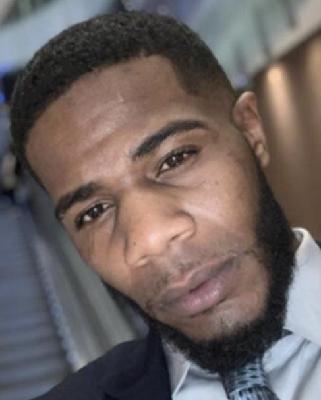
Wayne Brown, a 25-year-old male from Atlantic City, New Jersey, spent the late morning of Wednesday, August 12, 2020, inside the Madison Hotel on South Dr. Martin Luther King Boulevard when the quiet of the building’s 11th floor was broken by gunfire. Around 11:45 a.m., a 911 call reported a shooting at the hotel, bringing Atlantic City police rushing to the scene. Officers made their way up to the eleventh floor and found Brown in the corridor with an apparent gunshot wound.
Emergency responders tried to save him, but he succumbed to his injuries there in the hotel, and the case was immediately treated as a homicide tied to the events of that late summer morning.
In the hours and days that followed, the hallway where Brown fell became the center of a major investigation. Detectives from the Atlantic County Prosecutor’s Office Major Crimes Unit worked alongside Atlantic City police, processing the crime scene inside the aging Madison Hotel and canvassing for witnesses and surveillance footage. Atlantic County Prosecutor Damon G. Tyner publicly confirmed that Brown had been the victim of a fatal shooting and appealed for information from anyone who had been in or around the hotel that morning, directing potential witnesses to both the prosecutor’s tip line and regional Crime Stoppers programs. Early reports emphasized that investigators were still piecing together what had happened in the minutes before Brown was shot, but they made clear that the death was being pursued as a serious violent crime rather than an accident or stray gunshot.
Leads developed quickly. Within four days, attention had focused on a young Atlantic City resident named Keshawn T. Faulkner. On August 16, 2020, authorities announced that the 22-year-old had been charged in connection with Brown’s killing inside the Madison Hotel. The prosecutor’s office said Faulkner was accused of fatally shooting Brown during a robbery in the hotel, and he was charged with felony murder, robbery and unlawful possession of a firearm. After his arrest, Faulkner was processed and transported to the Atlantic County Justice Facility, where he remained in custody as the joint investigation continued to build a fuller picture of what had unfolded on the eleventh floor that day.
By the following winter, the case had moved from the investigative stage into the courts. In February 2021, an Atlantic County grand jury returned an indictment against Faulkner, now 23, for the August 2020 shooting that took Brown’s life. The indictment expanded on the earlier charges, listing felony murder, robbery, unlawful possession of a firearm and possession of a weapon for an unlawful purpose. Court documents and local reporting described how the shooting had been captured on hotel surveillance video and how witnesses recounted Faulkner firing the gun while taking money from another man during a robbery inside the hotel, with Brown caught in the deadly violence that followed. Even as the indictment formalized the case against Faulkner, he remained jailed at the county facility awaiting trial on the serious charges tied to Brown’s death.
The courtroom phase would eventually bring a permanent resolution in law, if not in memory. In a plea arrangement reached more than two years after the shooting, Faulkner admitted his role in what prosecutors described as a botched armed robbery at the Madison Hotel, pleading guilty to first-degree aggravated manslaughter, first-degree robbery and second-degree possession of a firearm for an unlawful purpose. In February 2023, he stood before a judge and was sentenced to 19 years in New Jersey state prison for the crimes linked to the events of August 12, 2020. Under the state’s No Early Release Act, he must serve 85 percent of that sentence—more than sixteen years—before he can even seek parole, a term that prosecutors and later news accounts squarely connected to the fatal shooting in the eleventh-floor corridor where Brown’s life ended.
Long after the courtroom proceedings concluded, Brown’s name continues to appear in online records that both document and mourn lives lost to violence. Gun violence memorial sites list his full name and the date and place of his killing in Atlantic City and show dozens of virtual candles lit in his memory. Elsewhere, case-tracking and crime-solving platforms retell the bare outline of what happened that morning at the Madison Hotel: the emergency call, the discovery on the eleventh floor, the swift identification of a suspect and the eventual conviction that closed the legal file on the case. Together, these public traces fix the story of Wayne Brown’s death in the collective record—one young life ended in a hotel hallway, and a chain of events that carried on through police work, indictments, and a lengthy prison sentence for the man held responsible.