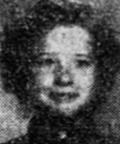
Kathleen Clark, an 11-year-old White / Caucasian female, died on January 17, 1961, in Grand Blanc, Michigan, in a family murder-suicide that took place only days after the Clark family moved into a new house on Oldbridge Drive. The home was a brick-front, story-and-a-half house in a new subdivision, and the family had lived there for just five days before the deaths. The setting made the tragedy even more unsettling because the Clarks had barely arrived; neighbors had not yet become acquainted with them, boxes were still waiting to be unpacked, and the house had not had time to become a true home.
Kathleen was one of four children killed that day, along with her siblings Karl, Karen, and Kurt. Their mother, Janet Rasmussen Clark, was also killed. Online memorial records identify Kathleen as having been born in Flint, Michigan, and later buried at Flint Memorial Park in Mount Morris, Genesee County, Michigan. Her death was part of the same Grand Blanc incident that claimed the lives of every member of the household.
The person identified as responsible was Kathleen’s father, Thomas B. Clark. Contemporary reporting described the family of six as dead “at the father’s hand,” indicating that Thomas killed his wife and children before taking his own life. Because he died at the scene, there was no arrest, no criminal prosecution, no trial, and no conviction. The case was not presented as an unsolved crime involving an unknown suspect, but as a domestic murder-suicide in which the father was the identified killer.
One of the last people known to have contact with the family before the bodies were discovered was Mrs. Ernest J. Somers, the real estate agent who had sold the Clarks their new house. She went to the home around 7 p.m. on Monday with papers that needed to be signed. Thomas was there at the time, while Janet had gone to the grocery store. Mrs. Somers waited until Janet returned, and she later said Thomas appeared very nervous and did not seem capable of discussing the documents. Janet told her she would return the papers the next morning.
When Mrs. Somers came back at about 3:30 p.m. Tuesday, the family’s late-model station wagon was still sitting in the driveway. Believing Janet might be upstairs resting, she rang the doorbell for almost five minutes, but no one answered. She left, and by the time she returned later, the bodies had been discovered. The new home that had been meant to represent stability and a fresh start had instead become the place where Kathleen and the rest of her family were found dead.
Thomas Clark’s mother, Mrs. Oscar Ostrander, struggled to explain what had happened. She said she could not understand why her son had taken the lives of his wife, children, and himself. She described him as a man who had loved his family, admired Janet, and had spoken repeatedly about how wonderful it would be to move into the new home. He had worked with Boy Scouts, enjoyed woodworking, and was remembered by his mother as someone who had many friends and was good with children and older people.
At the same time, Thomas had reportedly been under serious strain. His mother said he had been worrying a great deal and that relatives had tried to get him to see a doctor. The family had recently gone through multiple disruptions, including a move to St. Charles, Missouri, job changes, Thomas’s studies in Detroit, and then a return to the Flint area. Before moving into the Grand Blanc house, the family had stayed at the Temp Ho Motel, and Thomas’s mother believed the accumulation of pressures may have become too much for him.
His family also pointed to a severe injury years earlier. In January 1945, Thomas suffered a back fracture while tobogganing with a church group on the grounds of the Flint Golf Club. Doctors had once feared he might not recover or could be paralyzed, though he eventually improved. According to his mother, doctors had warned that a severe nervous shock could lead to something more serious for him, and she believed the strain surrounding his work, moves, and family responsibilities may have contributed to the catastrophe.
Kathleen’s death is remembered within the larger destruction of the Clark family: a young girl killed alongside her mother and siblings in a house where the family had barely begun unpacking. There was no surviving suspect to question in court and no later legal resolution, because the man identified as responsible ended his own life after killing them. What remained was the story of a family that had stepped into a new home expecting security, only for that hope to end almost immediately in violence.