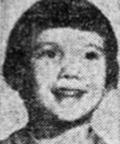
Karen Clark, a 6-year-old White / Caucasian female, died on January 17, 1961, in Grand Blanc, Michigan, only days after her family had moved into a new house on Oldbridge Drive. The Clark home was still new enough that it had not truly become a home yet. The family had occupied the brick-front, story-and-a-half house for just five days, and the new subdivision around them was still unfamiliar, with neighbors who barely had time to learn who the Clarks were before tragedy overtook the street.
Karen was one of four Clark children killed that day, along with her siblings Kathleen, Karl, and Kurt. Their mother, Janet Rasmussen Clark, was also killed. Online memorial records list Karen as having been born on June 24, 1954, in Flint, Michigan, and dying at age 6 in Grand Blanc. She was later buried at Flint Memorial Park in Mount Morris, Genesee County, Michigan. Gun-violence memorial records identify Karen as having been lost to gun violence and list her among the five deceased victims from the Grand Blanc incident.
The available account of the family's final hours centers on the new home and the family's father, Thomas B. Clark. A real estate agent, Mrs. Ernest J. Somers, had sold the house to the family and may have been one of the last people to see them alive. She went to the Clark home around 7 p.m. on Monday with documents that needed signatures. Thomas was there, but Janet had gone to the grocery store. Mrs. Somers waited until Janet returned, and she later recalled that Thomas appeared very nervous and seemed unable to discuss the papers. Janet told her the documents would be returned Tuesday morning.
The next afternoon, at about 3:30 p.m., Mrs. Somers returned to the house. The family's late-model station wagon was still in the driveway, so she rang the bell for nearly five minutes, thinking Janet might be upstairs sleeping. No one came to the door. By the time Mrs. Somers came back again, the bodies had been discovered, and the quiet new house had become the scene of a family murder-suicide.
Thomas B. Clark was identified as the person responsible for killing his wife and children before taking his own life. Reports described the family of six as dead “at the father's hand,” meaning there was no surviving suspect to arrest or prosecute. Because Thomas died at the scene, there were no criminal charges, trial, or conviction. The case was not treated as an unsolved killing involving an unknown assailant, but as a domestic murder-suicide in which the father was the identified perpetrator.
The circumstances surrounding Thomas's state of mind were described through comments from his mother, Mrs. Oscar Ostrander. She said she could not understand why he had killed Janet, the children, and himself. She described him as a man who loved his family, admired his wife, and had often spoken with excitement about how wonderful it would be to get into the new home. At the same time, she said he had been worrying a great deal, and relatives had tried to persuade him to see a doctor.
Thomas had reportedly been under pressure from job changes, studying in Detroit, a move to Missouri, and the family's return to the Flint area. His mother also pointed to an old back injury from 1945, when he suffered a fracture while tobogganing with a church group. Doctors had once warned that a severe nervous shock could lead to something more serious for him. His family believed the move into the new house might ease his worry, and they thought things had begun to settle down just before the killings.
For Karen, the larger explanations came too late. She had moved into a new home with her parents and siblings, into a neighborhood where people had not yet learned the family's routines or even their names. Within days, she and the rest of the household were dead. What remained was a brief but devastating record of a child killed alongside her family in a house that was meant to represent stability, safety, and a new beginning.