Who caused the 1995 Palo Verde train derailment, killing Mitchell Bates?
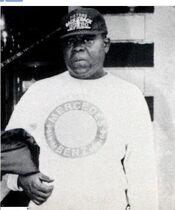
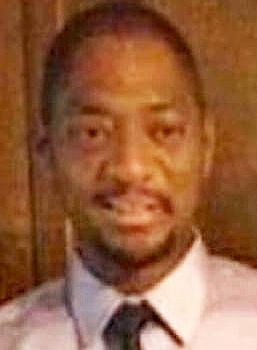
Mitchell Bates, a 41-year-old male, was working as a sleeping car attendant aboard Amtrak’s Sunset Limited on the night of October 9, 1995, when the train derailed in the remote desert near Palo Verde, Arizona. The Los Angeles–bound train was crossing Southern Pacific tracks roughly 60–70 miles southwest of Phoenix in the early morning hours, traveling at about 50–60 miles per hour, when it hit a sabotaged section of rail on a trestle over a dry wash. Two locomotives and eight of the twelve cars left the tracks, and four cars plunged roughly 30 feet into the riverbed below. Bates, a 20-year railroad veteran remembered by passengers as attentive and kind, was the only person killed in the wreck; around 78 to nearly 100 other passengers and crew were injured, a dozen of them seriously.
From the beginning, investigators treated the derailment as a deliberate attack rather than an accident. At the crash site, they found that 29–39 spikes had been pulled from a joint in the rail and a critical joint bar had been removed, allowing one rail to shift inward just a few inches—enough to send the train off the tracks as it crossed the bridge. To make the sabotage even more sophisticated, wires had been used to keep the track circuit electrically “complete,” defeating safety systems that would normally warn an engineer of a broken rail. Nearby, several nearly identical typewritten notes were discovered, criticizing federal law-enforcement agencies over the Waco and Ruby Ridge standoffs and signed by a group calling itself the “Sons of the Gestapo.” These notes led authorities to classify the case as an act of domestic terrorism and to consider whether the derailment was intended as a copycat or follow-on to the Oklahoma City bombing earlier that year.
The scale of the response reflected how seriously the government viewed the attack that killed Bates. The FBI opened a “major case” investigation code-named Operation Splitrail and sent around 90 agents to the desert scene, making it one of the bureau’s largest crime-scene deployments of the 1990s. Agents and railroad investigators canvassed an area of more than a square mile, interviewed local residents and railroad personnel, and scrutinized parallels to a 1939 train sabotage in Nevada that had used similar methods. Over time, investigators’ theories shifted: the dramatic “Sons of the Gestapo” letters are now widely considered possible misdirection, and some experts and reporters have suggested the saboteur might instead have been a disgruntled railroad employee or someone targeting a train in a desolate spot for robbery.
Despite the attention, no one has ever been arrested for Bates’s death. A 1995 FBI raid on the home of railroad salvage contractor John Ernest Olin near the area, and later interest in other potential suspects—including a Tonopah Valley firefighter named in an inadvertently faxed FBI bulletin—did not result in charges, and those individuals have consistently denied involvement. Over the years, writers and researchers have floated additional possibilities, from right-wing extremists linked to the Oklahoma City bombing to members of the Aryan Republican Army, but these remain speculative and have never progressed to formal accusations or indictments. The case is officially treated as an unsolved murder and act of terrorism, and it appears on lists of unsolved homicides from the era.
Decades after the derailment that claimed Mitchell Bates’s life, the FBI continues to list the case as open. In 2015, on the 20th anniversary of the attack, the bureau’s Phoenix office announced a reward of up to $310,000 for information leading to the arrest and conviction of those responsible—a reward that remains in effect, underscoring that investigators still believe someone knows who sabotaged the track that night. For Bates’s colleagues and the broader rail community, his death in the dark desert west of Palo Verde stands as a symbol of a carefully engineered crime whose perpetrators have, so far, escaped justice.