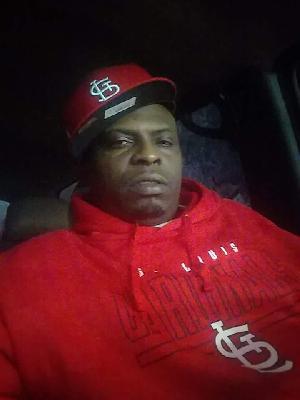
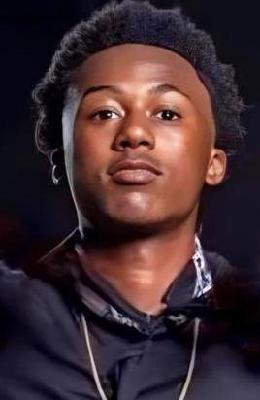
On a humid Saturday night in mid-August 2015, D’Alandis Love, a 27-year-old Black man from Greenwood, Mississippi, slid into the back seat of a red Pontiac with his cousins and friends, heading west on Highway 82 toward the Moroccan Lounge in nearby Itta Bena. Inside the car with him were his relative Perez Love and cousins Kelsey Jennings and Ken-Norris Stigler, four young men sharing the easy energy of a late summer night, driving out for an ordinary trip to a club.
As they traveled west around 11 p.m., a light-colored or gold Tahoe sped up alongside the Pontiac. Without warning, gunfire erupted from the Tahoe, spraying the Pontiac with bullets as both vehicles moved down the highway. Later forensic work showed that the shots ripped into the car from back to front, shattering the rear passenger window on the side where D’Alandis sat and punching holes along that side of the vehicle. The Pontiac veered off the road into a deep drainage ditch and came to rest in a field, smoldering. A Leflore County deputy on patrol noticed the fire in the darkness and pulled over, finding not a simple wreck but a crime scene: one man outside the vehicle, others trapped or unconscious inside, and two men in the back seat who had to be pulled from the car. D’Alandis was among those dragged from the wreck; he was later pronounced dead at the scene, and an autopsy determined that he had been killed by multiple gunshot wounds in what was formally ruled a homicide.
Investigators from the Leflore County Sheriff’s Office and the Mississippi Bureau of Investigation worked through the night and into the next day. Near the path the car had taken, they collected numerous 7.62 mm shell casings, suggesting a rifle or similar weapon had been used, along with a single. 40-caliber casing. Inside the Pontiac, they recovered two. 40-caliber pistols—one later found fully loaded with the safety engaged on the front passenger floorboard—indicating that whatever weapons the victims might have had were not fired in the chaos that unfolded on the highway.
Very quickly, the case moved from a mysterious drive-by to a targeted shooting with named suspects. Within days, local reporting stated that the Leflore County Sheriff’s Department had charged two Greenwood men, Michael Holland and David Reedy, with first-degree murder in connection with the fatal shooting of one man and the wounding of three others; that same account identified D’Alandis as a 27-year-old Greenwood resident pronounced dead at the scene by the county coroner. But the investigation did not stop there. As detectives kept working leads and evidence, a more complex picture emerged, widening the circle of alleged participants beyond the two initially named men.
In early September 2015, a turning point came when Jacarius Keys, accompanied by his attorney, walked into the sheriff’s department and offered a statement. In a videotaped interview with investigators, Keys admitted that he had been driving the Tahoe the night of the shooting and implicated four other men—Armand Jones, Sedrick Buchanan, Michael Holland, and James Earl McClung Jr.—in the ambush on Highway 82. His account became the backbone of the state’s theory: that the men in the Tahoe had acted together to attack the Pontiac as it headed toward the club, turning an ordinary night out into a deadly trap for the Loves and their cousins.
The investigation continued into the following year. In July 2016, a Leflore County grand jury returned a joint indictment against Jones, Buchanan, Keys, Holland, and McClung. They were charged with “acting alone or in concert with each other or others” in one count of deliberate-design murder for killing D’Alandis, along with three counts of attempted murder for the gunshot injuries inflicted on Perez Love, Jennings, and Stigler. The earlier figure of David Reedy did not appear in these later indictments; instead, the focus of the prosecution settled on the five men now formally accused of carrying out the drive-by.
Then, in December 2016, the case took another dark turn. About a year and a half after the shooting and roughly five months after the indictments, Keys himself was shot and killed. Court records describe Holland and Buchanan as suspects in his death, with prosecutors later arguing that Keys’s killing was tied to the effort to silence him after he had given his damaging statement to law enforcement. With their primary cooperating witness now dead, the state moved to introduce his videotaped statement at trial, setting up a major legal battle over whether the jury could hear from a witness who could no longer be cross-examined.
When Jones, Buchanan, Holland, and McClung were finally brought to trial together in May 2017, the courtroom proceedings stretched over several days. Jurors heard from surviving victims who described being shot at as the Tahoe roared past, from law enforcement officers who had pulled bodies from a burning car, and from forensic experts who tied together the shell casings and bullet paths with the testimony of those who had been there that night. Keys’s videotaped statement was played for the jury over the objections of the defense, admitted under a combination of hearsay exceptions including the “forfeiture-by-wrongdoing” doctrine, which allows a defendant to lose the right to confront a witness if the court finds the defendant was involved in making that witness unavailable.
The verdicts reflected the complicated web of accusations. The jury found Armand Jones guilty of first-degree murder for the killing of D’Alandis and of three counts of attempted first-degree murder for the attacks on Perez Love, Jennings, and Stigler. He was sentenced to life in prison for the murder and to three separate thirty-year terms for the attempted murders, all to be served consecutively—a punishment described publicly by the district attorney as life plus 90 years, with Mississippi law requiring that such sentences for murder and attempted murder be served day for day without early release.
Sedrick Buchanan and James McClung were acquitted of the murder charge but convicted of three counts each of the lesser-included offense of aggravated assault for the injuries to the surviving victims. The court imposed the maximum sentence on each count—twenty years per conviction—to run one after the other, leaving each man with a 60-year term in state custody. Michael Holland was found guilty of second-degree murder and three counts of attempted murder; his sentencing was continued to a separate date, but he faced decades in prison as well, on top of the prospect of a separate first-degree murder case for Keys’s killing that prosecutors said was under review by another grand jury.
The legal story did not end with the jury’s decisions. Jones and Buchanan appealed, challenging, among other things, the use of Keys’s videotaped statement at trial and various evidentiary rulings, including the admission of a. 40-caliber pistol found months later in a car where Buchanan had been a passenger. In 2019, the Mississippi Court of Appeals affirmed both men’s convictions and sentences, upholding the trial judge’s decisions and accepting the state’s theory that Keys’s statement could be admitted under the forfeiture-by-wrongdoing rule. Two years later, however, the Mississippi Supreme Court revisited the case on certiorari. It agreed that Jones’s convictions for murder and attempted murder should stand but concluded that there was not enough evidence to support Buchanan’s aggravated-assault convictions, reversing those convictions and rendering a judgment of acquittal in his favor.
Outside the courtroom, D’Alandis’s absence left a quieter but deeper mark on the people who had known him. An online memorial remembers him simply as a young man lost to gun violence in Greenwood on August 16, 2015, with candles lit in his honor and comments describing him as loving, caring, and an all-around great personality who was a true people person. Though the criminal justice system ultimately brought long prison sentences for some of the men found responsible for the ambush on Highway 82, the story of D’Alandis Love ends where it began: with a late-night drive among cousins and friends that never made it to the club, and with a family and community still left to live with the loss.