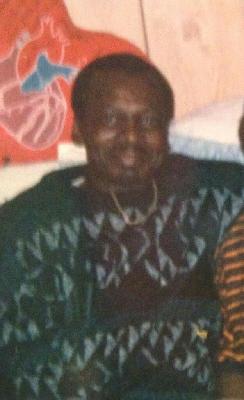
Tommy Jenkins was a 62-year-old Black/African American man from Grenada, Mississippi, whose life was cut short by gun violence on March 20, 2016. On that day, along Futheyville Road on the edge of town, what should have been another quiet Sunday in a small Mississippi community instead became a marker in the national toll of shootings, one more name added to a list of lives ended far too abruptly.
Those who knew Jenkins remembered him not as a statistic but as a man with a steady presence and an easy way about him. Friends and family memorialized him online with the nickname “Scoop,” painting a picture of someone smooth, hard working, lovable, and humble, the kind of person whose reliability made him a quiet anchor in the lives around him. He earned his living at Water Valley Poultry, a job that demanded long hours and physical effort, and he carried that same work ethic into his relationships, providing for his family and doing what he could to keep life moving forward in a modest, unassuming way.
When the gunfire that killed Jenkins echoed on Futheyville Road, it set in motion a homicide investigation rather than a routine accident report. The incident was recorded in national gun violence databases as a fatal shooting at that location on March 20, 2016, confirming that his death was treated as a criminal act from the outset rather than as some inexplicable misfortune. In the days that followed, a local news report, later summarized in the National Gun Violence Memorial, noted that a woman was charged with murder in connection with his killing.
Beyond that stark line about a murder charge, however, the public trail grows thin. Openly accessible online records and summaries do not clearly reveal who the woman was, how she was connected to Jenkins, or what investigators believe led up to the shooting on Futheyville Road. No widely available court documents or follow-up coverage shed light on whether the case went to trial, resulted in a conviction or plea agreement, or ended in some quieter resolution. From the outside, it appears that law enforcement identified and arrested a suspect, but the final legal chapter of the case remains difficult to trace in the public record.
What endures most clearly is the way Jenkins is remembered rather than the paperwork of the case. Online memorial pages preserve details that his loved ones chose to share: his nickname, his personality, the place he worked, and the candles lit in his honor by people who did not want his name to fade into anonymity. For them, the unanswered questions about how the justice system ultimately handled his killing exist alongside the everyday memories of a man who went to work, came home to his family, and tried to live a decent life, until a burst of violence on a Grenada road took that future away.