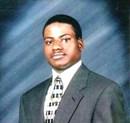
On a cold Friday the 13th in January 2017, the quiet streets around Jackson State University stirred to the sound of police sirens after a passerby spotted a body lying near the intersection of University Boulevard and Lynch Street, close to the back entrance of the campus and its baseball field. The victim was identified as Marquez Schaffer, a 22-year-old Black man from Jackson, Mississippi, who had been shot once in the leg; that single wound proved fatal.
He was discovered before 6 a.m., his body lying where he had finally collapsed after trying to escape whoever had opened fire on him. For Jackson, it was only the second homicide of the year, but it was a jarring reminder of how quickly an ordinary morning could dissolve into tragedy.
Investigators arriving at the scene soon realized that the place where Schaffer fell was not where the violence had begun. Officers followed a trail of blood away from the campus entrance and toward a nearby neighborhood, eventually tracing it to Minerva and Olin streets. There they found shell casings and other physical evidence that convinced detectives Schaffer had been shot at that corner and then run, bleeding, through the dark streets toward Jackson State, only to collapse at University and Lynch. The path of the blood told a wordless story of panic and desperation, of someone trying to outrun death and not quite making it.
In the days that followed, Jackson police worked to piece together how Schaffer had crossed paths with his killer. Detectives combed the area for witnesses and pulled surveillance video from businesses and homes near both the Minerva and Olin crime scene and the spot where his body was found. From that footage, they circulated an image of a person they believed could be crucial to the case: a figure presenting as a woman, seen driving a light-colored Buick. Jackson police released the still image publicly and asked for help identifying “this female” wanted for questioning in connection with Schaffer’s killing, emphasizing the car and the person’s appearance in hopes that someone in the community would recognize them.
Two weeks after the shooting, the investigation took a sharp turn. On January 27, 2017, Jackson police announced they had made an arrest in the murder near Jackson State University. The person in the surveillance picture, initially thought to be a woman, was identified as 29-year-old Walter Randle. Randle was described by police as a crossdresser, which explained why investigators had first asked the public to help find a woman; only later did they clarify that the person in the images was, in fact, Randle, a man who sometimes dressed in women’s clothing. That same day, officers took him into custody and charged him with Schaffer’s murder. A police tweet referenced in local coverage described the person once “wanted for questioning in the death of Marquez Shaffer” as “BM, Walter Randle – 29,” noting that he had been arrested and formally charged with murder.
With Randle under arrest, authorities publicly framed the case as a straightforward homicide near the university: a young man shot at one location, collapsing at another, and a suspect identified and charged after the release of surveillance images. Yet, beyond those early reports, the public record falls quiet. Local news outlets documented Schaffer’s death, the search for the person in the light-colored Buick, and Randle’s arrest on a murder charge, but there is no readily available coverage detailing what happened next in court—whether the case went to trial, whether there was a plea agreement, or what ultimate verdict or sentence, if any, was imposed. From the perspective of the public record, the story remains suspended at the moment of arrest: a fatal pre-dawn shooting, a blood trail from a neighborhood corner to a university gate, and a suspect whose prosecution fades from view once the headlines move on.