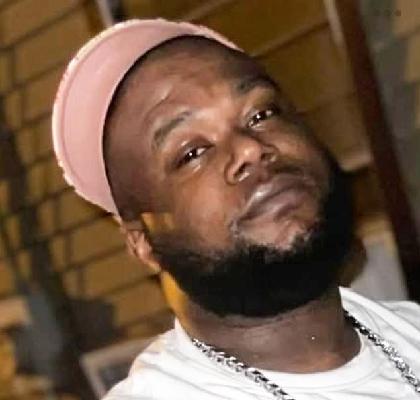
On the night of May 20, 2018, Terry Donnell Jordan, a 33-year-old man from Jackson, Mississippi, was at an apartment complex along West Silas Brown Street when the quiet of a Sunday evening broke into gunfire. Jordan, who had been born in 1984 and was connected to the city’s tight-knit networks on the west side, would later be remembered in brief obituary lines and online memorials that noted his age, his hometown, and hinted at close family ties, describing him as loving and devoted to his
children. In a city that had been grappling for years with high levels of lethal violence, his death became one more tragedy in a long-running struggle with gun crime.
Late that Sunday, around 11 p.m., police were called to the apartment complex on West Silas Brown Street after reports of shots fired. Officers arrived to find Jordan sitting inside a vehicle, shot multiple times. The car was still in place when investigators began working the scene, turning the parking lot into a grid of evidence markers and photographs under harsh artificial light. Jordan was pronounced dead there, his final moments unfolding not on a busy roadway or in a public square, but in the confined space of a parked vehicle in front of homes where residents would later recall waking to sirens and flashing blue lights.
Detectives with the Jackson Police Department’s Gun Crimes Interdiction Team quickly took the lead, treating the shooting as a homicide. Within days, their investigation pointed to a young man with a history of encounters with law enforcement: Booker Orlandus Tarvin Jr. Four days after Jordan’s death, officers with that unit, working alongside members of an ATF task force, stopped Tarvin during a traffic operation and took him into custody. He was 22 years old, and police announced that he had been arrested on a murder charge in connection with the Silas Brown Street killing. According to later reporting that reviewed case files, officers found him in possession of a Glock 23 handgun and a quantity of methamphetamine at the time of that arrest, details that deepened the impression that the case was intertwined with the city’s broader drug trade.
Jordan’s death, investigators said, did not appear random. Sources familiar with the case later described him as a popular figure in circles associated with drugs, someone who moved in an underworld of street economies but who also had “a lot of allies” who cared about him. Those relationships, and the tensions that often come with them, hovered in the background of the homicide file. Public accounts do not lay out a clear narrative of exactly what dispute or arrangement preceded the gunfire on West Silas Brown Street, but they suggest that whoever targeted Jordan knew who he was and where to find him that night, turning his car into the setting for an execution-style shooting.
Once charged, Tarvin was booked into the Hinds County Jail in Raymond, and the case began its slow passage through the local courts. Court records described in later news coverage show that he was being held on a $150,000 bond, a figure that underscored both the seriousness of the accusation and the court’s reluctance to see him quickly released. Over time, the file began to fill with delays: a bench warrant issued after Tarvin failed to report or stay in contact with his attorneys, continuances granted while his defense lawyer dealt with significant health complications from Covid, and a rescheduling of the trial date into March 2022. A request for a bond reduction was denied, but eventually he did bond out, stepping back into the community while still under the weight of the unresolved murder charge.
By 2022, the case that had started with gunfire in a parked car on Silas Brown Street was still unresolved in open court. Reporters who revisited the file noted that the paper trail appeared to end with the continuance order, setting the trial out but not documenting a final verdict. Then, in September of that year, the story took a grim and ironic turn. Tarvin himself was shot multiple times at the Pine Ridge Gardens apartments on Rebel Woods Drive in Jackson, another sprawling complex scarred by repeated violence. He died at the scene, becoming the city’s 91st homicide victim of the year. At the time of his death, he was still out on that $150,000 bond, identified in news reports as a man awaiting trial for the 2018 killing of Jordan.
For Jordan’s family and those who had lit digital candles and left short, aching messages on online memorial pages, the arc of the case left a hollow kind of closure. There had been an arrest, a name attached to the gunfire that took his life, and formal charges announced to the public. But with the accused dying in a separate burst of violence before a jury could ever hear witnesses or weigh evidence, the question of legal accountability for the killing on West Silas Brown Street faded into the broader story of Jackson’s homicide crisis. What remains in the public record is a portrait drawn from brief obituaries, a memorial page, and fragments of court and police documents: a man from Jackson whose life ended in the front seat of a car, and an investigation that found a suspect but never reached the final, definitive judgment of a completed trial.