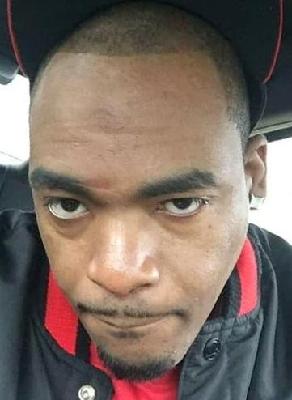
Corey McCoy was a 35-year-old Black / African American man from Greenwood, Mississippi, a McNeill Street resident whose life was rooted in the small Delta city he called home. Family and friends would later remember him as warm and playful, a man whose presence filled ordinary days with jokes, affection, and quiet reliability, someone woven into the daily fabric of his neighborhood and his children’s lives.
In the early hours of Sunday, October 27, 2019, the stillness along Avenue H
was broken by gunfire. At a house listed as 210 Ave. H, Corey was shot, the kind of sudden, close-range violence that turns a familiar front yard or porch into a crime scene. According to local reporting, he was taken from that address to Greenwood Leflore Hospital, and police first learned of the shooting when the hospital’s emergency room called to report that a wounded man had arrived. Investigators quickly classified the case as a homicide, and Police Chief Ray Moore publicly identified the victim as Corey Rondrell McCoy, underscoring that the man who had just died was not an unknown statistic but a resident of their own streets.
The spot where Corey was shot was not an anonymous corner. Avenue H is a modest residential street that, in the years around his death, had already seen its share of gunfire and police tape. Earlier and later news from the same stretch of road described drive-by shootings, shootouts between groups of men, and incidents where houses and cars were sprayed with bullets, sometimes miraculously leaving residents only “treated for minor injuries” or escaping harm altogether. For neighbors, waking up to learn that a man had been shot there in the pre-dawn dark felt less like a shocking anomaly and more like a horrifying escalation of dangers they already knew too well.
In the days that followed, Corey’s family had to move from the chaos of the hospital and the police investigation into the rituals of mourning. An obituary in the local paper announced that services for Corey M. McCoy would be held at McKinney Chapel Missionary Baptist Church, a familiar sanctuary for many Greenwood families. Visitation was scheduled at Century Funeral Home, giving relatives, friends, and neighbors a chance to pass by his casket, share memories, and offer condolences face to face. After the service, Corey was to be laid to rest in Marsh Prairie Cemetery in nearby Minter City, his grave joining generations of Leflore County residents whose lives had been shaped by the same fields, churches, and streets.
Online memorials fill in some of the emotional landscape left behind. On a national gun-violence remembrance site, candles have been lit in Corey’s name by people who call him “my dad,” “my daddy,” and “cuzzo,” and one contribution notes that he had eight children, hinting at the size of the family circle shattered by his death. Others describe how he kept people smiling and how deeply he is missed, the brief messages stacking up into a portrait of a man remembered not just for the way he died, but for the way he made those around him feel when he was alive. In the publicly accessible reporting and memorials that remain online, investigators are described as treating the shooting as a homicide, but there is no record of police publicly naming a suspect or announcing an arrest connected to Corey’s killing, leaving his family and community with grief that is compounded by the absence of clear answers about who pulled the trigger on that October morning.