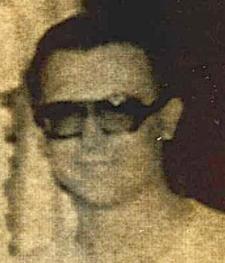
On the night of July 17, 1907, Deputy U.S. Marshal John W. Morrison was working in and around Sasakwa City, a small community in what would soon become Seminole County, Oklahoma, when routine law enforcement duty turned into a deadly encounter. At 37 years old, he was a white male lawman serving both as a deputy U.S. marshal and as the marshal of Sasakwa City, tasked with bringing order to a rough landscape of new towns, scattered farms, and thinly policed roads at the edge of statehood.
In the days leading up to his death, an armed gang had struck the Evans Store in Spaulding, a combination general store and post office about six miles north of Sasakwa. Contemporary accounts describe four men as responsible for that robbery: brothers John and Ned Cudjo, along with John Street and Joseph Harkins. Their crime sent a shock through the area, and Morrison joined the effort to track them down, heading a posse that rode out from Sasakwa into the countryside in search of the bandits who had already shown they were willing to use violence.
What happened when Morrison finally crossed paths with the fugitives is preserved only in brief memorial summaries rather than full newspaper-style narratives, but those summaries agree on the essentials. During the hunt for the Evans Store robbers, three of the suspects opened fire on him in or near Sasakwa City. Outnumbered and facing men already desperate to escape justice, Morrison was shot and killed in the exchange. Later records simply state that he died by gunfire at the hands of three robbery suspects, his “end of watch” recorded as Wednesday, July 17, 1907, in Sasakwa City, Oklahoma.
His death did not end the violence. The killing of a federal deputy and town marshal galvanized authorities across the region. On the morning of Friday, July 19, another deputy, John Cordell, mustered a posse in Wewoka—north of Sasakwa—to tighten the net around the four men now wanted both for armed robbery and for Morrison's murder. By this point, the suspects' names were widely known: the Cudjo brothers, Street, and Harkins. Lawmen spread out along the roads and trails they believed the fugitives might use, hoping to cut them off before they could disappear deeper into Indian Territory or beyond.
During that manhunt, Special Deputy Marshal L. P. Dixon was assigned to guard a road near Wewoka, a critical checkpoint in the dragnet. As he watched the route, two of the wanted men came into view. When they ignored his command to halt, Dixon fired, wounding one in the leg. The response was immediate and deadly: the suspects and at least one accomplice opened fire on him, and Dixon was fatally shot on July 19, 1907—two days after Morrison's killing. The same gang that had gunned down Morrison now claimed another lawman's life before attempting once more to flee into the countryside.
Their escape did not last. According to later memorial records, all three principal fugitives were eventually captured after Dixon's murder. The legal outcome, however, was strikingly lenient compared with the gravity of their crimes. Two of the men were formally charged with the murder of John Morrison, but only one was convicted, and then not of murder but of manslaughter; he received a sentence of five years in prison. The third man was prosecuted not for Morrison's killing but for the shooting of L. P. Dixon. He, too, was convicted of manslaughter rather than murder and was sentenced to just two years. These short terms, measured against the deaths of two federal officers, have been noted in modern discussion of the case as remarkably light, leaving a lingering sense that the punishment never fully matched the loss.
More than a century later, the record of John Morrison's life is thin, but the record of his death is stark. Memorials list his name among the fallen of the U.S. Marshals Service and of Oklahoma law enforcement, marking how he was killed in the line of duty while pursuing armed robbers on behalf of a small town that was still finding its place on the map. Sasakwa City today is a quiet community, but in July 1907 it was the scene of a brief, violent confrontation that cost a marshal his life, drew a posse into the field, spurred another deadly gunfight days later, and ended with the capture of the suspects whose sentences would echo through time as another, more subtle injustice layered atop the first.