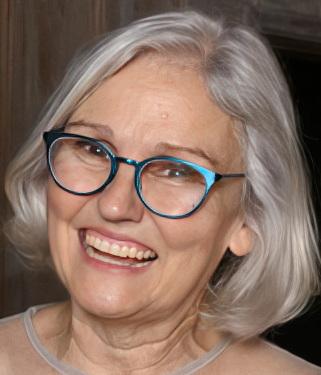
In the summer of 1961, in the small farming community of Unger in Choctaw County, Oklahoma, Dovie Marie Golden Freeman, a 28-year-old female from the area, lived close to her parents, John W. Golden and Fannie McCoy Golden, at their family farm outside the hamlet. Unger itself was little more than a crossroads surrounded by fields and back roads, a quiet place between towns like Soper and Boswell where families often stayed for generations and life revolved around the land and church and kin. Dovie had been born in 1933 and carried both her maiden name, Golden, and her married name, Freeman, in the records that now survive, tying her to the Golden family that worked the farm near Unger. Later genealogical and cemetery listings would place her with her parents again, this time in Johnson Cemetery near West Siloam Springs in Delaware County, where all three were eventually buried.
That quiet rural routine was violently broken on June 20, 1961. On that day, John Golden, age 61, Fannie Golden, age 57, and their daughter Dovie were found dead at the Golden farm home in the Unger community, their deaths attributed to gun violence rather than any natural cause. Modern summaries describe the case starkly as “death by force,” grouping the three together as victims of an apparent triple homicide in a single incident. Contemporary accounts referenced the scene as a farm home near Unger, suggesting an isolated family house rather than a town residence, underscoring how shocking such a crime would have been in so small and remote a place. Later compilations note only that the family was “found slain” on June 20, 1961, leaving the details of how they were discovered, what the house looked like inside, and how the last moments unfolded locked away in reports that have not made it into the digital historical record.
What the surviving sources do reveal is that investigators quickly treated the deaths as suspicious and opened a criminal inquiry. A regional newspaper piece from late July 1961 reported that a man named Freeman had “been sought” by authorities since the previous week, describing him as Dovie's former husband and linking that search directly to the shootings that claimed her life and the lives of her parents at their Unger farm home. The wording places him clearly in the role of a person of intense interest to law enforcement in the immediate aftermath of the killings, and it shows that investigators were not dealing with a mystery in which no potential suspect existed at all, but with a case in which attention focused on someone who had once been part of Dovie's household. However, the digitized article does not go on to describe an arrest, indictment, or trial, and there is no accessible follow-up piece online that explains whether the search for him led to formal charges or simply faded from public coverage as the years passed.
Later true-crime and gun-violence memorial projects, working backward from fragmentary archival material, underscore how little of the official record has surfaced. A national gun-violence memorial lists all three members of the Golden family as having been “lost to gun violence” on June 20, 1961 in Unger, linking their deaths to an incident recorded in the Gun Violence Archive but offering no narrative beyond their names, ages, and the bare fact of the shooting. Crime-case databases that profile Oklahoma homicides describe Dovie's death as a “death by force” and acknowledge that, despite searches across online newspaper archives, court references, and public records, they have found no publicly available documentation of how the investigation proceeded after those first urgent days. One such summary explicitly notes that there are no accessible records showing any arrests in connection with Dovie Freeman's killing, a caveat that leaves open what may be buried in non-digitized county files but confirms that nothing resembling a resolved prosecution appears in the sources that modern researchers can reach.
Across more than six decades, the story of what happened at the Golden farm has therefore become a patchwork of brief factual entries and the questions of people who stumble across the case while tracing family lines or studying unsolved crimes. Online forums attached to the modern case summaries are filled with short posts by researchers and descendants who remark on how strange it is that three members of one family could be killed by gunfire in a single event and yet leave so thin a public trail, and they ask whether locals remember an arrest, a trial, or even a whispered explanation. Others note the conflicting dates in the surviving records, with some sources giving the deaths as June 20, 1961 and others listing July 20, 1961, an inconsistency that only deepens the sense of distance and uncertainty around the case. What remains clear, despite those gaps, is that on a single day in 1961 the Golden family of Unger was destroyed by gunfire, and that for Dovie Marie Golden Freeman the surviving record now consists of a handful of lines in homicide indexes, cemetery rolls, and memorial sites—signs that something terrible happened on that farm, but not yet the full story of who was held to account, or whether anyone ever was.