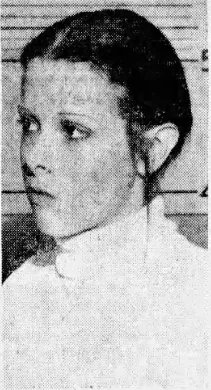
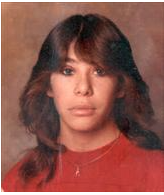
Shametra Jeanell Fields-Daniyan, a 25-year-old Black woman from Tulsa, Oklahoma, was known to those around her as warm, energetic, and full of life, a young mother of two whose presence lit up family gatherings and everyday routines alike. Friends and relatives later described how she carried a sense of optimism into even ordinary days, building a small but close circle of people who relied on her humor and kindness.
Her life was rooted in south Tulsa, in familiar streets and apartment complexes where neighbors knew one another by name and children played outside in the late summer heat.
In the early hours of Monday, September 10, 2012, that sense of normalcy was shattered. At an apartment complex near East 63rd Street and Peoria Avenue in south Tulsa, gunfire erupted, leaving three people gravely wounded: Everett Adkins Makala White, and Shametra. Police and medics responded to reports of shots fired and found the victims near an apartment later identified in charging documents as 1209 East 63rd Street, Apartment D. The scene bore all the signs of a chaotic, close-range attack, with investigators quickly determining that the shooting was tied to a confrontation inside the apartment, not a random act of violence.
All three victims were rushed to St. John Medical Center. Adkins and White survived their injuries, but Shametra’s condition was critical. Through Monday and into Tuesday, her family waited in the hospital, clinging to updates and hoping she would pull through. Their hopes were crushed when authorities confirmed that she died at the hospital on the night of September 11, 2012, turning a terrifying triple shooting into a homicide investigation. News reports noted that she had become the lone fatality of the South Tulsa attack that week, and her death deepened the sense of shock and grief in her community.
As detectives worked the case, a clearer picture emerged of what had happened inside and outside that apartment. Witnesses told police that two men—identified as 21-year-old Everett Monte Wilson and 22-year-old Ronnie Burnett Jones—had gone to the apartment with robbery in mind. According to arrest reports, one of the male victims had been seen earlier counting a large amount of cash, and there were also drugs present in the residence, making the apartment a target. Investigators later alleged that Wilson entered the apartment wearing a mask and moved toward the back rooms, while Jones confronted the people inside with a. 45-caliber handgun. In the chaos that followed, multiple shots were fired; at least one of the women, police said, had simply been walking near the apartment when she was struck.
Police moved quickly. On Tuesday, September 11, officers stopped a car on Tulsa’s Inner Dispersal Loop and arrested Wilson around late morning. Later that day, they tracked Jones to an apartment complex near 61st and Lewis and took him into custody as well. Both men were initially booked on complaints of shooting with intent to kill and first-degree robbery, and once Shametra died, prosecutors added a complaint of first-degree murder for each. Witness accounts in the arrest affidavits identified Jones as the gunman, while Wilson told detectives he had been forced at gunpoint by Jones to participate in the crime—a claim authorities recorded but did not accept at face value.
Formal charges followed in Tulsa County District Court under case number CF-2012-4245. Prosecutors accused Jones and Wilson of felony murder in the first degree, alleging that they caused Shametra’s death during the commission of a first-degree burglary and robbery with a firearm. They were also charged with first-degree burglary, robbery with a firearm, and two counts of shooting with intent to kill for the attacks on Adkins and White; Jones alone faced an additional count for possession of a firearm after a former felony conviction. The charging language laid out a stark narrative: the men were said to have forced their way into Adkins’s apartment, terrorized him with a handgun, and stolen money and drugs before gunfire left all three occupants—or those nearby—shot and bleeding.
As the case progressed, the paths of the two defendants began to diverge. Court records show that in March 2013, the felony murder count against Everett Monte Wilson was dismissed at the request of the state, even as other charges remained. Eventually, Wilson appeared in court in October 2014 and entered a guilty plea. In that proceeding, one of the burglary counts was dismissed, and a shooting-with-intent-to-kill charge was amended down to assault and battery with a dangerous weapon. The judge accepted his plea and sentenced Wilson to fifteen years in the Oklahoma Department of Corrections, with credit for time already served, to run concurrent with several other cases. The plea acknowledged his role in the violent robbery and shooting but left him convicted on a lesser set of offenses than the original homicide charge.
Ronnie Burnett Jones, by contrast, went to trial. In 2014, a Tulsa County jury heard testimony about the triple shooting and the events of that September morning. Jurors were told that Jones had gone on what prosecutors described as a shooting rampage at the south Tulsa complex, firing at close range inside and near the apartment. Evidence presented at trial indicated that Shametra was shot three times, including once in the back of the head, while Adkins and White were also struck at close range but survived. The jury found Jones guilty of first-degree murder in Shametra’s death, as well as multiple counts of shooting with intent to kill and other related charges, reflecting both the fatal and nonfatal injuries he inflicted.
The court sentenced Jones, who was in his mid-twenties at the time, to life in prison for the murder conviction, along with additional time for the associated counts. In 2016, the Oklahoma Court of Criminal Appeals reviewed his case and upheld both the conviction and the life sentence, rejecting his arguments on appeal and leaving the original judgment intact. Public records indicate that he remains incarcerated in the state prison system, serving out the life term imposed for taking Shametra’s life and nearly ending the lives of the two surviving victims.
In the years since the shooting, Shametra’s absence has been most deeply felt in the intimate spaces she once filled—among her children, family, and friends whose memories of her predate the headlines and court filings. Online memorials remember her not as a case number but as a daughter, a mother, and a friend whose life was cut short by sudden, senseless violence. Community-driven sites and tributes keep her story alive, pairing formal records of the crime and its resolution with personal recollections of her warmth and spirit. Together, they form a portrait of a young woman whose final moments unfolded amid fear and chaos, but whose legacy endures in the lives she touched and in the determination of her loved ones to make sure she is not forgotten.