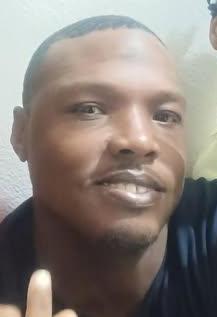
Karl Huffmaster, a 32-year-old white man from Lawton, Oklahoma, had built his adult life close to home, surrounded by the streets and people he knew best. Born in November 1982, he grew up in Lawton and stayed rooted there, moving from school activities into steady work and modest plans for the future. As a boy and young man he was active in the Boy Scouts, and in high school he finally got the chance he’d hoped for: playing football for Lawton High, something he was said to be ecstatic
about. After graduation he attended Great Plains Technology Center, earning a certificate in graphic design and printing. Those skills sat alongside more blue-collar experience—jobs in food management and landscaping—that kept him working while he talked about someday turning his design training into his own business.
On the afternoon of April 28, 2015, an ordinary weekday in southwest Lawton turned violent. Around 2:30 p.m., police were called to 614 Southwest Roosevelt Avenue for a double shooting. Neighbors later told reporters they had stepped outside to find a man lying on the ground with a gunshot wound to his side and a woman with a wound to her hand. Both victims were rushed to the hospital. The woman, identified that night as Kelley Huffmaster, was expected to survive her injuries. The man, identified as Karl, died shortly after arriving for treatment, becoming the city’s second homicide victim of the year. In the confusion that followed, police initially withheld the relationship between the two, but it would later be made clear that Kelley was his wife.
Even in those first days, the case carried a sense of unease that lingered beyond the yellow tape. Investigators described the scene only in broad strokes while they processed evidence and interviewed witnesses, and early news reports emphasized how little had been officially released. While detectives worked through leads, officers made a separate arrest connected not to the killing itself but to what they said they had found when they responded: Karl’s wife, Kelly, was taken into custody on a charge of possession of drug paraphernalia, even as detectives continued to investigate who had fired the shots that killed her husband and wounded her hand.
In the weeks that followed, attention shifted to a new name: Marquise Javon Rasco. Lawton police announced that Rasco had been arrested in connection with the shooting death of Karl, describing the development as a breakthrough in the city’s second homicide of 2015. Jail and booking records from Comanche County show Rasco being held on serious charges—murder in the first degree, robbery in the first degree, and assault with a deadly weapon—with bail set at $850,000, an amount he said he could not pay. According to his later federal court filings, he remained in custody from late May 2015 until the end of September 2016, awaiting his day in court on the allegations stemming from the attack that killed Karl.
When the case finally went to trial in 2016, jurors were asked to decide what had happened inside the Huffmasters’ home that April afternoon. Prosecutors portrayed the shooting as the violent climax of a home invasion, telling the jury that Rasco had entered the house and that Karl was shot and Kelley wounded during the intrusion. A single piece of clothing became the centerpiece of the state’s narrative: a hoodie found a few blocks from the crime scene. Forensic testing tied the garment to both men, with investigators reporting that Rasco’s skin cells and Karl’s blood were present on the fabric. In closing arguments, the prosecution held the hoodie up for the jury, insisting there was no innocent explanation for how both the defendant’s DNA and the victim’s blood could be on the same item unless Rasco had pulled the trigger.
The defense told a very different story. Rasco took the stand and described April 28, 2015, as an ordinary day spent visiting a friend, picking up his daughter from school, and returning home, insisting that he had not left again during the window when the shooting occurred. He acknowledged owning the hoodie but said he and his friends routinely traded clothes and that he had given it away before the crime. Defense attorneys leaned on this explanation and on perceived gaps in the state’s case, pointing the jury to what they framed as inconsistencies in eyewitness identification—particularly Kelley Huffmaster’s hesitance when asked to select Rasco from a lineup—as reasons to doubt the prosecution’s theory.
After a day and a half of testimony and seven hours of deliberation, the jury returned its verdict: not guilty on the murder charge. Rasco walked out of court acquitted of killing Karl and of the related violent charges, his family reportedly in tears as the decision was read. For Karl’s loved ones, however, the verdict did not bring the kind of resolution that comes with a conviction. Property and case summaries that continue to mention the crime describe an unsolved killing in a modest house on Southwest Roosevelt, noting that Rasco was initially arrested and tried but ultimately cleared, and that no one else has been arrested for the murder.
Years later, memorial pages and case profiles keep Karl’s name alive more than any court record does. Online tributes remember a hometown son who had once been thrilled just to make his high school football team, who worked hard in kitchens and on landscaping crews, who earned a graphic design certificate and dreamed of turning it into something more. They sketch the outline of a life cut short without a definitive public answer to the question of who, in the end, was responsible for taking it.