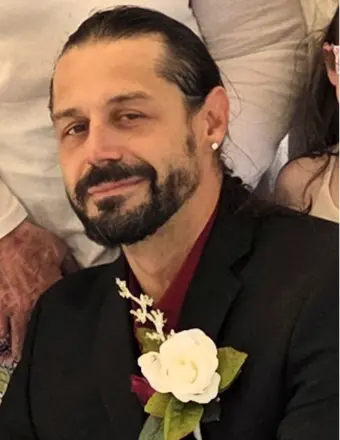
James Holley Cooper, a 62-year-old Black / African American man, was known across north Tulsa as “Coop,” a kind, community-minded businessman and avid tennis player whose days were carefully balanced between work, family and his love of the game. He had been born in 1953 in Clinton, Oklahoma, and over the years became a long-time resident of Tulsa, building a reputation as a prominent figure in the neighborhood and a mentor to younger generations.
Friends and relatives later described how he poured his energy into improving the well-being of his community, volunteering through local tennis organizations, including the Northside Tennis Association, and giving his time to teach children how to play.
On the evening of July 23, 2015, Cooper finished a late tennis match at Lacy Park in north Tulsa, a place he visited often and where he felt entirely at home. The summer light was fading when he and his friends wrapped up their game, and a little after 10 p.m. he walked back alone toward the parking lot, carrying the familiar weight of his racquet and tennis bag. As he stood at his vehicle and began loading his gear into the trunk, an unknown assailant approached. In a burst of sudden violence, multiple shots were fired; later accounts from his family and fundraising appeals described him being struck six times, the quiet of the park shattered by the sound of gunfire. Witnesses nearby heard four or five shots and someone shouting from a parked car before seeing Cooper lying on the ground. Emergency responders rushed him to the hospital, but the wounds were too severe, and he was pronounced dead a short time later that night.
The investigation that followed focused on the moments just after the shooting and on the mysterious figure who fled the scene. Witnesses reported seeing a man running away from the park, heading west in the direction of North Midland Avenue, and investigators collected a description of a medium-build male between roughly 5 feet 7 inches and 5 feet 9 inches tall, weighing about 160 to 170 pounds. Despite canvassing the area and appealing to the public, detectives were unable to identify this person or link him definitively to the killing. Crime-tracking summaries later noted that Cooper’s death marked the 37th homicide in Tulsa that year, yet unlike many of the others, no quick arrest or clear motive emerged. Years later, state investigators would still list the case among their cold files, emphasizing that the suspect remained unidentified and urging anyone with information to contact law enforcement.
For Cooper’s family, the loss was immediate and consuming. His daughter Laquita remembered sharing something as simple as fresh blackberries with him at his house the day before he died, not knowing it would be their last ordinary moment together. After the shooting, she arrived at the hospital with a blanket and a pillow, expecting to spend the night in the waiting room while he recovered, only to be told that his injuries were fatal. In interviews, she spoke of a pain that felt like a part of herself had been taken away and could never be filled, and she vowed to keep his name and his hopes for north Tulsa alive until there was justice. His brother Val described how grief pushed him toward depression and even thoughts of leaving the city altogether, bewildered that someone could be killed walking away from a tennis court.
As the months passed, the family and community rallied to honor Cooper while pressing for answers. Hundreds of mourners reportedly attended memorial services, and an online remembrance page and gun-violence memorial entry preserved his photograph and tributes from those who loved him. A fundraiser established in the days after his death tried to ease the financial burden of funeral costs while painting a picture of a phenomenal, generous figure whose absence left a void in Tulsa’s civic and sporting life. Local news outlets periodically returned to the story, especially around anniversaries of the shooting, highlighting the lack of new leads even as detectives insisted the case remained open and active.
By early 2017, Tulsa police homicide statistics showed that most killings in the city were being solved, but Cooper’s stood out as one of the few that had not yet yielded an arrest. A veteran homicide sergeant publicly described the attack at Lacy Park as one of the closest things to an execution he had seen in his career, underscoring how deliberate it appeared and how little sense it made given Cooper’s role in the community. State and local agencies continued to feature his case in lists of unsolved homicides, and appeals for tips still circulated a decade later. To date, no suspect has been arrested or charged in connection with the shooting, and the man who stepped out of the darkness that July night remains unnamed, leaving Cooper’s family to carry both the memory of his generosity and the unresolved weight of a crime that has yet to be answered. turn2search2