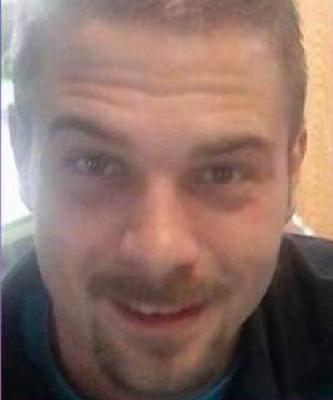
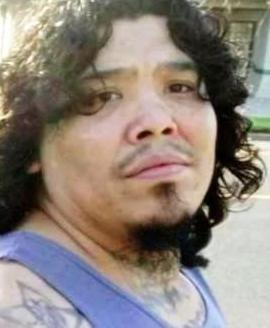
On the evening of September 19, 2015, 35-year-old Robert Dale “Robby” Almon, a White/Caucasian male from the Bethel Acres–Shawnee area of Pottawatomie County, Oklahoma, crossed paths with a man whose home sat on a quiet stretch of Angie Lane. He was a familiar figure in the local community, deeply tied to his family and his children. Online memorials describe him as a husband, father, son, brother and friend who loved his kids more than anything and struggled earnestly to make better
choices and build a more stable life for those around him.
That Saturday, an argument flared between Almon and 44-year-old John Joseph Quinter Jr. outside Quinter’s house in Bethel Acres. The dispute moved into the driveway, where tempers and fear rose together. According to case summaries and later reporting, Quinter armed himself with a 12-gauge shotgun during the confrontation. In the chaos that followed, he fired multiple times at Almon. The state medical examiner later concluded that Almon had been shot five times, including a devastating wound to the head, leaving no chance for survival there on the gravel drive in front of the home.
Evidence presented at trial later filled in the terrible details of those final moments. One of the first blasts shattered Almon’s arm, but the violence did not stop there. Quinter chased him down the driveway as he tried to get away, continuing to fire and striking him from behind. Appellate records describe how, after Almon fell forward onto his knees, Quinter closed the distance and fired one last shot into his head. That sequence—shots as Almon fled, and a final blast delivered while he was already down and defenseless—became central to how investigators, prosecutors, jurors and judges understood what had happened on Angie Lane that night.
In the immediate aftermath, patrol cars and emergency vehicles descended on the rural property, lights cutting across the darkness as deputies tried to make sense of the scene. Quinter was taken in for questioning but initially released while investigators worked to piece together witness accounts, physical evidence and the trajectory of the shots. As the sheriff’s office continued its work, Almon’s family moved swiftly through the grim practicalities of death: arrangements were made, and within days loved ones gathered to lay him to rest, mourning a man whose future with his children had been cut short in a single burst of gunfire.
Three days later, on September 22, the same property drew law enforcement back under very different but equally alarming circumstances. A 911 caller reported a woman outside Quinter’s home who appeared to be turning blue and unresponsive. When deputies and medics arrived, they helped revive her and saw signs that she had likely been assaulted. As officers secured the scene, they realized they were once again at the house linked to the weekend’s homicide. Quinter, moving around the property with firearms and refusing to surrender, turned the situation into a tense armed standoff. Investigators discovered about 150 pounds of Tannerite, a powerful exploding target compound, on the property, prompting a large-scale response that included armored vehicles, bomb technicians and robots as the confrontation stretched on for roughly eleven hours.
Tear gas eventually drifted through the air around the house, and Quinter was taken into custody without further bloodshed. He was booked into the Pottawatomie County Jail on a complaint of assault and battery by strangulation connected to the woman who had been found outside his home, and authorities formally pursued a first-degree murder charge for the shooting of Robert Almon outside the same residence days earlier. From that point on, Quinter was no longer a man merely questioned in a homicide; he was the accused killer at the center of a rapidly hardening case.
As the case moved through the courts, prosecutors argued that Quinter’s actions went far beyond any reasonable claim of self-defense. A jury agreed, finding him guilty of first-degree murder for gunning Almon down in the driveway of his Bethel Acres home, and the trial judge imposed a sentence of life in prison without the possibility of parole. Quinter appealed, insisting the jury should have been instructed on a lesser charge of first-degree manslaughter and alleging prosecutorial misconduct and ineffective assistance of counsel. In June 2019, the Oklahoma Court of Criminal Appeals rejected those arguments, emphasizing the evidence that Quinter had first shot and wounded Almon, then chased him, fired from behind as he tried to escape, and finally delivered a fatal head shot while Almon was on his knees. To the appellate judges, that pattern of pursuit and continued firing supported the jury’s decision to classify the killing as murder rather than a lesser offense.
Years later, Almon’s name lives on in memorial pages, court opinions and crime databases, each preserving a different fragment of who he was and how he died. Online tributes show a smiling face and rows of virtual candles, lit by strangers and loved ones alike in remembrance of a father lost to gunfire. For his family, the legal conclusion of Quinter’s case brought a measure of accountability, but it did not erase the image of that driveway on Angie Lane, or the knowledge that a quarrel on an ordinary September night escalated, step by step, into the kind of irreversible tragedy that leaves a permanent absence where a living, complicated, much-loved man once stood.