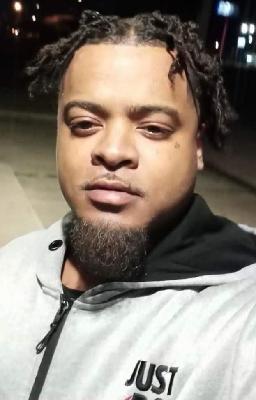
On a Sunday night in February 2019, Matt Bowens, a 39-year-old Black / African American male from Oklahoma City, was shot multiple times at an apartment complex in the northwest part of the city and rushed to St. Anthony Hospital, where he was pronounced dead shortly after arriving. Police and later case summaries place the shooting on February 10, 2019, near Northwest 19th Street in Oklahoma City, and record his death as one of that year’s early homicides in the city.
That night, officers were first called around 9:30 p.m. on a report of shots fired at an apartment complex, but when they arrived they could not locate a victim or clear crime scene. According to police, a report had come in that a black male had been shot in the back in the area of Northwest 19th, and that he had fled the immediate scene and gotten into a vehicle. A woman drove him away from the complex and took him to St. Anthony Hospital; authorities later said she cooperated with investigators as they tried to piece together what had happened. Despite emergency treatment, Bowens died at the hospital, with investigators later emphasizing that he had been shot multiple times.
In the days that followed, the shooting was officially logged as a homicide, noted in public summaries as the 13th killing investigated by Oklahoma City police that year. Investigators began to describe the encounter not as a random act, but as violence emerging from a situation they said involved illegal activity. Police reports and later case compilations state that Bowens and the woman who drove him to the hospital were believed to have been involved in criminal activity at the time the gunfire erupted, a detail that shaped how detectives and prosecutors approached the case.
Within a short time, attention turned first to the woman who had driven Bowens to the hospital. She was identified in local coverage and case summaries as Erika Schwengels, 29 years old, and she was arrested on a complaint of felony murder connected to Bowens’s death. Police publicly emphasized that she had been with him around the time of the shooting and reiterated their belief that both had been engaged in illegal activity. Not long afterward, investigators announced another arrest: Kristen Brenee Brooks, a 33-year-old resident of Moore, Oklahoma, was also taken into custody on a murder complaint in connection with the same killing. Reports note that both Schwengels and Brooks were held in the Oklahoma County jail without bail while the case moved forward.
As detectives continued to follow leads, they identified a third person as a key suspect in the killing: 44-year-old Cheo McCoy. Police obtained an arrest warrant for McCoy on a charge of first-degree murder, describing him publicly as the person they believed had shot Bowens on or near the 1900 block of Minnie Lane and warning the public that he was wanted in connection with the February 10 homicide. Local news outlets shared his name and image, and officers asked anyone who recognized him or knew his whereabouts to call 911. A few weeks later, authorities in El Dorado, Arkansas, stopped a vehicle for a fictitious license plate and encountered McCoy. According to Arkansas and Oklahoma reports, he initially gave officers false names, was arrested for obstructing government operations, and was found with drug paraphernalia and synthetic drugs during the stop. After he began experiencing medical issues that police believed were related to narcotics use, he was taken to the Medical Center of South Arkansas for treatment. While he was in custody there, Oklahoma City police confirmed that he was the same man wanted on the first-degree murder warrant in Bowens’s case and stated that he would be transported back to Oklahoma once medically cleared; at that time, they continued to refer to him as a suspect rather than announcing a conviction or final resolution.
Beyond the investigative files and arrest reports, traces of Bowens’s life remain scattered across online memorials. On one such page, relatives and friends describe a man remembered as a truck driver, a brother and partner whose personality was “bigger than life,” whose smile and laugh were missed every day, and whose absence left a lasting ache in his family. Candle counts, comments stretching on for years, and messages praying for justice all underline that, behind the legal terminology of “victim,” “suspect,” and “felony murder complaint,” Bowens’s killing was, for those who knew him, the sudden loss of someone they loved and expected to see again.