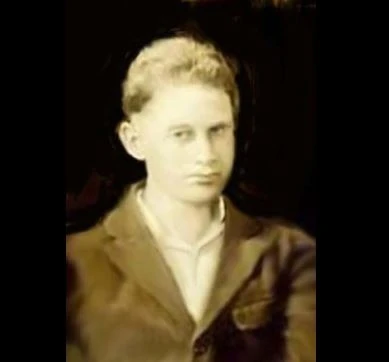
Bernice Conover Worden was a 58-year-old White/Caucasian woman who operated her family’s hardware store in Plainfield, Wisconsin. On Saturday, November 16, 1957, the opening day of Wisconsin’s deer-hunting season, Worden was working at the store while much of the surrounding community was focused on hunting. Her son, Frank Worden, was a Waushara County deputy sheriff and was away for part of the day.
Ed Gein, a local farmer and handyman who was familiar to the Worden family, had visited the store the previous evening and indicated that he intended to return to purchase antifreeze.
Gein returned to the hardware store that morning. The last sales slip written by Worden was for antifreeze purchased by Gein, creating a direct record placing him in the store shortly before she vanished. At approximately 9:30 that morning, witnesses reportedly saw the hardware store’s truck being driven away from the rear of the business. The store subsequently remained unattended. When Frank Worden returned later in the day, he discovered blood inside the store and realized his mother was missing. Contemporary reports also said the cash register had been taken. Remembering Gein’s visit and his stated intention to return for antifreeze, Frank immediately focused investigators’ attention on him.
Investigators determined that Worden had been shot with a. 22-caliber rifle. Evidence developed during the investigation and later court proceedings established that the shooting occurred inside the hardware store and that the extensive mutilation of her body occurred after her death. Gein transported Worden from the store to his isolated farm outside Plainfield, using the store’s vehicle. He also took the cash register from the business.
Later that evening, officers located Gein and took him into custody. Deputies then went to his farm while searching for Worden. In an outbuilding or woodshed, authorities discovered her decapitated body suspended upside down by the legs. The body had been processed in a manner investigators compared to the way a hunter would dress a deer. Worden’s remains provided unmistakable evidence that the investigation had shifted from a disappearance to a homicide.
The search of Gein’s property soon revealed that Worden’s murder was connected to a much larger and deeply disturbing pattern. Investigators found numerous human remains and objects fashioned from human bones and skin inside the farmhouse. Gein explained that many of the remains came from graves he had robbed in local cemeteries. Authorities were able to corroborate portions of his grave-robbing account by examining graves he identified. The investigation also linked Gein to the disappearance and killing of Mary Hogan, a tavern operator who had vanished in 1954. Gein admitted killing Hogan as well, although he would ultimately be prosecuted only for Worden’s murder.
Gein gave investigators varying accounts of Worden’s death. At times he claimed he could not remember the actual shooting and described being in a dazed state. During later proceedings, he maintained that the rifle discharged while he was examining it. Judge Robert H. Gollmar ultimately rejected the suggestion that the shooting was simply an accident, concluding from the physical evidence that Worden had been deliberately killed.
On November 21, 1957, Gein was arraigned on a charge of first-degree murder in Worden’s death. His mental condition quickly became a central issue in the case. After psychiatric evaluation, he was found mentally incompetent to stand trial and was committed to Central State Hospital in Waupun. Because he could not legally assist in his defense, the murder prosecution remained unresolved for approximately a decade.
By 1968, doctors determined that Gein had improved sufficiently to understand the proceedings and assist his attorneys. His trial for Worden’s killing began on November 7, 1968, before Judge Gollmar, with Gein waiving a jury. On November 14, the judge found that the evidence established first-degree murder. In the separate determination concerning Gein’s mental state at the time of the crime, however, Gollmar ruled that Gein had been suffering from a mental disease that left him unable to conform his conduct to the requirements of the law. Gein was therefore found not guilty by reason of insanity and returned to state psychiatric custody rather than sentenced to prison.
No second murder prosecution was pursued for Mary Hogan’s death, even though Gein had admitted killing her. Worden’s case became the only homicide for which the courts formally determined his responsibility. Gein remained confined in Wisconsin psychiatric institutions for the rest of his life, eventually residing at the Mendota Mental Health Institute in Madison. He died there on July 26, 1984. The discovery of Bernice Worden’s body on November 16, 1957, had exposed crimes that might otherwise have remained hidden and ended Gein’s years of grave robbing and killing around Plainfield.