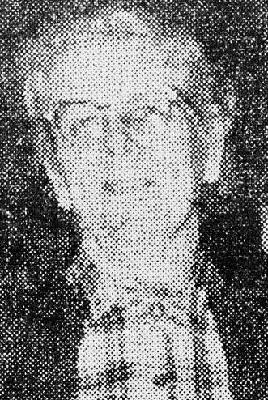
Henry Gein, a 43-year-old White/Caucasian man, died on May 16, 1944, near Plainfield, Wisconsin, while he and his younger brother, Edward “Ed” Gein, were dealing with a brush or marsh fire on the family property. The brothers had reportedly been burning vegetation when wind caused the fire to spread beyond their control. They attempted to fight the flames but became separated as smoke and fire moved through the area.
According to accounts of the incident, Ed later said that after the fire was brought under control he could not locate Henry. A search was organized, with Deputy Sheriff Frank Engle among those involved. Ed accompanied the searchers into the marshy area and reportedly led them to the place where Henry was found. Henry was lying face down on the ground and appeared to have been dead for some time. Contemporary and later accounts note that although he had been found in the area affected by the fire, his body was not significantly burned. Soot was reportedly present on his clothing.
There were also reports of unusual bruising or injuries around Henry's head. Those marks would become one of the principal reasons later writers questioned whether the fire fully explained his death. At the time, however, officials did not conclude that the injuries demonstrated an assault. The medical determination was that Henry had died from asphyxiation associated with the fire, commonly described as resulting from smoke or a lack of breathable air.
Waushara County authorities treated the death as accidental. District Attorney Earl Killeen, County Coroner George Blader and a physician who examined the circumstances reportedly concluded that foul play was not involved. No formal inquest was considered necessary, and no autopsy was performed. As a result, there was never a complete forensic examination capable of establishing whether the reported head injuries occurred from a fall, another accident during the fire, or some other cause.
Questions about Henry's death became much more prominent years later, particularly after Ed Gein was arrested in 1957 and authorities discovered evidence of his grave robbing and murders. In hindsight, writers and researchers began looking again at several unusual features of the 1944 incident: Henry reportedly had few or no burns despite being found near the fire, marks were observed on his head, and Ed was reportedly able to guide the search party to his brother's body after earlier saying he did not know where Henry was. These circumstances have led to longstanding speculation that Ed might have been responsible for Henry's death.
Some biographical accounts have also pointed to tension between the brothers before Henry died. Henry had reportedly begun questioning their mother Augusta's harsh religious beliefs and had expressed concern about Ed's unusually close attachment to her. Because Ed remained devoted to their mother, later authors have suggested that this disagreement could conceivably have provided a motive if Henry's death were not accidental. That theory, however, developed retrospectively and was never established by a criminal investigation or court proceeding.
Despite decades of suspicion surrounding the circumstances, Ed Gein was never arrested, charged, tried or convicted in connection with Henry Gein's death. He never confessed to killing his brother, and authorities never officially reclassified Henry's death as a homicide. The historical record therefore leaves Henry's death officially attributed to asphyxiation during the 1944 fire, while the unexplained head injuries and circumstances surrounding the discovery of his body have continued to generate questions about whether the death was truly accidental.