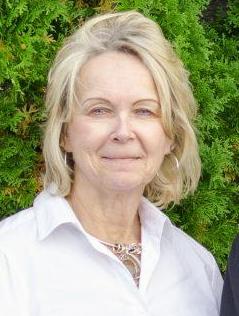
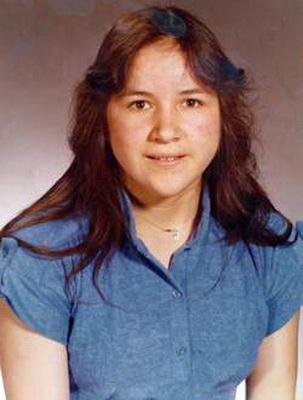
Judith Rudell, an 11-year-old White/Caucasian female, was killed on February 18, 1963, during the shooting deaths of five members of her family at their home on the southwest side of Green Bay, Wisconsin. Judith and her twin sister, Janice Rudell, lived there with their older brother John Rudell, their mother Joyce Hebard, and their stepfather Jack Hebard. Jack’s son from a previous marriage, Harry Hebard, also lived with the blended family.
By the end of that February evening, Judith, Janice, John, Joyce, and Jack had all been fatally shot.
The investigation later established that Harry Hebard had attended school on the morning of February 18 but did not attend that afternoon. Earlier that day he arranged for a friend to meet him about two blocks from the family home at approximately 5:30 p.m. Court records also documented events leading up to the killings. During the preceding month, Harry and friends had been involved in stealing cigarettes, his school performance had become a concern, he had experienced difficulty getting along with his stepbrother, and there were indications that he was considering running away. Jack and Joyce had taken him to psychologist Dr. Thomas Grib, who believed the teenager had a personality disturbance but was not psychotic. Just days before the killings, Harry attempted to buy a pistol but was refused because he was too young, and on February 17 he went hunting with one of his father’s automatic rifles.
The shootings occurred before the family was discovered the following morning. Joyce was seen arriving home at about 5:30 p.m. on February 18. Jack and the Rudell children were already at the house. At approximately 6 p.m., someone telephoned the residence, but no one answered. Contemporary reporting described the scene as appearing to have been interrupted around dinnertime, with food being prepared, the table set and the television still on. Judith and other members of the household suffered fatal gunshot wounds to the head. Investigators subsequently recovered both an automatic rifle and a. 22-caliber revolver that were linked to the killings.
Harry met the friend as previously arranged at approximately 5:45 p.m., carrying a bundle of clothing and saying he was leaving home. He later buried the bundle in the snow. The bundle would become important physical evidence because police recovered bloodstained clothing from it as well as a nine-shot. 22-caliber revolver. Expert testimony at the eventual trial identified that revolver as one of the weapons used in the family killings. Police also recovered an automatic rifle from the Hebard residence, and bullet evidence was collected from the scene.
The crime was discovered on February 19 after Jack failed to report for work. His coworker and neighbor, Darold Aebischer, became concerned and arranged for a telephone call to the Hebard home. Although lights were still burning and the family's dogs could be heard barking, no one answered. Police were contacted, and officers looking through a window could see what appeared to be bodies inside. Detective Dale Herfort entered the residence and found Jack Hebard, Joyce Hebard, John Rudell, Judith Rudell and Janice Rudell dead. Investigators determined that the victims had died at approximately the same time.
Attention quickly focused on Harry, who was absent from the house. Contemporary reports said police located him later that morning at a farm near Pulaski, roughly 20 miles from Green Bay. He was taken into custody and questioned by authorities. During questioning by the district attorney, Harry initially denied responsibility and then confessed to the killings. Contemporary reports attributed to him an explanation that he had felt excluded from the family circle. His confessions later became a major legal issue: before trial, two written confessions and an oral confession were ruled inadmissible after the court applied constitutional requirements concerning police interrogation. The physical evidence, however, remained available to prosecutors.
Harry was initially brought before the court on first-degree murder allegations shortly after the killings. Early newspaper reports stated that four counts were filed while another homicide charge was temporarily held in abeyance. His case did not proceed directly to trial. Court-appointed psychiatrists examined him, and in March 1963 a Brown County judge found him mentally incompetent to stand trial and committed him to Central State Hospital at Waupun. He remained institutionalized for several years. In 1967, authorities were informed that his condition had improved sufficiently for him to face criminal proceedings.
On December 28, 1967, Harry Hebard was formally charged with five counts of first-degree murder, covering the deaths of Jack Hebard, Joyce Hebard, John Rudell, Judith Rudell and Janice Rudell. He pleaded not guilty and not guilty by reason of insanity. His defense also sought a change of venue because of the extensive publicity surrounding the killings, but the request was denied. The case ultimately went before a jury in Brown County more than five years after Judith and the other members of her family were killed.
The trial was divided into separate guilt and insanity phases. During the guilt phase, the prosecution was able to present the firearms and other physical evidence despite the exclusion of Harry’s confessions. The automatic rifle had been recovered from the family home, while the revolver was recovered from the bundle Harry had buried after leaving the area. On September 20, 1968, the jury found Harry guilty of the five murders. A week later, on September 27, the jury considered conflicting psychiatric testimony and determined that he was not legally insane at the time of the crimes. He was sentenced to concurrent terms of life imprisonment for each killing.
Harry appealed his convictions to the Wisconsin Supreme Court, challenging several aspects of the proceedings, including the two-stage trial, the handling of psychiatric evidence, the insanity determination, the refusal to move the trial out of Brown County and the admission of physical evidence. In 1971, the Wisconsin Supreme Court rejected those arguments and affirmed the judgment, leaving intact the convictions and life sentences for the deaths of Judith Rudell and the four other members of her family.