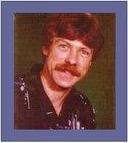
Peter Arthur Larsen was a 51-year-old White/Caucasian male and longtime Beloit Police Department patrol officer whose death was the result of wounds inflicted during a January 4, 1985 shooting in Beloit, Wisconsin. Although January 4, 1985 is the date of the attack, online records show that Larsen survived for nearly 14 years before dying on November 15, 1998, at his home in the Las Vegas, Nevada, area.
He had served with the Beloit Police Department for approximately 16 years and carried badge number 23.
The events that ultimately claimed Larsen's life began as a kidnapping investigation involving April Rankins and her estranged boyfriend, David Hatch. According to the Wisconsin Court of Appeals record, Hatch had become upset with Rankins because he believed she had been involved with another man. He went to the home where she was staying but was initially turned away because of the late hour. Hatch spent the remainder of the night with a friend, talking about Rankins, reading letters from her and speaking about suicide. The following morning, Hatch and his friend returned to the residence. Hatch was allowed to see Rankins briefly, but when someone attempted to force him from the home, he produced a gun. Rankins persuaded him to put it away, then dressed and left with him.
As they traveled, Hatch and Rankins continued arguing about their relationship. They eventually arrived at Hatch's residence, where Larsen approached the vehicle while responding to the situation. What followed happened quickly. Court testimony established that Larsen approached the car and that Hatch shot him twice in the head. Hatch then turned his attention to Rankins, shooting her twice, including once in the head, before shooting himself. All three survived the immediate shooting and were taken for emergency medical treatment. Contemporary reporting described Larsen as critically injured and Rankins as comatose while authorities moved forward with charges against Hatch.
The evidence later presented in court showed that Larsen never had an opportunity to fire his service weapon. A responding Beloit officer testified that Larsen's handgun remained secured in its holster with the retaining strap still fastened. Hatch himself made a series of statements after the shooting that became important evidence against him. A paramedic testified that Hatch said he had shot Larsen twice to make certain the officer could not come back after him and expressed the hope that both Larsen and Rankins would die. Another officer testified that Hatch acknowledged shooting Larsen twice and said he wanted to prevent Larsen from stopping him before he could shoot Rankins. During another interview, Hatch admitted that Larsen had not drawn his weapon.
Investigators also obtained Hatch's account of the confrontation. He told a Beloit detective that Larsen had slipped and fallen on the snowy driveway and that he then shot the officer twice in the head. Hatch said he subsequently went toward Larsen's squad car, where Rankins was crouched, and shot her before backing away and shooting himself. A defense witness later offered a somewhat different description, saying Larsen and Hatch had struggled after slipping on ice and that both appeared to reach toward their weapons. However, appellate judges found the evidence of Hatch's intent to kill Larsen overwhelming, pointing in particular to Hatch's repeated statements after the shooting and the close-range gunshots to Larsen's head.
Hatch was arrested and prosecuted in Rock County. He was ultimately convicted of kidnapping while armed, reckless use of a weapon, and two counts of attempted first-degree murder involving Larsen and Rankins. Records concerning the case state that he received a 77-year prison sentence. Hatch later challenged his convictions, arguing among other things that his trial attorney had been ineffective and that the jury should have been instructed on lesser offenses and imperfect self-defense. An appellate court initially ordered another hearing because Hatch had not been allowed to attend an earlier post-conviction evidentiary hearing. After that hearing was conducted with Hatch present, his request for a new trial was rejected, and the Wisconsin Court of Appeals affirmed the ruling in 1989.
For Larsen, the consequences of the shooting continued long after the criminal trial. The two head wounds left him quadriplegic and in a semi-comatose condition. His wife, Pamela, became his legal guardian and cared for him as he required continuing medical treatment. The enormous amount of care required also became the subject of legal proceedings after disputes developed over payment of medical and home-care expenses. A federal appellate decision later documented that the Beloit City Council adopted a resolution in November 1985 to advance funds for Larsen's home nursing and other medical expenses after thousands of Beloit residents signed a petition supporting assistance for him.
Larsen never recovered from the catastrophic injuries inflicted that January morning. After living for almost 14 years with the effects of the gunshot wounds, he died on November 15, 1998. His death was officially associated with the injuries he suffered while performing his duties as a Beloit police officer, and law-enforcement memorial records recognize the shooting as the cause of his line-of-duty death. He was later buried at Emerald Grove Cemetery in Wisconsin.
David Hatch remained incarcerated after his convictions and sentence. In April 2000, roughly a year and a half after Larsen's death, Hatch died by suicide while imprisoned in Wisconsin. The case therefore ended with a conviction and lengthy prison sentence for the gunman, while Larsen's death came many years after the shooting that permanently altered his life and ultimately proved fatal.