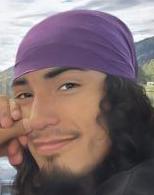
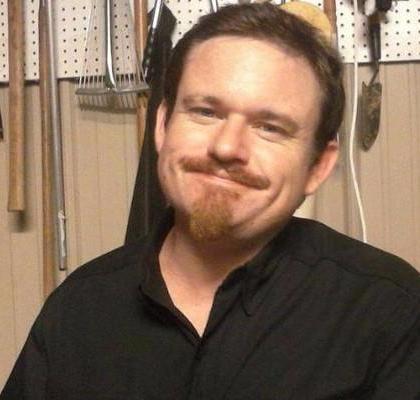
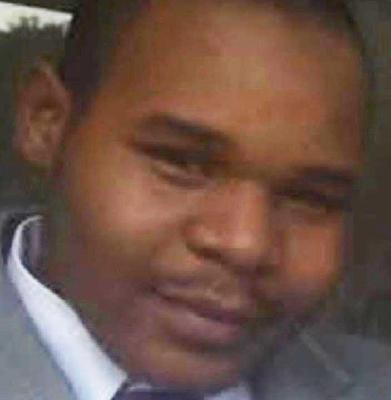
Kenneth L. Courtney, a 48-year-old Black man from Louisville, Kentucky, was known within his family as someone who brought energy and warmth to every gathering, a father with deep ties to his two adult sons and to the extended relatives who filled his life with everyday moments and celebrations. His obituary later noted the close-knit circle that surrounded him: his sons, Kenneth Jr.
and Sterling, his parents, Howard Courtney and Joyce Brown, and his sister, Shannon, along with a wide network of relatives and friends who would feel his absence in ways both large and small.
On Sunday, June 4, 2017, that circle was broken in a burst of sudden violence. Kenneth spent the day with his cousin, 31-year-old Ronald Campbell Jr., at an apartment in the Partridge Meadows complex in the Lyndon area of Louisville, a place neighbors described as quiet and untroubled. The two cousins had been with the couple who lived in the unit, family members who left late that morning, expecting to return to a normal evening. When they came back hours later to the 1600 block of Blue Jay Drive, they found the exterior of their apartment scarred by bullet holes and, inside, the bodies of their loved ones. Police were called around 5 p.m., and the Jefferson County Coroner’s Office later confirmed that both Kenneth and Ronald had died from multiple gunshot wounds.
In the days that followed, the scene lingered in the minds of neighbors: an otherwise ordinary apartment building turned into a crime scene, patrol cars and crime tape cutting across a courtyard where, until then, trouble had seemed distant. Partridge Meadows was described as the sort of complex where there were rarely loud parties or disturbances, and residents struggled to reconcile that reputation with the brutality of what had happened behind one unit’s door. The suddenness of the attack, the number of shots fired and the daylight timing all suggested that whoever came to that apartment had a clear and lethal purpose, but the reasons for the ambush were left unstated in the official accounts, a blank space where motive might have been.
For Kenneth’s family, the shock quickly turned into a quieter, enduring grief. His eldest son, speaking from New York, remembered a father who seemed to anchor every family event, someone who could be found at the center of the room, laughing, talking, and drawing people together, and who now was gone without warning. Relatives of both cousins described their bond as being like brothers, a relationship that made the fact they died side by side in the same room both cruel and strangely fitting, as if even in death they had refused to be separated. At the funeral days later, held at First Virginia Avenue Baptist Church, the rituals of music, prayer, and burial at Louisville Cemetery offered formality and structure, but could not quite answer the questions that hovered over the service: who had done this, and why?
From the outset, Louisville Metro Police treated the case as a double homicide, but early statements offered few specifics beyond confirming that both men had been shot multiple times and that investigators were still working to determine who, if anyone, had been the intended target. Officers appealed for information from the public, emphasizing how unusual such an eruption of gunfire was for that corner of Lyndon. As months and then years passed, however, no public announcements named a suspect or detailed a clear theory of the crime. The department’s own photo gallery of open homicide cases continues to highlight the June 4, 2017 killing at 1608 Blue Jay Drive as an unsolved investigation, underscoring that the double shooting which claimed Kenneth and his cousin remains without an arrest on record.
Today, Kenneth’s story exists in two overlapping forms. One is formal and factual: the obituary and police summaries that record his name, the date and manner of his death, the surviving family and the location of the crime. The other is the version held in the memories of those who knew him—a father whose presence defined family get-togethers, a cousin who shared a lifetime of experiences with Ronald, a son and brother whose life ended on an ordinary Sunday afternoon in a quiet Louisville apartment. Between those two versions lies the unresolved space of the investigation, a case still waiting for someone, somewhere, to provide the piece of information that could finally connect the violence on Blue Jay Drive to a face and a name, and turn a lingering absence into something closer to justice.