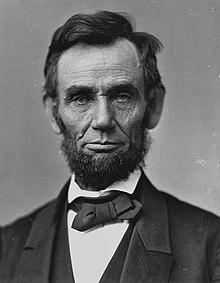
On the evening of April 14, 1865, Abraham Lincoln, a 56-year-old White male, attended a performance of the play 'Our American Cousin' at Ford's Theatre in Washington, D.C. Accompanying him in the presidential box were his wife, Mary Todd Lincoln, Major Henry Rathbone, and Rathbone's fiancée, Clara Harris. During the third act of the play, John Wilkes Booth, a well-known actor and a staunch Confederate sympathizer, slipped into the box unnoticed. Booth fired a single shot from a.
44-caliber derringer pistol into the back of the President's head. Rathbone attempted to apprehend Booth, but was slashed in the arm with a dagger before Booth leaped from the box onto the stage. Despite breaking his leg in the fall, Booth managed to escape out the back of the theater and flee from the city on horseback.
A young doctor in the audience, Charles Leale, rushed to the presidential box and found the President paralyzed and struggling to breathe. Lincoln was carried across the street to a boarding house and placed on a bed. Surgeons were summoned, but they concluded that the wound was mortal. After remaining in a coma for nine hours, Abraham Lincoln died at 7:22 a.m. on April 15, 1865.
The assassination was part of a larger conspiracy to destabilize the Union government in the final days of the Civil War. Booth had enlisted several co-conspirators with plans to simultaneously assassinate Vice President Andrew Johnson and Secretary of State William H. Seward. Lewis Powell was assigned to kill Seward, and he managed to break into the Secretary's home and severely wound him and others, but Seward survived. George Atzerodt, tasked with killing Johnson, lost his nerve and spent the evening drinking in a hotel bar.
In the wake of the assassination, Secretary of War Edwin Stanton directed a massive manhunt, one of the largest in U.S. history. Booth and his accomplice, David Herold, were on the run for 12 days, receiving aid from Confederate sympathizers as they made their way through Maryland and into Virginia. On April 26, 1865, Union troops surrounded them in a barn on a farm in Virginia. Herold surrendered, but Booth refused and was shot and killed after the barn was set on fire.
Numerous individuals suspected of involvement in the plot were arrested. Eight of Booth's co-conspirators were tried by a military commission in Washington. The trial lasted for seven weeks and included the testimony of 366 witnesses. On June 30, 1865, all eight were found guilty. Mary Surratt, Lewis Powell, David Herold, and George Atzerodt were sentenced to death and were hanged on July 7, 1865. Samuel Arnold, Michael O'Laughlen, and Dr. Samuel Mudd were sentenced to life in prison, while Edmund Spangler received a six-year sentence. John Surratt, another key conspirator and Mary's son, fled the country but was eventually captured in Egypt in 1866. He was tried in a civilian court in 1867, but a hung jury led to his release.