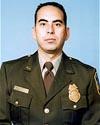
Christopher Sher Eney reported for a routine training assignment on August 24, 1984, with the United States Capitol Police’s Containment and Emergency Response Team, a specialized unit akin to a SWAT team. The drill unfolded inside a vacant Capitol Hill building at 128 C Street NE in Washington, DC. Near the conclusion of the exercise—after officers had trained with blanks—weapons were reloaded, and a colleague’s firearm discharged, striking Eney in the lower back. He succumbed to his injuries that day, a loss that marked the first line-of-duty death in the history of the Capitol Police and sent a quiet shock through the force charged with protecting Congress.
In the days and years that followed, his death was consistently described as a tragic training accident rather than the result of an intentional act. Contemporary reporting identified the accidental discharge by a fellow officer at the end of the exercise; official remembrances and congressional tributes memorialized Eney’s sacrifice in the line of duty without naming any suspect or suggesting criminal culpability. No arrests were reported in connection with the shooting.
Eney had served more than a dozen years with the Capitol Police and was remembered as a steady hand on a unit that practiced for the worst scenarios it hoped never to face. His death galvanized a community around his family—his wife, Vivian Eney Cross, and their two daughters—and inspired continuing efforts to honor fallen officers on the national memorial, where his name is etched among thousands of others. The tributes that accumulate with each anniversary remind colleagues and visitors alike that the hazards of public safety work can surface even in training, when vigilance softens and a single lapse can carry irrevocable consequences.