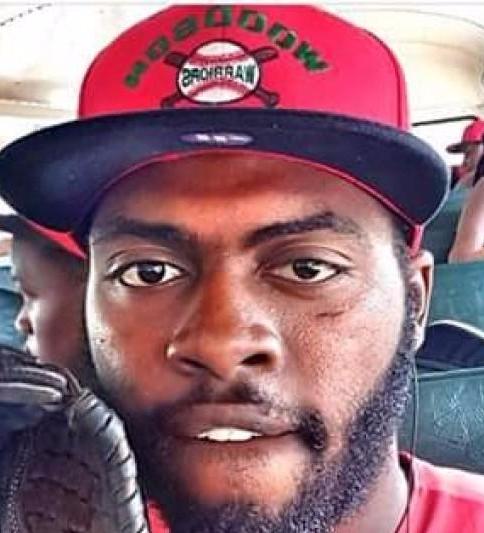
Tarriq Curtis Childs, a 28-year-old Black man who grew up in Northeast Washington, DC and was living in nearby Silver Spring, Maryland, spent his life moving back and forth between hardship and hope. As a baby, he and his teenage mother lived in a group home for young moms in the city, where a volunteer tutor named Joanne met them and became an informal mentor to him.
She would drive across town to pick him up from his housing project in Northeast and take him to parks, museums, swimming pools, ice skating rinks, and even Shakespeare festivals, trying to show him that a different world existed just a few miles from the streets where he was growing up. She later recalled his boundless energy, curiosity, and easy smile, qualities that drew people to him even when life around him was unstable.
As he got older, the pull of those same streets grew stronger. According to Joanne, he eventually “succumbed to the lure of the streets” and ended up in prison just months before he was supposed to graduate from high school. His time behind bars was grueling, including more than a year in solitary confinement, but it was also a period in which he tried to reshape himself. He developed a passion for physical fitness and dreamed of becoming a personal trainer, looking up to formerly incarcerated fitness entrepreneur Coss Marte as a model for the kind of future he wanted. Even while locked away, he and Joanne wrote letters, reminiscing about earlier outings and talking about what he hoped to do once he was free.
Freedom finally came on November 6, 2018, when he was released and placed in a halfway house in Washington, DC. The conditions there were harsh, with little meaningful support to help men re-enter society, but he focused on building a plan that would keep him away from the same corners that had gotten him into trouble before. He first picked up work on a construction site, saving whatever he could so that he would have money for an apartment when he left the halfway house. Afterward he secured a more stable position with a reputable plumbing company, working on commission but with full benefits, including health insurance and retirement savings. His supervisor described him as reliable and well liked. Other accounts later noted that he worked as a water restoration technician for Roto Rooter, reflecting how seriously he took the chance to build a legitimate career.
Outside of work, he tried to repair and deepen family ties that had been frayed by his years away. He spent time with his mother, helping prepare Thanksgiving dinner in the kitchen just a month before he was killed, joking and smiling in the way those closest to him remembered best. He visited his great-grandmother, who was living with dementia but still lit up when he came, patiently showing her photos and videos to jog her memory. He maintained a close relationship with his girlfriend, and when Joanne’s husband visited Washington on business in the fall of 2019, they met up with him after a long work shift; he seemed tired but proud, focused on his job and his future, and happy to enjoy an evening out while the Washington Nationals were on the brink of a historic World Series win. By then, he also had a young daughter and was trying to make up for lost time, splitting his days between work and family. He even returned to Beacon House, a community organization in his old Northeast neighborhood where he had spent many hours as a boy, to volunteer and encourage local children to choose positive activities instead of the streets that had once swallowed him.
In the early hours of December 28, 2019, that fragile new stability was shattered. Around 3:20 a.m., residents near the unit block of Riggs Road NE, in the Fort Totten area of Northeast Washington, heard gunfire. Officers from the Metropolitan Police Department’s Fourth District responded to reports of shots fired and found an adult man inside a vehicle, unconscious and unresponsive, suffering from at least one gunshot wound. DC Fire and Emergency Medical Services rushed him to an area hospital, where, after all life-saving efforts failed, he was pronounced dead. The victim was soon identified as 28-year-old Tarriq Childs of Silver Spring, Maryland.
For those who loved him, the news arrived in fragments and panic. His mother received a cryptic phone call saying he had been shot but offering no meaningful details. Joanne later wrote about the frantic hour of phone calls that followed as they struggled to learn what had happened. Eventually they were told that he had been shot in the leg and left in a car to die. When police and paramedics reached him, they transported him to the hospital, but he did not survive. Because he had no identification on him, it took time for officials to connect his body to the worried family members making calls across the city. What they finally heard was devastating: the police had ruled his death a homicide, and the investigation was just beginning.
His killing was one of the stark statistics that defined violence in Washington that year. Friends noted that his death marked the 165th homicide in the city in 2019, contributing to what was described as Washington’s deadliest year in more than a decade. Yet the statistics could not capture the particular loss felt by the people closest to him. Joanne described her heart as broken, struggling to reconcile the energetic little boy she had taken to ballgames and museums with the man who had worked so hard to piece together a good life after prison, only to be gunned down before those efforts had a chance to fully blossom. His memorial page, where candles and comments accumulated, painted a picture of a man remembered for “good vibes,” loyalty, and positivity. Entries there listed his personality as “Positive,” noted his work as a water restoration technician, and mentioned his daughter, underscoring that behind the case file there was a father, co-worker, and friend whose absence left a void.
In the months and years that followed, the official investigation remained active but frustratingly opaque. Detectives from the MPD Homicide Branch took the lead, and the department issued public appeals for information, including a printed reward flyer naming him as the victim and offering up to $25,000 for information leading to the arrest and conviction of whoever was responsible. The release urged anyone with information to call the police tip line or send anonymous text tips, a standard signal that investigators had not yet identified a suspect. The case also appeared in listings of major or unsolved homicides and in cold-case roundups, where it was repeatedly described as an open investigation with authorities still seeking leads.
Publicly available records up through 2025 contain no indication that anyone has been arrested or charged in connection with his killing, nor do they identify any suspect by name. News coverage, community posts, and official statements all echo the same unresolved story: a young man found shot in a car on Riggs Road NE; a family and network of friends pleading for answers; and detectives still waiting for the piece of information that might finally turn a late-December homicide into a case with justice attached to it. In that silence, what endures is the memory of who he was becoming in the final years of his life—someone trying, despite a difficult past, to carve out steady work, be present for his family, give back to his neighborhood, and live long enough to see the future he had only just begun to build.