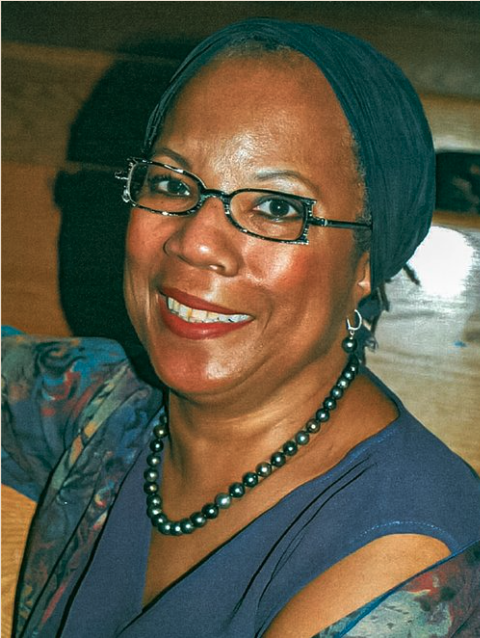
In the early morning hours of March 31, 1991, Mia Sanders, a woman attending an after-hours party in Boston’s Roxbury neighborhood, was caught in a burst of gunfire that investigators later determined grew out of a violent rivalry between two neighborhood gangs. The gathering was being held in the basement of a home on Fayston Street and drew approximately 80 people.
Sanders had gone to the party with her boyfriend and was not identified as a participant in the gang conflict that led to the shooting.
According to evidence later presented in court, Craig Holliday and Jeffrey Mooltrey were members of a gang known as the Big Head Boys, which was engaged in a rivalry with the Intervale Street Posse. Nathaniel Rivers, who was also at the party, was identified as a leader of the Intervale group. Eight days before the shooting, Holliday’s older brother, Todd Holliday, had been shot and killed. Mooltrey’s brother reported to Holliday and Mooltrey that members of the Intervale gang were responsible, and prosecutors later presented evidence that Holliday repeatedly spoke of seeking revenge. Shortly before going to the Fayston Street party, Holliday and Mooltrey met with other associates, discussed the presence of Intervale members at the gathering, and left armed with handguns.
Once inside the crowded basement, gunfire erupted. Witnesses later testified that they saw both Holliday and Mooltrey firing handguns, while others described seeing muzzle flashes or sparks coming from Mooltrey’s direction. Rivers was shot in the back as he attempted to reach the stairs and later died at a hospital. Sanders was struck in the crossfire and died at the scene. Investigators recovered shell casings and spent ammunition from the basement, and the physical evidence indicated that three different types of handguns had been fired. Another person, James Whiteside, was also found suffering from a gunshot wound outside the residence.
The investigation did not quickly result in prosecutions. Court records later described significant reluctance among witnesses to provide information against gang members, causing the case to stall. Six weeks after Sanders and Rivers were killed, Holliday and Mooltrey were connected to another shooting involving members of the rival gang. Police recovered firearms afterward, and one of those weapons was determined through ballistics evidence to have fired the bullet that killed Rivers. That evidence eventually became an important part of the case surrounding the March 31 killings.
Years later, Boston police cold-case investigators questioned Holliday while he was incarcerated on unrelated offenses. Holliday admitted being at the Fayston Street party and acknowledged firing a gun, but he maintained that he had fired because he feared Rivers was reaching for a weapon. Police, however, had found no weapon on Rivers. Holliday also claimed that Mooltrey had not fired during the incident. When investigators questioned Mooltrey, he acknowledged going to the party but claimed that unidentified friends, rather than himself, had carried out the shooting. He refused to identify those individuals. At trial, the defense positions largely followed those accounts, with Holliday asserting self-defense and Mooltrey maintaining that he had merely been present.
On October 3, 1996, more than five years after Sanders’s death, Holliday and Mooltrey were formally indicted. Their case went before a jury in 1998. Prosecutors relied on eyewitness testimony, the defendants’ statements, evidence of the gang rivalry and revenge motive, and firearms evidence connecting the men to the violence. On May 22, 1998, the jury convicted both Holliday and Mooltrey of two counts of first-degree murder, covering the deaths of Sanders and Rivers, under theories of deliberate premeditation and felony murder. Each was also convicted on armed-home-invasion charges and a firearm-possession charge.
Both men received consecutive life sentences for the two murder convictions, along with concurrent terms of four to five years for firearm possession. Their armed-home-invasion convictions were initially placed on file, with the Massachusetts Supreme Judicial Court later addressing the procedural status of those convictions. Holliday and Mooltrey subsequently sought new trials and challenged several aspects of the prosecution, including restrictions involving witness information, the effectiveness of their attorneys, the handling of alternative-suspect theories, and certain evidence introduced at trial.
In March 2008, the Massachusetts Supreme Judicial Court rejected their challenges and affirmed the murder convictions and the orders denying their motions for new trials. The court concluded that the protective measures surrounding witnesses had not deprived the defendants of a fair trial and found no basis to reduce the murder verdicts or grant new proceedings. The convictions therefore remained intact, bringing the long-delayed prosecution of Mia Sanders’s killing to a conclusion nearly seventeen years after she was fatally caught in the gunfire at the Roxbury party.