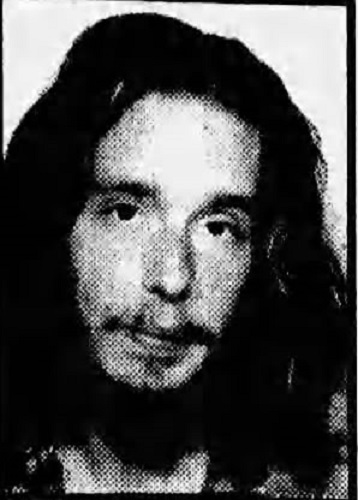
Anthony Arthur Barker, a 27-year-old homeless man, was one of the victims of a series of murders committed by Douglas Franklin Wright in October 1991. Wright, an American serial killer, lured Barker and several other homeless men to remote areas with the promise of work.
On October 1991, Wright advertised work opportunities to homeless men in Portland, Oregon, offering them $10 an hour to clear brush at a youth camp.
Barker, along with two other men, William Clement Marks and William Ray Davis, accepted this offer. Wright drove them to a remote area on the Warm Springs Indian Reservation, where he bought them food and offered them alcohol. Once the men were under the influence of alcohol, Wright fatally shot each of them in the head with a pistol. This method was consistent with how he murdered his other victims during this period.
The events leading to the discovery of Wright's crimes began when he attempted to kill another homeless man, Randy Scott Henry, and Anthony Shawn 'Tony' Nelson, on October 20, 1991. Wright drove Henry and Nelson to the same remote area, where he shot and killed Nelson. Henry managed to escape by jumping out of the car and running to the highway, where he alerted the police. Henry's testimony and another witness's information led the police directly to Wright, who was subsequently apprehended.
Wright was convicted of the aggravated murders of Barker, Marks, and Davis in June 1993. He was sentenced to death on October 11, 1993, for these crimes. During his trial, it was revealed that Wright had a history of violent behavior, including the murder of Margaret Rosenberry and her granddaughter, Gail Snelling, in 1969. Wright also confessed to the abduction, molestation, and murder of 10-year-old Luke Tredway in 1984, a crime that had remained unsolved until his confession.
Wright's execution was carried out on September 6, 1996, by lethal injection at the Oregon State Penitentiary. This marked the first execution in Oregon since 1962 and the first by lethal injection in the state. Wright had waived his appeals and requested to be executed, hastening the process of his capital punishment.
The investigation and trial of Douglas Franklin Wright were significant due to the brutal nature of his crimes and the efficient manner in which the police were able to apprehend him following Henry's escape and testimony. Wright's case highlighted the vulnerabilities of homeless individuals who were targeted by his false promises of employment and the tragic consequences that followed.