Paul J. Harmon was a 26-year-old White male and a police officer with the Huntington Police Department when he was killed during the early morning hours of December 14, 1981. Harmon had served with the department for approximately seven years and was also a United States Air Force veteran. What began as an attempted robbery across the Ohio River soon developed into a violent chain of events that brought two fleeing men into Huntington and ultimately placed Harmon directly in their path.
At approximately 1:15 a.m., two masked men armed with sawed-off shotguns entered a McDonald's restaurant in Chesapeake, Ohio. They demanded the combination to the restaurant's safe, but the employees told them they did not know it. The men instead took the keys to an employee's 1972 AMC Matador and fled in the stolen vehicle at about 1:20 a.m. The car was later abandoned in Huntington, and a tape deck and several eight-track tapes had been removed from it.
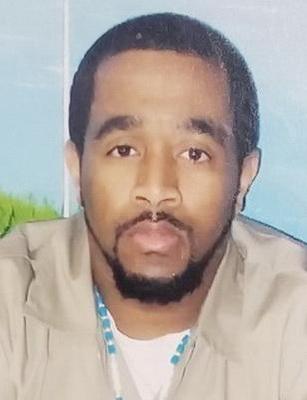
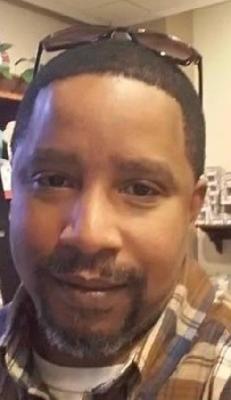
Prosecutors would later identify the men as Bobby Dean Stacy and Wilbert Mayle and argue that the crimes that followed were part of their continuing effort to escape after the attempted robbery.
Only about twenty minutes later, Huntington Police Officer Randy Byard noticed what appeared to be two men attempting a break-in at a gasoline station and radioed for assistance. Harmon responded to the call. According to the later court record, Harmon radioed that he had located the men near 19th Street and Jefferson Avenue. Within seconds, Byard heard a gunshot. As he moved toward Harmon, he heard four additional shots. When he reached the intersection, Harmon had been severely beaten about the head and shot five times. His service revolver and flashlight were missing. Byard also saw two men running from the area and then leaving in a green 1971 Buick Skylark.
The attack was witnessed from nearby homes. Ted Norman, who lived close to the intersection, testified that after hearing a shot he looked outside and saw Harmon on the ground with another man over him, apparently struggling to take something from him. Norman then saw the assailant rise and fire additional shots into Harmon. As the gunman ran toward Norman's house, Norman switched on his porch light and was able to see the man's face from only several feet away. He later identified Bobby Dean Stacy as the man who shot Harmon. Norman's young granddaughter also witnessed portions of the attack and later identified Stacy, although the procedures police used in showing witnesses photographs and television footage became a significant issue during Stacy's appeal years later.
The suspects' escape left investigators with a substantial trail of evidence. Kenova Police Officer Leroy Campbell encountered a vehicle traveling west on U.S. Route 60 shortly after the shooting and later identified Wilbert Mayle as its driver. After learning of Harmon's shooting and receiving a description of the fleeing vehicle, Campbell attempted to block the route toward Kentucky. The car turned away from the roadblock and was later discovered abandoned on Sycamore Street in Kenova. The vehicle was registered to Bobby Dean Stacy. Inside, police found Harmon's service revolver on the front passenger seat, along with a loaded. 357 Magnum, ski masks, and property connected with the earlier crime in Ohio. Mayle's fingerprints were found on the steering wheel and other evidence linked both men to the vehicle and stolen property.
Prosecutors argued that Stacy and Mayle had never reached a place of safety after the attempted McDonald's robbery and that Harmon's killing occurred while they were still escaping from that felony. The evidence presented against Stacy included the eyewitness identification, his ownership of the Buick containing Harmon's murder weapon, fingerprints on items inside the car, and property taken from the stolen Ohio vehicle. Evidence against Mayle included his fingerprints on Stacy's steering wheel, hair evidence associated with the ski masks, Officer Campbell's identification of him as the driver, and evidence contradicting testimony intended to establish an alibi. The prosecution maintained that Stacy was the man who actually fired Harmon's revolver while Mayle participated in the underlying crimes and escape.
On July 27, 1982, a jury found Bobby Dean Stacy guilty of first-degree felony murder. Because the jury made no recommendation of mercy, Stacy was sentenced to life imprisonment without the possibility of parole. Wilbert Mayle was tried separately and was also convicted of first-degree murder under the felony-murder rule, although his jury recommended mercy. Mayle appealed his conviction, arguing among other things that the earlier robbery had already ended by the time Harmon was killed. In 1987, the Supreme Court of Appeals of West Virginia rejected that argument, ruling that the robbery, flight, and killing could be treated as one continuous transaction, and Mayle's conviction was affirmed.
Stacy's imprisonment produced another dramatic chapter in April 1988 when he and two other convicted murderers escaped from the maximum-security West Virginia Penitentiary at Moundsville. Stacy was still serving his life-without-mercy sentence for Harmon's murder at the time. The escape prompted a large manhunt, and Stacy was captured on April 14 at a friend's residence in Columbus, Ohio. Authorities reported that he and the other escapees faced additional charges stemming from the prison break.
The legal history of Stacy's murder conviction later became more complicated. On July 21, 1989, the Supreme Court of Appeals of West Virginia reversed his 1982 conviction and ordered a new trial. The court did not rule that the evidence was insufficient or that Stacy had been wrongly identified. Instead, it concluded that the trial judge had failed to adequately instruct the jury on the essential elements of the robbery underlying the felony-murder charge. The case was therefore returned to Cabell County for another trial. The court specifically noted that the reversal was not based on the eyewitness identification by Ted Norman.
Huntington Police Department records continue to identify Bobby Dean Stacy and Wilbert Mayle as the two men responsible for Harmon's killing and summarize the case by stating that both suspects were convicted of first-degree murder and sentenced to life imprisonment. The department's memorial account also states that one of the offenders died in prison in 2000. Published burial information identifies a Bobby Dean Stacy of Columbus, born in 1951, as having died in 2000, which is consistent with the department's account, although readily available online court records do not clearly document the final disposition of Stacy's case following the 1989 reversal and remand. Mayle's conviction, in contrast, is clearly documented as having survived his appeal, and later federal court records show him continuing to challenge parole decisions many years afterward.
Harmon's death was ultimately the result of a brief police encounter with men prosecutors said were still fleeing a violent crime committed minutes earlier across the river in Ohio. He arrived to assist another officer investigating suspicious activity and was overtaken, beaten, disarmed, and killed with his own service weapon. The investigation quickly connected the fleeing men to the earlier robbery through eyewitness accounts, vehicles, fingerprints, stolen property, ski masks, and Harmon's recovered gun. Harmon left behind his wife and two daughters, and his death remains commemorated by the Huntington Police Department as the killing of an officer who encountered two offenders while carrying out an ordinary late-night call for assistance.