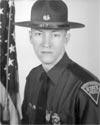
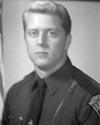
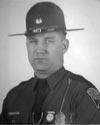
James Thomas Brammer was a 42-year-old White/Caucasian male who was born in South Charleston, West Virginia, and spent 16 years serving with the West Virginia State Police. By April 1989, he held the rank of Trooper First Class. On Saturday, April 15, 1989, Brammer and fellow Trooper Ronald J. Hicks were sent to a residence near Terra Alta in Preston County to serve an arrest warrant on Ercil Layton. The warrant stemmed from a traffic matter; contemporary reporting said Layton had failed to appear in traffic court three times in connection with an unpaid traffic ticket.
When Brammer and Hicks arrived at Layton's home, Layton's wife answered the door and allowed the troopers inside. Accounts preserved in law-enforcement memorial records indicate that she told the officers her husband was not home. In reality, Layton was inside the residence and had armed himself with a rifle.
The troopers proceeded into the house, unaware that what had begun as the service of a relatively routine traffic-related warrant was about to turn into a deadly confrontation.
Layton opened fire on the officers from inside the home. Brammer was struck in the head and killed. A later resolution adopted by the West Virginia Legislature described his death as instantaneous. Hicks was also hit, suffering a gunshot wound to his upper arm. Contemporary reports indicated that Brammer was found dead in a bedroom located off a hallway from the front entrance, while Hicks survived and was transported to Ruby Memorial Hospital in Morgantown, where he was initially reported in serious condition.
The confrontation did not end with the shooting of the two troopers. Layton was also shot during the incident. Contemporary Associated Press reporting immediately after the shooting said investigators had not yet determined whether the officers had returned fire or whether Layton's fatal injury had been self-inflicted. He was reportedly found alive on the floor of a utility room at the end of the hallway and died while being taken to a hospital. Investigators recovered a. 30-06 high-powered rifle from the residence along with a handgun.
Later law-enforcement memorial accounts provide a more complete reconstruction of Layton's death. Those records state that after being wounded, Hicks managed to return fire and wounded Layton. Layton subsequently took his own life. The Officer Down Memorial Page consequently lists the weapon involved in Brammer's killing as a rifle and records the offender's ultimate disposition as suicide. Because Ercil Layton died during the incident, there was no arrest, criminal prosecution, trial, or conviction arising from Brammer's killing. Layton nevertheless was identified by authorities as the gunman responsible for the fatal shooting.
Brammer's death was particularly striking because the confrontation had begun with an attempt to enforce a traffic-related warrant rather than an investigation of a violent crime. He had joined the West Virginia State Police in February 1973 and remained with the agency until his death. Official state records describe him as an expert sharpshooter and note that he had also served in the United States Army. His surviving family included his wife, Bonnie Holliday Brammer, whom he had married in 1971, their son Michael and daughter Mary Beth, as well as his brother Robert, who was also associated with the state police.
In the years following the shooting, Brammer was honored for his service and sacrifice. He received recognition including the American Police Hall of Fame Medal of Honor, the West Virginia State Police Medal of Valor and the West Virginia Chiefs of Police Association Police Cross. His name was also placed on the National Law Enforcement Officers Memorial. West Virginia lawmakers later sought to permanently memorialize him by naming a bridge crossing Interstate 68 at the Bruceton Mills exit in Preston County the Trooper First Class James Thomas Brammer Memorial Bridge. The legislative resolution described his career as one of service to his community, state and country and remembered April 15, 1989, as the day he gave his life while carrying out his duties as a state trooper.