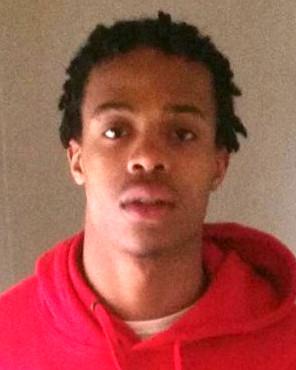
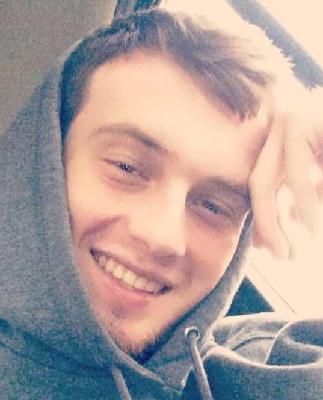
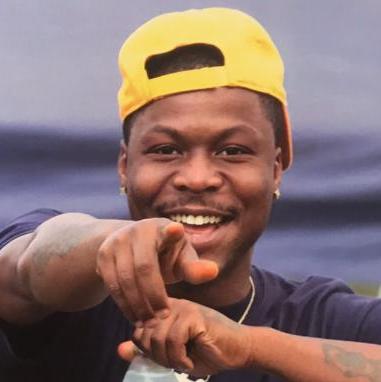
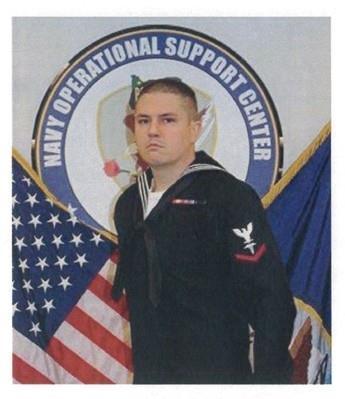
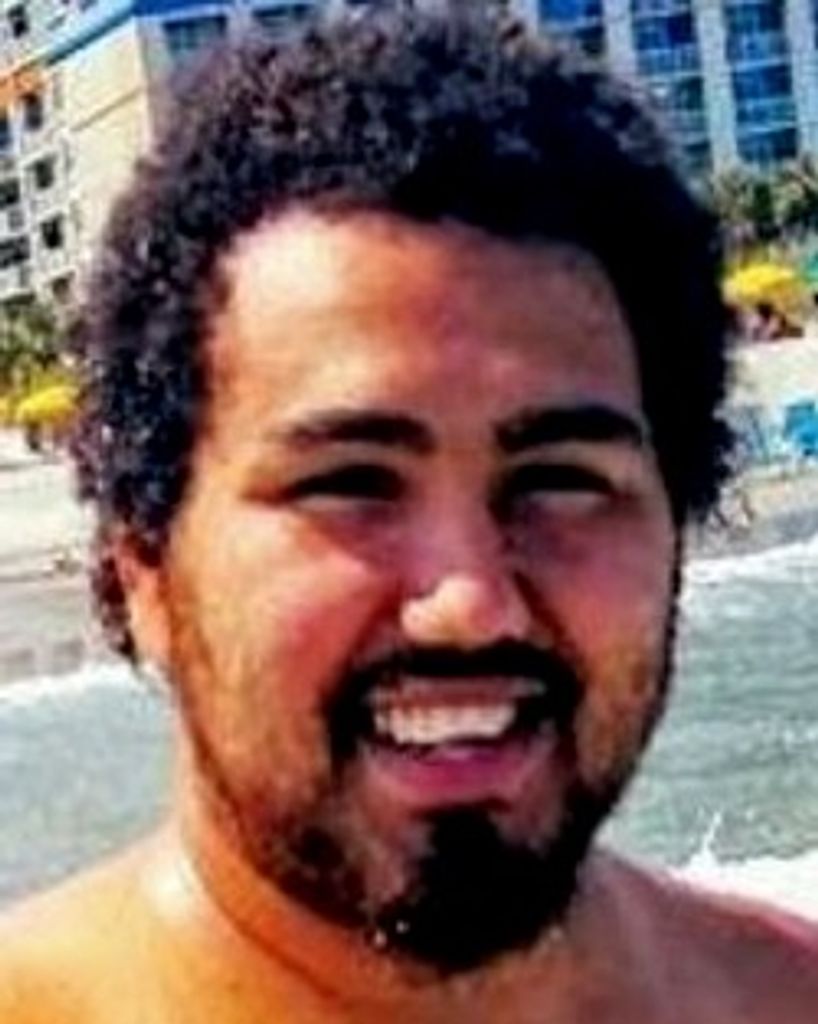
Michael Christopher Dillon was a 17-year-old White/Caucasian male from Huntington, West Virginia, and a junior at Huntington High School when his life was taken in the early morning hours of May 22, 2005. The night had begun as one normally associated with celebration. Dillon and Megan Brooke Poston, a student at Cabell Midland High School, were dates for Huntington High School's prom.
By approximately 4:30 a.m., however, Dillon, Poston, Donté Ward and Eddrick Clark were together outside Ward's residence at 1410 Charleston Avenue in Huntington. All four were shot and killed.
The circumstances surrounding why all four teenagers ended up at Ward's residence after the prom have never been completely explained publicly. Contemporary reporting said Dillon and Poston were supposed to attend a post-prom lock-in at the school, although their names did not appear on its registration sheet. Dillon's father, Garry Dillon, told reporters that he did not know why his son and Poston had gone to Ward's home. What happened once they arrived became one of Huntington's most notorious unsolved crimes. A nearby resident reported being awakened by a burst of gunfire, followed by a pause during which he heard a girl pleading for her life, and then additional shots.
Police initially cast a wide net. Within a day of the killings, nine people had been brought in for questioning, while investigators conducted searches and followed leads involving people with connections to Huntington and Detroit. None of those early investigative actions resulted in an arrest for the quadruple homicide. As detectives continued working the case, their attention increasingly turned toward the drug trade between Detroit and Huntington and toward the possibility that Ward, rather than Dillon, Poston or Clark, had been the intended target.
The most significant details about that theory later emerged publicly through federal court records involving Jamal LaRonne Ray, also identified as Jamal Douglas. According to a Huntington police search-warrant affidavit reproduced in Ray's federal appeal, investigators developed information suggesting Ward had been killed in retaliation after marijuana belonging to Cherylethia "Bunny" Holmes was taken from her. Holmes acknowledged to investigators that marijuana had been taken from her residence. Police records described the theory that Ward's death was retaliation connected to that loss, while later Huntington reporting said investigators believed Holmes ordered the shootings and that Ward was their intended target. Holmes has denied responsibility and was never charged with Dillon's murder or any of the other three Charleston Avenue killings.
The federal court record also revealed that investigators received information implicating Ray. On July 14, 2005, a cooperating witness reportedly told police that a man known as "T" or "Trouble," later identified as Ray, had claimed responsibility for killing the four victims over a drug debt involving Ward. On July 25, Shannon Dennis gave investigators a statement saying he had witnessed Ray commit the murders. Dennis also admitted, according to the court record, that he had assisted in the escape and had thrown what he described as the murder weapon into the Ohio River. Dennis told detectives that they left the area in a white 1987 Chevrolet Monte Carlo with a gray interior.
Investigators were able to connect Ray to a vehicle matching that description. Police had encountered him driving the Monte Carlo in July, and by the time officers sought a search warrant, the car had reportedly been repainted blue and was parked outside Ray's Huntington residence. A Cabell County circuit judge authorized a search of the home on July 26, 2005. Officers recovered a. 40-caliber semiautomatic handgun and a 7.62-millimeter rifle, but the federal court record does not establish either firearm as the weapon used to kill Dillon and the other victims. Because Ray was already a convicted felon, the firearms resulted instead in a federal felon-in-possession prosecution.
Ray ultimately entered a conditional guilty plea to possession of a firearm by a convicted felon and received 34 months in prison followed by three years of supervised release. His appeal challenged the legality of the search rather than any murder conviction. In 2007, the Fourth Circuit Court of Appeals upheld the search, concluding that investigators had sufficient probable cause at the time to believe Ray was involved in the four homicides. The court specifically cited Dennis's statement, the statement of another cooperating witness, the suspected getaway vehicle and its presence outside Ray's residence. That probable-cause finding was not a finding of guilt, however, and Ray was never tried or convicted for the Charleston Avenue murders. The court also acknowledged that investigators had received inconsistent and contradictory information during the investigation, including questions about Dennis's credibility.
Holmes likewise became a major figure surrounding the case without ever being prosecuted for the four killings. She was eventually tried and convicted in an entirely separate homicide: the 2004 murder of Wendy Morgan in Huntington. Prosecutors alleged in that case that Holmes ordered Morgan killed after Morgan stole drugs and money. Holmes was convicted of first-degree murder as an accessory before the fact and received a life sentence with the possibility of parole. Huntington police have continued to say they believe Holmes was also behind the 2005 prom-night killings, but no charge has ever been filed against her in connection with Dillon, Poston, Ward or Clark. Her conviction and sentence therefore concern Morgan's death and should not be confused with a conviction in the quadruple homicide.
More than two decades after Michael Dillon and the three other teenagers were killed, the distinction between investigative suspicion and a proven criminal case remains crucial. Investigators developed named persons of interest, a suspected motive, witness statements and a possible getaway vehicle, yet prosecutors never brought anyone to trial for the four murders. WSAZ reported in 2025 that no arrests had been made in the killings, and coverage marking the 21st anniversary in May 2026 continued to describe families and investigators as hoping justice might still be achieved. Michael Dillon's death therefore remains part of an unresolved quadruple homicide in which substantial suspicions have surfaced publicly, but no person has been convicted of taking his life.