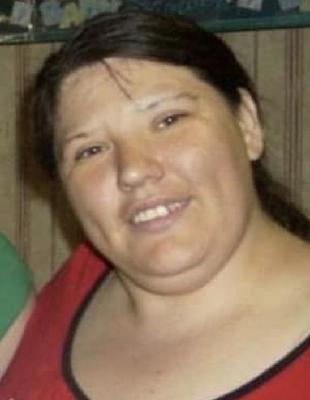
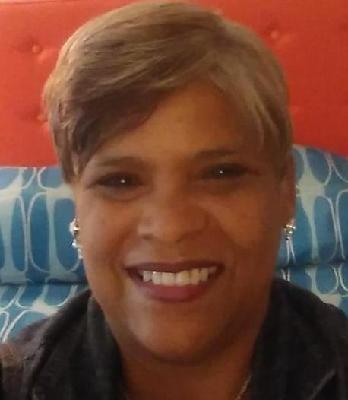
Megan Brooke Poston was a 16-year-old White/Caucasian female from the Huntington area of West Virginia. Contemporary reporting described her as a Barboursville resident, while her obituary listed Huntington. She was a junior at Cabell Midland High School, where she was doing well in a child-development class and had already begun thinking seriously about her future. Her mother later recalled that Megan hoped to become a labor-and-delivery nurse. Earlier in 2005, when Megan’s baby brother Casey was born and the doctor was temporarily unavailable, Megan helped a nurse with his delivery—an experience that gave her an unexpected glimpse of the career she hoped one day to pursue.
On Saturday, May 21, 2005, Megan dressed for Huntington High School’s prom in an orange-and-yellow dress. She attended the dance with Huntington High junior Michael Christopher Dillon.
What happened during all of the hours that followed has never been completely explained publicly, but sometime after the prom Megan and Michael ended up with Eddrick Jamon Clark and Donté Ward at Ward’s residence at 1410 Charleston Avenue in Huntington. Police and the victims’ families were left with unanswered questions about why all four were together there in the predawn hours.
At approximately 4:30 a.m. on Sunday, May 22, gunfire shattered the quiet outside the Charleston Avenue residence. Neighbors reported being awakened by a burst of shots. One neighbor recalled hearing a frightened girl pleading with the gunman not to kill her during a pause in the shooting, followed by additional gunfire. Authorities identified the four people shot as Megan, Michael Dillon, Eddrick Clark and Donté Ward. Three victims were already dead when officers arrived, while another died after being taken to Cabell Huntington Hospital. Megan’s mother has said that her daughter’s body was found near a tree in the yard, a spot she continued to visit each year on the anniversary of the killings.
The killings immediately became one of Huntington’s most disturbing homicide investigations. Detectives initially had no publicly established motive, but their attention quickly turned toward the possibility that Ward had been the primary target. Police Capt. Steve Hall said investigators believed the other three teenagers may have been killed because they happened to be present and could identify whoever attacked Ward. Nine people were brought in for questioning in the days following the murders, five of them reportedly connected to Detroit. Some people were arrested on unrelated charges, but nobody was arrested for murdering Megan or the other three victims. Investigators examined the connection between Huntington’s drug trade and individuals coming into the city from Detroit as they tried to determine whether the quadruple homicide was a targeted retaliation rather than a random attack.
What investigators learned during the following months became much clearer years later through federal court records involving Jamal LaRonne Ray, who was also known as Jamal Douglas. According to a Huntington police search-warrant affidavit reproduced in a federal appellate decision, investigators developed information indicating that Ward may have been killed in retaliation after marijuana was taken from Cherylethia “Bunny” Holmes. Holmes acknowledged to investigators that marijuana had been taken from her Charleston Avenue residence. Police also received information from a cooperating witness in July 2005 that a man known as “T” or “Trouble,” later identified as Jamal Douglas, had claimed responsibility for killing the four victims over a drug debt involving Ward.
A second major development came from Shannon Dennis. On July 25, 2005, Dennis gave investigators a voluntary statement in which, according to the federal court record, he claimed that he had witnessed Jamal Douglas commit the four murders. Dennis also acknowledged helping Douglas leave the area and said he threw the murder weapon into the Ohio River. He described the vehicle used to leave the scene as a white 1987 Chevrolet Monte Carlo with a gray interior. Police subsequently determined that Douglas had been driving a vehicle matching that description, although it had been painted blue after the killings. These allegations were serious enough that investigators sought a warrant to search Douglas’s residence.
On July 26, 2005, police executed that search warrant. Investigators recovered a. 40-caliber semiautomatic pistol and a 7.62mm rifle from the residence. Because Ray/Douglas was already a convicted felon, possession of the firearms resulted in a federal criminal case. He ultimately entered a conditional guilty plea to being a felon in possession of a firearm and was sentenced to 34 months in prison followed by three years of supervised release. The Fourth Circuit Court of Appeals later upheld the denial of his attempt to suppress the firearms seized during the search. Importantly, however, that prosecution was a federal firearms case—not a prosecution for the deaths of Megan, Michael, Eddrick or Donté. Ray/Douglas was never convicted, or even publicly charged, with the quadruple homicide. The federal litigation also revealed that investigators had received contradictory information during the murder investigation and that questions had been raised about Dennis’s credibility, although the courts concluded that those issues did not invalidate the probable cause supporting the search warrant.
Cherylethia “Bunny” Holmes also remained a central figure in investigators’ theory of the crime. Law enforcement has publicly stated for years that investigators believe Holmes ordered the attack that resulted in the four deaths, although she has denied involvement and has never been charged in the prom-night murders. Holmes was separately prosecuted for an entirely different killing: the July 2004 murder of Wendy Morgan in Huntington. Prosecutors accused Holmes of arranging Morgan’s killing over drugs, and she was convicted in 2008 of being an accessory before the fact to first-degree murder and sentenced to life with the possibility of parole. That conviction did not legally resolve the deaths of Megan and the other teenagers, and authorities have never obtained a murder conviction against Holmes in connection with the May 2005 shootings.
For Megan’s family, the years that followed brought memorials and anniversaries but no courtroom resolution. Her mother, Subrina Poston Gebhardt, has continued returning to the former crime scene, where the house itself is gone but the tree near the place Megan was found still stands. On anniversaries she has placed a candle, rose and photograph there in remembrance of her daughter. Twenty years after the killings, she said she still wanted to know who killed the four teenagers but feared the answers might never lead to justice.
Despite the suspects and investigative information revealed through the federal court proceedings, no one has been charged with Megan’s murder or with the other three killings. WSAZ reported during the 20th anniversary in May 2025 that no arrests had been made, and coverage marking the 21st anniversary on May 22, 2026 continued to describe the case as unresolved and the families as still hoping justice might eventually be served. The evidence publicly known therefore leaves an unusually stark divide: investigators developed a theory involving a retaliatory drug-related hit, identified Holmes as the person they believe was behind it, received statements accusing Ray/Douglas of being the shooter and Dennis of helping afterward, and even searched Ray’s home on the strength of those allegations—yet none of those developments produced homicide charges, a murder trial or a conviction for the deaths of Megan Brooke Poston, Michael Dillon, Eddrick Clark and Donté Ward.