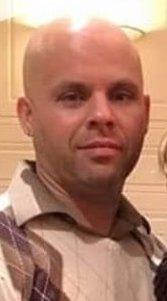
Eugene Crum, a 59-year-old White male, was serving as sheriff of Mingo County when he was shot and killed in downtown Williamson, West Virginia, on April 3, 2013. Crum had taken office only a few months earlier, in January, after years in local law enforcement and the court system. As sheriff, he had become closely associated with an aggressive campaign against illegal drugs known as Operation Zero Tolerance, an effort that had already resulted in numerous arrests and indictments.
Around noon that Wednesday, Crum was sitting in his official vehicle near the Mingo County Courthouse, at a location where he was known to spend his lunch break. Reports said the location was also near a former pharmacy that had been associated with illegal prescription-drug activity.
According to investigators and witnesses, a man approached Crum's vehicle and opened fire at close range. Crum suffered fatal gunshot wounds, including shots to the head, and died at the scene. Some accounts reported that the gunman fired multiple times before calmly leaving the area and driving away. The sudden daylight killing triggered a major law-enforcement response around the courthouse. Streets were blocked, the courthouse was evacuated or locked down, and officers converged on the area as authorities began searching for the fleeing gunman.
Police quickly identified Tennis Melvin Maynard of the Delbarton area as the suspect. Maynard fled Williamson in a vehicle, and a Mingo County sheriff's deputy pursued him. The chase continued toward Delbarton, where Maynard crashed his vehicle into a bridge. Authorities said that after the crash, Maynard got out and pointed a handgun at the pursuing deputy. The deputy opened fire, striking Maynard several times. Maynard survived his wounds and was taken first for emergency medical treatment and later treated at Cabell Huntington Hospital. A handgun recovered during the investigation was described as a. 40-caliber Glock.
The day after Crum's killing, West Virginia State Police announced that Maynard had been charged with attempted murder for allegedly pointing the weapon at the deputy during the pursuit. The homicide charge was handled separately. Later that month, a Mingo County grand jury indicted Maynard on first-degree murder for Crum's death, attempted first-degree murder in connection with the confrontation with the deputy, and a felony fleeing-related charge. Investigators did not announce a clear motive for the killing. Although Crum's highly visible drug crackdown initially prompted speculation that his death might be connected to his law-enforcement activities, authorities said they had not established such a connection.
Information concerning Maynard's mental-health history soon became an important part of the case. His father told reporters that Maynard had serious mental-health problems and had previously been institutionalized. Prosecutors subsequently disclosed that Maynard had been legally prohibited from possessing firearms because of a prior commitment to a mental institution. Nevertheless, investigators determined that he had been able to purchase firearms. Officials said a failure to properly transmit information into the background-check system apparently allowed at least one prohibited purchase to proceed even though the firearms dealer had conducted the required check.
Federal authorities also brought a separate case against Maynard. In June 2013, a federal grand jury returned a 10-count indictment accusing him of possessing firearms after having been committed to a mental institution and of making false statements while acquiring firearms. The indictment alleged that on five occasions Maynard falsely completed federal firearms-purchase paperwork and that he unlawfully possessed firearms on five occasions. Those federal allegations were separate from the state murder prosecution arising from Crum's death.
Maynard's state murder case initially appeared headed toward trial. A judge ordered a mental-health evaluation in November 2013, and preparations were made for a trial that was expected to begin in 2014. Those plans changed as questions about Maynard's competency became central to the proceedings. The murder trial was postponed indefinitely while his ability to understand the proceedings and assist his attorneys was evaluated.
In January 2015, Cabell County Circuit Judge Paul Farrell ruled that Maynard was mentally incompetent to stand trial. The court determined that he lacked sufficient ability to consult rationally with his lawyers and did not adequately understand the proceedings against him. The judge further concluded there was not a substantial likelihood that Maynard would regain competency. He was therefore committed to the William R. Sharpe Jr. Hospital, a state psychiatric facility in Weston, rather than being tried and convicted in criminal court. The ruling provided that if Maynard ever regained competency, the criminal charges could again proceed.
Years later, the legal situation remained essentially unchanged. In June 2021, another court hearing resulted in a finding that Maynard was still incompetent to stand trial. He was ordered returned to a mental-health facility, with prosecutors indicating that he would likely remain institutionalized for the rest of his life. The murder, attempted-murder and fleeing-related charges remained associated with the case, but there was no criminal trial and therefore no murder conviction. Crum's killing consequently ended not with a conventional verdict and prison sentence, but with the accused gunman confined indefinitely in a psychiatric institution because the courts determined he was not competent to face trial.