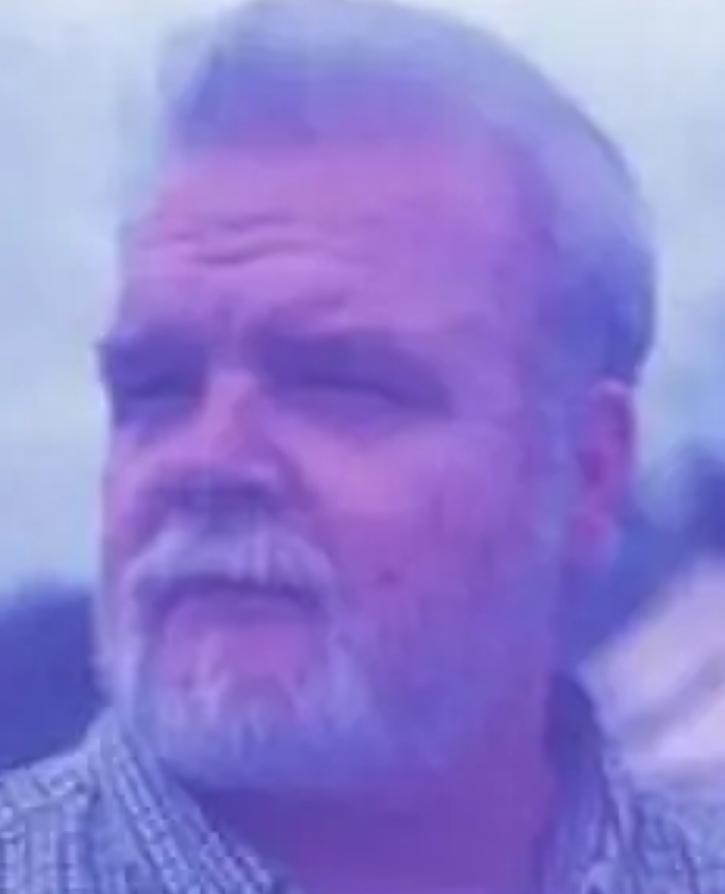
Michael Garcia was a 33-year-old Hispanic/Latino man whose life ended violently on September 14, 2014, in Berkeley County, West Virginia, south of Martinsburg. The events leading to his death began that afternoon when LaQuadia Grant contacted Garcia on behalf of Tulsa Johnson to arrange a heroin purchase. Johnson was traveling with Grant and later picked up Vincent Scott Smith Jr. and Jucobe Johnson.
Garcia initially directed them to meet at a ROCS gas station, but the meeting was moved to the home of Davon Adams in the Inwood area.
According to testimony later presented in court, everyone except Jucobe Johnson went inside Adams's residence. Tulsa Johnson spoke privately with Adams and told him that the group intended to forcibly take Garcia's drugs rather than simply complete the purchase. Alarmed by what he had been told, Adams ordered everyone out of his home. He later testified that he hoped his actions would alert Garcia that something was wrong. After leaving the residence, Grant returned to the vehicle where Jucobe Johnson was waiting, while Tulsa Johnson and Vincent Smith got into Garcia's work vehicle with him and traveled in the direction of a nearby cornfield. Adams attempted to telephone and text Garcia to warn him that he was about to be robbed, but he was unable to reach him.
What happened next became central to the prosecution's case. Grant testified that Johnson and Smith returned from the direction of the cornfield without Garcia. According to Grant, Johnson made a statement indicating that she had killed Garcia, while Smith was wiping a firearm with a red bandana. Grant also testified that the pair discussed having cleaned up evidence and needing to dispose of the weapon. Roughly half an hour after Garcia had driven away from Adams's residence, emergency vehicles began arriving in the area.
Garcia's twin brother, Justin Garcia, was among the first people to discover what had happened. He was driving along Technology Road when he noticed Garcia's work vehicle sitting in the roadway. When he stopped, he found his brother badly injured behind the vehicle. His pockets had been turned inside out, and Justin could not locate his cell phone when he tried to find a way to call for help. He went to the nearby home of Anthony Branson, with whom Garcia had been staying, and brought Branson back to the scene. Justin left before law enforcement arrived because he had outstanding warrants. When police reached the area, Garcia was dead from multiple gunshot wounds. The medical examiner determined that he had been shot six times, with the fatal bullet penetrating his heart. Investigators also documented abrasions and dirt on his body and disturbances in the gravel consistent with a struggle. His cell phone, wallet, drugs, and other expected personal items were not found on him, and his phone was never recovered.
Grant went to authorities a couple of days after the killing and gave investigators an account that was later substantially repeated during her testimony. Forensic testing also became part of the case against Vincent Smith. DNA recovered from the rear area of Garcia's vehicle did not permit an absolute individual identification under the laboratory's standards, but the forensic expert testified that Smith could not be excluded as the contributor. The statistical random-match probability for the usable portions of the DNA profile was reported as approximately one in 12.3 billion. Prosecutors also introduced cell-phone records intended to place people connected with the case in the vicinity of the crime scene during the relevant period.
On February 19, 2015, a Berkeley County grand jury indicted Tulsa Johnson and Vincent Smith on charges that included first-degree murder, felony murder, first-degree robbery, and conspiracy to commit robbery. Jucobe Johnson was indicted separately as an accessory after the fact to murder. The defendants went to a consolidated trial in September 2015. Prosecutors presented fifteen witnesses, including Grant and Adams, building the case around the alleged plan to rob Garcia, the movements of Johnson and Smith immediately before the shooting, their return without Garcia, Grant's account of the firearm and Johnson's statement, the physical condition of the crime scene, and the forensic evidence. Neither Johnson nor Smith testified.
After the four-day trial, the jury convicted Tulsa Johnson and Vincent Smith of first-degree felony murder and conspiracy to commit robbery. The jury made no recommendation of mercy on the murder convictions, an important finding under West Virginia law because it meant the defendants would not be eligible for parole on their life sentences. Jucobe Johnson was acquitted of the accessory-after-the-fact charge and was ordered released from custody. Although some contemporary reporting described a first-degree robbery verdict as well, the later West Virginia Supreme Court records identify the sustained convictions against Johnson and Smith as felony murder and conspiracy to commit robbery.
In January 2016, Johnson and Smith were sentenced in Berkeley County Circuit Court. Both received life imprisonment without the possibility of parole for the killing. Johnson also received a one-to-five-year prison sentence for conspiracy to commit robbery, ordered to run consecutively to the life term. Members of Garcia's family addressed the court during sentencing and described the lasting impact his murder had caused, asking the judge not to extend mercy to those convicted.
Both convictions subsequently reached the Supreme Court of Appeals of West Virginia. Smith challenged the sufficiency of the evidence and raised issues concerning the DNA evidence and the prosecution's arguments, but the court affirmed his convictions in March 2017, finding that the evidence was sufficient for a jury to conclude that he participated in the robbery conspiracy that resulted in Garcia's death. Tulsa Johnson separately challenged, among other things, testimony interpreting historical cell-site records. The state Supreme Court agreed that the officer who interpreted the specialized cell-site information should have been qualified as an expert rather than testifying on that subject as a lay witness. Nevertheless, the court concluded that the error was harmless because eyewitness testimony from Grant and Adams independently placed Johnson with Garcia and Smith immediately before the killing and described her return from the area where Garcia was found. Johnson's convictions and sentence were therefore affirmed as well.