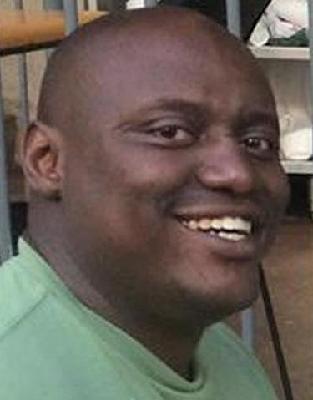
Franklin Dewayne Borders Jr., a 41-year-old Black/African American man whose homicide was connected to Oak Hill, West Virginia, died in early November 2014. His published obituary records his date of death as November 3, 2014. Although readily available contemporary reporting about the immediate crime scene is limited, later West Virginia court records repeatedly describe Borders’s death as a murder, making clear that investigators were dealing with an intentional killing rather than an
accidental or natural death.
The most significant publicly documented suspect connection emerged through Robert I. Brown Jr., an Oak Hill-area man who began looking into Borders’s killing on his own. According to the West Virginia Supreme Court of Appeals, Brown said he conducted what he called a “layman’s investigation” into Borders’s death. Brown came to believe that Jamaal Calhoun was involved in the murder. The court record is careful on this point: Calhoun’s alleged involvement was Brown’s conclusion, not a judicial finding that Calhoun had killed Borders.
That suspicion became intertwined with another homicide only days later. On November 13, 2014, Brown shot and killed Calhoun at Brown’s home. Brown later maintained that he acted in self-defense and claimed Calhoun had threatened his family. Prosecutors disputed important parts of Brown’s account, including his assertion that Calhoun appeared to have a gun; authorities determined Calhoun was unarmed. Brown was ultimately prosecuted for Calhoun’s killing, pleaded guilty to second-degree murder under an Alford/Kennedy-type plea, and received a 40-year prison sentence. That conviction was for Calhoun’s death and was not a conviction in Borders’s murder.
Years later, additional allegations concerning Calhoun and the Borders homicide surfaced during Brown’s efforts to challenge his own conviction. A private investigator working for Brown interviewed Mustafa Smith and Michael Wallace. Wallace reportedly said that while he was in a vehicle with Calhoun, he overheard an unidentified man tell Calhoun that Brown was asking too many questions about the death of a man identified as “Frankie Borders.” According to Wallace’s account, Calhoun responded that he would “take care” of Brown. Wallace also claimed to have seen Calhoun obtain a black pistol on another occasion. Smith separately characterized Calhoun as violent and alleged that he had been involved in other killings. These statements were submitted in Brown’s post-conviction litigation years after the events and were not findings that Calhoun murdered Borders.
The West Virginia Supreme Court later noted that the basic allegation connecting Calhoun to Borders was not actually new information. At the time Brown entered his plea in Calhoun’s killing, prosecutors had already been prepared to present evidence that Brown believed Calhoun had murdered Borders and that Calhoun had made veiled threats toward Brown or Brown’s family. The courts ultimately regarded the later witness information as cumulative evidence relevant to Brown’s claimed fear of Calhoun rather than proof resolving the Borders homicide. Brown’s attempt to undo his guilty plea was unsuccessful.
The appellate records therefore leave an important distinction in the history of Borders’s case. Calhoun became a specifically named person whom Brown believed was responsible or involved, and later witness accounts added circumstances that Brown argued supported that belief. But the available court decisions do not establish that Calhoun was convicted, tried, or judicially determined to have participated in Borders’s murder. Calhoun himself was killed shortly after Borders’s death, eliminating any possibility that the allegations against him could later be tested in a criminal trial. The publicly verifiable court record consequently preserves a substantial suspect theory surrounding Borders’s killing, but it does not provide a conviction that conclusively identifies his killer.