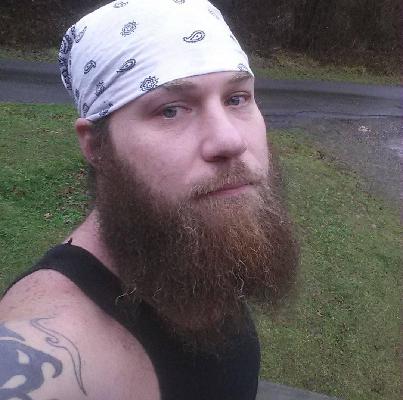
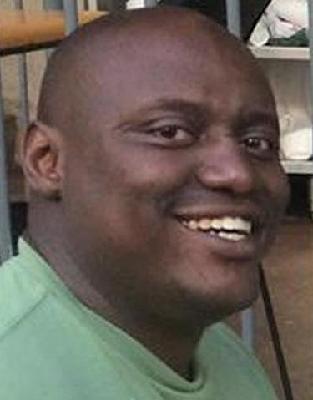
Jamaal Calhoun, a 31-year-old White/Caucasian man, was killed on November 13, 2014, inside the Oak Hill, West Virginia, home of Robert I. Brown Jr. Brown and Calhoun were described as friends, but investigators said the shooting appeared to have grown out of an earlier dispute. According to the Fayette County prosecutor’s account, Brown said Calhoun had verbally threatened him the day before the killing and again on the morning it occurred. Brown later maintained that the threats involved Brown’s questions about an earlier incident and that he feared for himself and his family.
The confrontation ended with extraordinary violence. Court records show that Brown used two. 357-caliber pistols, firing eleven rounds at Calhoun. Brown later told investigators that after those shots had been fired, he saw that Calhoun was still moving. He then went to his bedroom, retrieved a 12-gauge shotgun, loaded it with a slug, returned, and fired into the back of Calhoun’s head.
Brown admitted during questioning that he had shot Calhoun. Although he claimed self-defense and said Calhoun had displayed what Brown believed was a handgun, the court record states that Calhoun was unarmed and that no weapon was found on him. Later court proceedings further described the prosecution’s evidence as showing Calhoun was seated on a couch when the handgun shots were fired.
Brown’s explanation for the confrontation was connected in part to the death of another man, Franklin Borders. Brown said he had conducted his own informal investigation into Borders’ death and had come to believe Calhoun was involved. Prosecutors said the apparent motive for Calhoun’s killing was revenge stemming from a previous incident between the men, while Brown continued to characterize what happened as self-defense arising from threats. Those competing explanations became significant in the criminal proceedings, but the physical evidence and Brown’s own confession ultimately resulted in him being indicted on one count of second-degree murder.
As the case approached trial in 2017, Brown was initially offered a binding Alford/Kennedy plea to second-degree murder that contemplated a ten-year sentence. At a February 13 pretrial hearing, the judge indicated the agreement could be accepted, but Brown rejected that offer. His defense also attempted to have a law-enforcement lieutenant qualified as an expert in firearms and strategic training, but the court ruled that the proposed expert disclosure had been made too late. When Brown’s trial was scheduled to begin on February 27, 2017, another agreement was reached. This time Brown entered an Alford/Kennedy guilty plea to second-degree murder, a type of plea permitting a defendant to accept a conviction without necessarily admitting the prosecution’s version of guilt, while leaving sentencing to the judge’s discretion.
On March 31, 2017, Brown received the maximum statutory punishment for second-degree murder in West Virginia: forty years in prison. The prosecution had asked for the forty-year term, and the court considered the violent circumstances of Calhoun’s killing, testimony presented at sentencing, statements from Calhoun’s family, and information concerning Brown before imposing the sentence. Later appellate records also reference an April 9, 2018 resentencing and commitment order associated with Brown’s appeal. Brown argued that the forty-year punishment was effectively retaliation for his having rejected the earlier ten-year plea offer, but the Supreme Court of Appeals of West Virginia rejected that claim and affirmed the sentence in October 2020, finding it was within the lawful ten-to-forty-year range and was not shown to have been imposed for an impermissible reason.
Brown continued challenging the case years after his conviction. He sought to set aside his guilty plea based on information obtained by a private investigator, including statements from people who alleged that Calhoun had previously behaved violently or made threatening remarks connected to Brown’s questions about the Borders case. The circuit court rejected the attempt, concluding that the material was not sufficiently new or material and would not likely have produced a different outcome, particularly in light of the prosecution evidence that Calhoun was unarmed and had been shot repeatedly before Brown retrieved the shotgun. The West Virginia Supreme Court of Appeals affirmed the denial in July 2025.
Brown also pursued additional post-conviction motions seeking dismissal of the indictment, permission to exhume Calhoun’s body and have an independent forensic pathologist examine it, and access to portions of his criminal case file. The courts rejected those requests as well. In addressing the proposed exhumation, the court noted that Calhoun had already undergone an autopsy by the West Virginia Medical Examiner’s Office and that medical-examiner witnesses had been prepared to testify had the case gone to trial. The Supreme Court of Appeals affirmed the lower court’s decisions in July 2025, leaving Brown’s second-degree murder conviction and forty-year prison sentence intact.