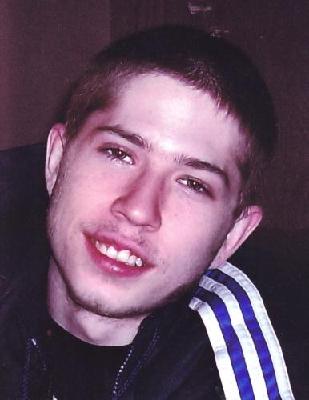
Joshua Martin, a 21-year-old White/Caucasian man from Huntington, West Virginia, was shot and killed during the early morning hours of March 18, 2015, in the Enslow Park neighborhood of Huntington. Martin had graduated from Huntington High School, where he had been a homecoming king, and had attended Marshall University. His mother later said he had been working toward becoming a mathematics teacher.
Friends remembered him as outgoing, funny and talented, making the circumstances surrounding his sudden death especially difficult for those who knew him to understand.
Shortly after 3 a.m., Martin arrived in the area of Donald Avenue, eventually coming to the home of Micah LeMaster. Police said the two men did not know one another, and investigators were initially unable to explain why Martin had traveled to that particular neighborhood. Evidence presented later showed that Martin's clothing and cellphone were found roughly 100 yards from where his body was discovered. Witness testimony indicated that Martin had consumed marijuana and hallucinogenic mushrooms earlier that night, and a later toxicology examination detected marijuana and mushrooms but no narcotics or alcohol.
What happened at the LeMaster residence became the central dispute in the criminal case. LeMaster's wife, Elizabeth Mott, told authorities that Martin was attempting to break into their home in the middle of the night. During the eventual trial, she testified that her children awakened her crying and that she woke LeMaster after Martin began trying to enter the house. The defense maintained that LeMaster was confronted with a frightening and unpredictable situation involving a stranger attempting to force his way into a home occupied by his family. Martin's family disputed the portrayal of him as someone who would intentionally break into a stranger's house, and his mother said she had no explanation for why he had been in Enslow Park that night.
Police investigators reconstructed a sequence in which LeMaster initially fired through his front door. Detective testimony later indicated that three shots traveled through the front and screen doors and struck Martin. According to the prosecution's interpretation of the physical evidence, Martin then moved away from the house, leaving a blood trail from the porch, down the steps and across the street. Investigators argued that LeMaster subsequently left the protection of his home and followed the already wounded Martin outside, where additional shots were fired. A former Huntington police officer who lived nearby testified that he observed muzzle flashes and saw a person fall after a rapid succession of several shots.
Martin was ultimately found outside, naked and unarmed. The state medical examiner testified during the 2016 trial about six gunshot wounds. Forensic testimony also connected bullets recovered in the investigation to LeMaster's firearm. Gunshot residue was found on both LeMaster and Mott; evidence presented at trial indicated that Mott had also fired a weapon during the incident but that her shots did not strike Martin. The defense pointed to scrapes on Martin and argued that they could have resulted from his breaking glass in LeMaster's door, supporting its contention that LeMaster reasonably believed his family was threatened. Prosecutors emphasized that the medical examiner found no cuts to Martin's hands or feet and argued that whatever threat might initially have existed had changed once Martin was wounded and outside the house.
Huntington police arrested Micah LeMaster the same day Martin was killed. He was initially charged with murder and held without bond at the Western Regional Jail. The following day, a judge set bond at $750,000 with the requirement that, if released, LeMaster remain on home confinement and have weapons removed from his residence. During a preliminary hearing later that month, Detective Matt Null testified about the six gunshot wounds, the shots fired through the door and evidence that investigators believed showed LeMaster pursued Martin outside. The defense argued that LeMaster had acted to defend himself and his family. A magistrate nevertheless found probable cause for the case to proceed to a grand jury.
In January 2016, a Cabell County grand jury indicted LeMaster on a first-degree murder charge. He remained on home confinement while the case moved toward trial. His attorney later sought a reduction in the bond restrictions, arguing that LeMaster was neither a flight risk nor a danger, but the judge declined to further reduce the conditions. The case eventually went to trial in Cabell County in the fall of 2016, more than a year and a half after Martin's death.
The trial centered not on whether LeMaster fired the fatal shots, but on whether his actions were legally justified as self-defense and defense of his family. Defense attorneys portrayed the shooting as the culmination of a terrifying home intrusion involving a stranger behaving erratically in the middle of the night. They argued that Martin's drug use and conduct created a situation in which LeMaster was forced to make split-second decisions to protect his wife and children. Prosecutors accepted that the confrontation may have begun at LeMaster's door but argued that the justification for deadly force ended once Martin was wounded and retreating. Their case focused heavily on the allegation that LeMaster left the security of his home and continued the confrontation outside.
The prosecution told jurors that Martin was wounded, naked and unarmed when LeMaster pursued him into the street. Prosecutors argued that Martin tried to get away and that LeMaster remained outside until Martin came back into view before shooting him again. The defense countered that the entire episode was one continuous, rapidly developing threat and that LeMaster could not be expected to evaluate each moment with the benefit of hindsight. LeMaster did not testify in his own defense. Jurors instead weighed physical evidence, expert testimony, eyewitness accounts, the 911 recording, testimony from LeMaster's wife and arguments from both sides concerning West Virginia's laws on self-defense.
On November 4, 2016, after a trial lasting approximately two weeks and nearly six hours of jury deliberations, Micah LeMaster was found not guilty. Jurors acquitted him of first-degree murder as well as the lesser offenses of second-degree murder and voluntary manslaughter. The verdict meant that although LeMaster had been arrested, indicted and tried for Martin's shooting death, he was not criminally convicted of killing him. Cabell County Prosecutor Sean Hammers expressed disappointment afterward but said the prosecution respected the jury's decision. Martin's relatives reacted emotionally as the acquittals were announced.
Martin's death continued to affect his family and friends long after the criminal proceedings began. On the first anniversary of the shooting, they gathered at Ritter Park for a candlelight vigil and balloon release in his memory. Those closest to him continued to struggle with unanswered questions, particularly why he had ended up at a stranger's home in Enslow Park in the first place. The criminal trial ultimately established that LeMaster could not be held legally responsible beyond a reasonable doubt under the charges presented to the jury, but it could not answer every question surrounding Martin's final hours or erase the loss experienced by the people who knew him.