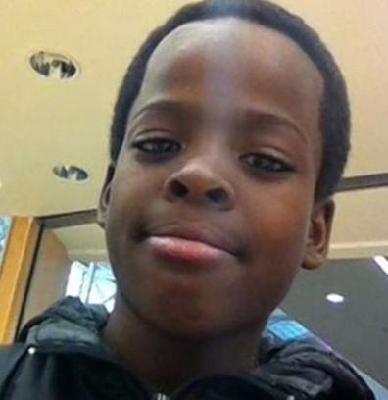
Kevin Clark “KC” Thompson Jr., a 26-year-old White/Caucasian male from Paden City, West Virginia, was fatally shot on June 8, 2015, outside the Paden City home of Jessica Dawn Quinn. West Virginia State Police later classified the shooting as a homicide and identified Quinn as the person who fired the fatal shot. What initially emerged as a claim that Thompson had entered the home of someone who feared him developed into a significantly different account as investigators interviewed
witnesses and reviewed the circumstances surrounding the shooting.
Wetzel County 911 received a report of a gunshot at Quinn’s residence on South Third Avenue. Emergency responders arrived to find Thompson on the ground suffering from a gunshot wound to the abdomen. He was transported to Wetzel County Hospital, but despite efforts to save him, he died from his injuries several hours later. An early report following the shooting said Quinn told investigators that Thompson had been stalking her and had come through the back door of her home shortly after 6 p.m., leading her to fire a. 45-caliber handgun. Later information contained in the criminal complaint and subsequent court proceedings painted a different picture of what happened immediately before the gunfire.
According to investigators, Quinn had recently told her uncle, Steven Quinn, that she was frightened because another person had physically assaulted her several days earlier. Her uncle came to her residence and learned that she had a firearm. Concerned about the situation, he reportedly told her to give the weapon to him, but she refused. He left and later returned. When Thompson arrived and approached the back porch, Steven Quinn saw him and apparently assumed that he was the person who had previously assaulted his niece. He confronted Thompson and told him to leave.
The criminal complaint stated that Thompson did not verbally threaten anyone and was not acting aggressively before the shot was fired. A companion who had traveled with him told investigators that the reason for their visit was ordinary: they had come to deliver firewood for Quinn’s outdoor fire pit. Police subsequently found firewood in Thompson’s vehicle. Although authorities reported recovering a silver automatic pistol at the scene that was said to belong to Thompson, court records described him as unarmed during the confrontation and prosecutors later emphasized that he was not threatening Quinn when she fired. Quinn’s children were inside the residence at the time.
Immediately after the gunshot, Steven Quinn called for someone to contact 911 and took the firearm from Jessica Quinn. State troopers arrested her, and she admitted that she had fired the shot. She maintained that she had acted out of fear for the safety of her children, but according to the criminal complaint, she also acknowledged that Thompson had not been trying to harm her or her uncle and had made no verbal threats toward her or her children. The investigation eventually developed the theory that Quinn had mistaken Thompson for the person she believed posed a danger to her.
Quinn was initially arrested on a murder charge and remained in the Northern Regional Jail without bond. She waived her preliminary hearing in July 2015, allowing the case to proceed directly toward consideration by the Wetzel County grand jury. In September 2015, the grand jury indicted her on murder and wanton endangerment involving a firearm. The wanton endangerment charge concerned the danger created for Steven Quinn, who was standing near the area where the firearm was discharged. Quinn pleaded not guilty to the charges on September 11, 2015.
The case moved slowly toward trial as prosecutors and defense attorneys awaited forensic evidence, including a fingerprint analysis of the firearm, as well as the results of a psychological evaluation. A trial was tentatively scheduled for March 28, 2016, but that date was later canceled because an expert witness was unavailable. The trial was rescheduled for July 25. Before a jury could hear the evidence, however, prosecutors and the defense reached a plea agreement.
On July 20, 2016, Quinn pleaded guilty to voluntary manslaughter, a lesser offense than the original murder charge, and also pleaded guilty to wanton endangerment. Wetzel County Prosecuting Attorney Timothy Haught announced that the state would seek the maximum sentences—15 years for voluntary manslaughter and five years for wanton endangerment—and ask that they run consecutively. Thompson’s parents agreed to the plea arrangement rather than face the uncertainty of a murder trial.
At Quinn’s sentencing on October 28, 2016, the courtroom heard competing descriptions of the shooting. Her attorney argued that she had acted in panic and portrayed what happened as a terrible mistake, noting that she had admitted firing the weapon and had expressed remorse. Friends and relatives spoke about the effect imprisonment would have on her children. Quinn herself accepted responsibility, apologized to Thompson’s family and said that she had acted out of panic and fear and wished she could undo what she had done.
Prosecutor Haught strongly rejected the suggestion that the shooting should be viewed as an accident or legitimate self-defense. He stressed that Thompson had done nothing that justified killing him and described him as unarmed and nonthreatening. The prosecution argued that Quinn made the conscious decision to pull the trigger without adequately identifying whom she was shooting. The circumstances were especially significant because the evidence suggested she believed Thompson was someone else—the person she feared had assaulted her earlier.
Circuit Judge David Hummel adopted a similarly severe view of the shooting. He concluded that although Quinn may not have intended to kill Thompson specifically, she had intentionally fired at someone she believed was another person. The judge characterized the case in terms of transferred intent and rejected the defense characterization of the killing as merely an accident. He also referenced the devastating final moments described in the police report and the permanent loss suffered by Thompson’s family.
Hummel imposed the maximum punishment available under the plea agreement: 15 years of imprisonment for voluntary manslaughter and five years for wanton endangerment. He ordered the terms to be served consecutively, resulting in a total sentence of 20 years. The sentence brought the criminal prosecution to a close more than a year after the shooting, with Jessica Dawn Quinn held legally responsible for Thompson’s death despite the case ultimately being resolved through a manslaughter conviction rather than a murder trial.