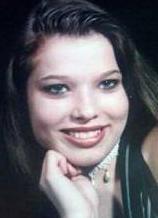
In the quiet hours of November 12, 1994, the life of 22-year-old Cornelia Ann Salt, a member of the Navajo Nation, was tragically cut short in Salt Lake City, Utah. Her body was discovered in a rental car parked on a desolate dead-end street near Jordan Park. She had been shot multiple times in the head, a violent end to a young life that would leave questions unanswered for nearly two decades.
The initial investigation into Cornelia's death yielded few leads, and with the passage of
time, her case grew cold. For years, her family and investigators were left with the haunting uncertainty of who was responsible for her murder. A significant breakthrough wouldn't come until fifteen years later, in 2009, when law enforcement's attention turned to two men, one of whom was Cornelia's former boyfriend, Richard Anthony Byrd. Acting on a tip from a confidential informant who knew details of the crime scene that had not been made public, investigators obtained search warrants for DNA samples from Byrd and another individual. The informant alleged that Byrd had been angry with Cornelia for leaving him to marry someone else and, as a result, had shot her.
Despite this promising lead, the case remained unresolved for three more years. Then, in a strange turn of events in September 2012, the body of 43-year-old Richard Anthony Byrd was discovered in a canal in West Valley City. An autopsy later determined that he had accidentally drowned. With the prime suspect in Cornelia's murder now dead, the Salt Lake City police, after consulting with the district attorney's office, officially closed the investigation into her death. While no one was ever arrested or formally charged in Cornelia Ann Salt's murder, the death of the man suspected of ending her life brought a somber and unconventional end to the long-standing cold case.