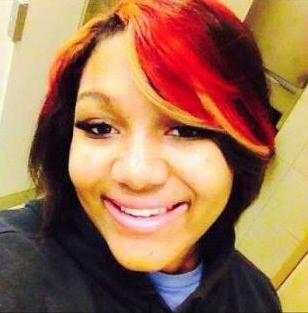
Nineteen-year-old Adeline King, a Black African American woman from Blytheville, Arkansas, was caught in a storm of violence on the night of August 8, 2015, when what began as a brief stop at a neighborhood party ended in her death and a dozen people shot. Late that evening, around 11 p.m., she went to a crowded gathering on Anderson Street, reportedly to drop off a friend and say a quick hello.
Witness accounts later described how she greeted a male friend who had once been involved with her sister; his ex-girlfriend became enraged, and an argument flared in the midst of the party crowd. What might have been a petty flare of jealousy turned, within moments, into a deadly confrontation.
The house on the 800 block of Anderson Street was packed, with people spilling into the yard and the street as the quarrel escalated. Police would later say the shooting appeared tied to an ongoing feud involving King and at least one other person at the gathering, tension that had simmered before that night and then ignited when voices rose and tempers snapped. In the confusion, a man pulled a gun and opened fire. King’s mother later said her daughter “died over a simple hello,” describing how the jealous confrontation turned King into the focus of the violence before a spray of bullets tore through the crowd. A quiet stop to see friends had become an ambush, and as shots rang out, partygoers ran in every direction, some already bleeding, others dragging wounded relatives and children toward cars in a desperate rush to get away.
When officers from the Blytheville Police Department arrived at the small house on Anderson Street, they found one wounded victim still at the scene and learned that many others had already been rushed to hospitals by relatives and friends. In total, twelve people had been shot, including King, who would die of her injuries at a hospital. At least four of the wounded were transported to Regional One Health in Memphis with more serious gunshot wounds, while others were treated closer to home at Great River Medical Center in Blytheville; among the injured were adults with wounds to their bodies and limbs, and at least two children caught in the chaos. Ten of the surviving gunshot victims were eventually treated and released, while one remained hospitalized in more serious condition.
The violence did not end at the house. As word spread, an estimated two hundred people converged on Great River Medical Center, where several of the victims had been taken. Emotions were raw, families collided in their grief and anger, and a fight broke out inside and around the hospital. Officers responding to the scene later described it as chaotic and emotional, struggling to control a crowd that was reeling from the suddenness of the attack and the revelation that a young woman had been killed. The situation grew so tense that Blytheville police called in deputies from the Mississippi County Sheriff’s Office and troopers from the Arkansas State Police to help restore order, turning the hospital parking lot and waiting areas into an extension of the crime scene that had begun on Anderson Street.
In the days that followed, investigators tried to piece together what had happened amid the panic and conflicting stories. Blytheville’s police chief said the shooting appeared to stem from a feud involving King, but early on witnesses were reluctant to speak openly, despite the large crowd present when the shots were fired. Local prosecutors publicly pleaded with residents to come forward, emphasizing that dozens of people had been on the scene yet only a handful were willing to give statements. Behind the scenes, detectives worked to separate rumor from fact, tracing the argument at the party back to the jealous confrontation and the man many witnesses said had raised the gun.
By late August 2015, investigators publicly named a suspect. Blytheville police identified 27-year-old Billy Dee Williams, described as being from Tulsa, as the man they believed had shot and killed King during the feud that erupted at the party. Authorities said a total of twelve people had been shot that night, with King the only one to die, and warned that Williams should be considered armed and dangerous. They released his name and photograph, asking anyone who knew his whereabouts to contact police. Not long after, Oklahoma media reported that an arrest warrant had been issued for Williams in connection with King’s killing, formally tying him to the homicide and making him the focus of an interstate manhunt.
Later reporting from Arkansas news outlets, reflected in victim memorial and case-tracking sites, indicates that Williams was eventually arrested in Oklahoma City on the Blytheville murder warrant, bringing the fugitive phase of the case to an end even as questions remained about what had led him to pull a gun at a family gathering. Publicly accessible summaries, however, do not clearly detail the final outcome of his prosecution or any sentence he may have received, leaving the legal ending of the story less visible than the violence that started it. What is clear in the record is that a jealous confrontation at a crowded house party, a feud no one managed to calm in time, and a gun in the wrong hands converged to end Adeline King’s life and scar a community that had already been struggling with poverty, crime, and mistrust—turning “a simple hello” into the moment everything changed.