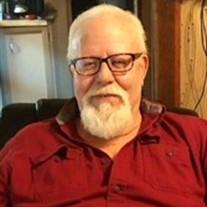
Greg Laron “Judge” Ford was a 33-year-old Black man from Strong, Arkansas, whose life ended violently on January 6, 2016, in nearby El Dorado. He had been born in El Dorado on August 29, 1982, to Gregory Bernard Ford and Catherine Oguinn, and over the years his world grew to include not only his parents but a close-knit circle of siblings and his own three children.
Those who knew Greg remembered him first as a son, brother, and father.
He was part of a large family, with three brothers — Craig, Daryl, and Brandon — and a sister, Candra, who shared his roots in Union County and gathered around him in life and in mourning. His children, Vlonia Ford, Jonas Ford, and Aspen Welch, were central to the legacy he left behind, the ones his relatives would hold close when his name was read aloud at services. After his death, loved ones brought him home one last time, gathering on January 16, 2016, at Mt. Zion Missionary Baptist Church in the Urbana community for his funeral, and then accompanying him to his resting place at Mt. Zion Cemetery.
On the day of the killing, Greg was at home in El Dorado when the quiet of an ordinary January day was broken by gunfire. News accounts describe him being shot on the porch of his house, the attack sudden and devastating. Emergency responders arrived, but the damage was already done; he was pronounced dead that same day, another life lost to gun violence in a small Arkansas city that knew him not as a statistic but as “Judge,” a familiar face whose absence was immediately felt.
In the days that followed, detectives worked quickly to find out who had come to Greg’s home with a gun. Within about two weeks, police announced the arrest of a 17-year-old El Dorado teenager, a boy whose name was not released because of his age. He was charged with first-degree murder in Greg’s shooting and with possession of a handgun by a minor, and a judge set his bond at one million dollars — a figure that underscored how seriously the authorities viewed the crime. Investigators said the teen had been arrested on a Friday in connection with the January 6 killing at Ford’s home, and they publicly acknowledged that they were still searching for a motive and expected more arrests in the case.
Even as the arrest brought a measure of progress to the investigation, it did not resolve the questions that haunted Greg’s family and community. Publicly available records and summaries of the case list his death among Arkansas homicides and link to the early news stories about the teenage suspect, but they do not show what ultimately happened in court or whether any additional suspects were ever arrested, leaving the later chapters of the legal story largely unwritten in the open record. Online memorials and homicide registries instead focus on Greg himself — his age, his family ties, his identity as “Judge” — and on the grief of those left behind, who continue to carry his memory in a city that still records his name among its victims of gun violence.