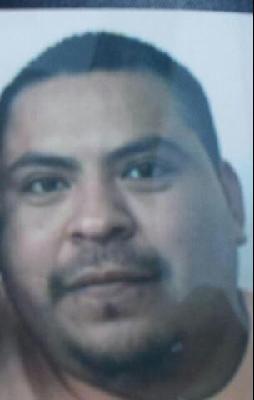
Hamzeh Ibrahim was a Phoenix, Arizona resident whose name appears in public cold-case listings as the victim of an unsolved murder investigated by the Phoenix Police Department. Third-party crime-mapping and data-aggregation sites that pull from Phoenix police records list him under “Area Cold Cases,” identifying him specifically as a homicide victim and noting only that the cause of death is classified as “murder” and that the case is handled by the Phoenix Police Department’s homicide unit. Beyond his name and the fact that he was killed, these public summaries do not provide a narrative of what happened to him, nor do they give a date, address, or description of the incident.
The City of Phoenix’s own cold-case homicide portal explains that the department maintains thousands of unsolved homicides and invites the public to submit tips, but the interface that lists individual victims and case details does not expose the underlying entry for Hamzeh Ibrahim in a way that can be accessed or read through publicly crawlable web pages. As a result, key biographical and incident details about him remain unavailable in open sources. His age at the time of death, his gender, and his ethnicity are not stated in the publicly visible records I can reach, and none of the official or semi-official databases I can see provide even a brief narrative describing where he was attacked, how he was discovered, or any known circumstances leading up to the crime.
Searches of local and national news coverage of Phoenix homicides and cold-case developments likewise do not surface any stories focused on a victim named Hamzeh Ibrahim. Recent articles and press releases about Phoenix cold-case breakthroughs highlight other victims whose cases have seen arrests or major leads, but none mention his name, which strongly suggests that there has been no publicly announced arrest or named suspect tied to his killing. Phoenix Police and partner agencies have issued releases for decades-old cases when suspects are identified or extradited, and those documents consistently name both victims and defendants; Hamzeh Ibrahim does not appear in that stream of announcements.
Context from Phoenix-area reporting shows how easily a case like Ibrahim’s can fade into the background. Coverage of the city’s cold-case homicide unit notes that, as of 2024, three people—one detective and two civilian investigators—were responsible for managing more than 3,000 unsolved homicide cases, a volume that makes it difficult for detectives to regularly revisit each file or to release detailed public summaries for every victim. Many older homicides, particularly those that did not generate sustained media attention at the time, exist in public view only as a name on a cold-case roster and a simple “murder” classification, which appears to be the situation for Hamzeh Ibrahim’s case today. With no accessible case narrative, no media profiles, and no public record of suspects or arrests, his death remains, in the open record, a largely undocumented homicide that the Phoenix Police Department still classifies as unsolved.