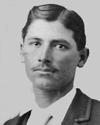
Deputy Constable James Haines, a white male lawman serving the small frontier community of Safford in territorial Arizona, met his end on August 26, 1879, when a routine piece of court business turned deadly. As one of the few formal representatives of the law in a sparsely settled region, Haines’ duties ranged from keeping the peace in town to carrying arrest warrants out into the rough country beyond the Gila River.
On that late–summer day, he set out from Safford toward the nearby post of Fort Thomas, a military outpost and growing settlement that had sprung up along the Gila during the Apache Wars, its adobe buildings and soldiers’ tents standing as a symbol of federal authority on the edge of the desert.
Haines carried with him an arrest warrant for a man identified in later summaries as J. R. Collins. The journey to Fort Thomas would not have been an unusual assignment for a deputy constable; the area between Safford and the fort was a corridor for soldiers, freighters, ranchers, and itinerant laborers, and conflict was never far away. When Haines arrived and moved to execute the warrant, the encounter with the wanted man did not go quietly. Contemporary law-enforcement memorial accounts agree that he was shot by the very person he was trying to arrest, the confrontation ending with the deputy constable mortally wounded and unable to complete his duty.
In the immediate aftermath of the shooting, the man named on the warrant, J. R. Collins, was taken into custody, and he was not the only one. Sources based on historical summaries of the Safford Police Department state that Collins and two other men were arrested in connection with the killing, swept up as possible participants or witnesses in what had begun as a straightforward warrant service and ended with the death of an officer. The arrests suggested that local authorities initially regarded the shooting as a criminal homicide, serious enough for multiple men to be held while the circumstances were examined.
The case moved quickly into the legal system of the territory. An inquest was convened to determine how Haines had been killed and whether the man who fired the fatal shot – and any associates – should face a murder or manslaughter charge. After hearing the available testimony, the inquest reached a conclusion that would shape the fate of the arrested men: the killing of Deputy Constable Haines was ruled a justifiable homicide. With that finding, the homicide charge that had attached to the suspects was dropped, and the man who shot Haines, along with the others who had been detained, was released from custody. No later record indicates that any of them were ever re-arrested or brought to trial for the deputy’s death, leaving the official narrative as one in which the shooter’s actions, though fatal to an officer, were judged legally defensible under the standards of the time.
In the years that followed, James Haines’ name did not disappear entirely into the dust of territorial history. Modern memorials to fallen law-enforcement officers list him as having died by gunfire in the line of duty on August 26, 1879, and Safford’s police history records him as the agency’s lone line-of-duty death, a singular loss in its annals. His story is also preserved in broader compilations of officers killed in 1879 and on online remembrance pages dedicated to victims of gun violence, where he appears as a constable who never came home from serving a warrant in the turbulent frontier days of Graham County.