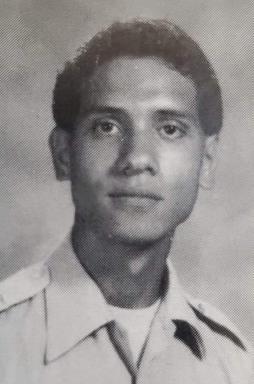
In the quiet community of Waddell, Arizona, the summer of 1991 was shattered by a horrific act of violence that claimed the life of Pairuch Kanthong, the 36-year-old male abbot of the Wat Promkunaram Buddhist temple. Kanthong, a Thai monk, was devoted to building the temple and fostering a place of peace and spiritual growth. His dreams, however, came to a brutal end on the night of August 9, 1991, in what would become known as the worst mass murder in Arizona's history.
The following
morning, on August 10, 1991, a scene of unimaginable horror was discovered within the temple walls. The bodies of Pairuch Kanthong and eight other individuals connected to the temple were found. The victims, who were all of Thai descent or origin, included five other monks, a nun, her nephew who was a novice monk, and a temple employee. They had been arranged in a circle, lying face down, each having been shot in the back of the head in an execution-style manner. The motive for this heinous crime was determined to be robbery.
The investigation into the temple massacre was fraught with complexity from the outset. Initially, authorities focused on four men from Tucson, who came to be known as the 'Tucson Four.' These men confessed to the crimes but later recanted their statements. Ultimately, they were exonerated when it became clear they had no involvement. The breakthrough in the case came when investigators traced the murder weapon, a. 22-caliber rifle, to two local teenagers: 17-year-old Johnathan Doody and 16-year-old Allessandro Garcia.
According to Garcia's account, he and Doody entered the temple armed with the rifle and a 20-gauge shotgun with the intent to rob it. Their greed culminated in the senseless slaughter of nine innocent people for approximately $2,600 and some audiovisual equipment. Both teenagers were charged with armed robbery and first-degree murder. Allessandro Garcia eventually accepted a plea deal. Johnathan Doody's legal journey was more prolonged, involving multiple trials and overturned convictions based on issues with his confession. However, in a third trial in 2014, Doody was found guilty on all counts, including the nine murders, and was sentenced to nine life terms in prison.