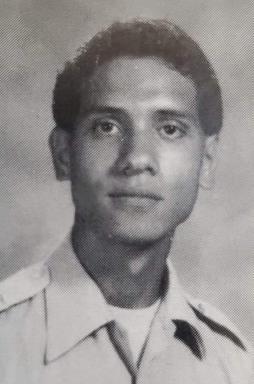
On August 10, 1991, Charlerm Chantapim, a 33-year-old Thai male monk, was among nine people murdered during a mass shooting at the Wat Promkunaram Buddhist temple in Waddell, Arizona. He lived and worshipped at the temple, a quiet religious community on the rural outskirts of the Phoenix metro area. All of the victims were connected to the temple and were either from Thailand or of Thai descent, including the abbot, several monks like Chantapim, a nun, a teenage novice monk, and a temple
employee. Their bodies were discovered later that day by a temple cook who arrived and found the scene of the massacre.
Investigators determined that the attack had taken place in the early hours of the morning, inside the temple. The nine victims, including Chantapim, had been shot execution-style in the back of the head and left face down, arranged in a circle on the floor of the temple. At the scene, authorities recovered numerous spent casings, including rifle and shotgun shells, which indicated the use of at least two firearms in the killings. The brutality of the crime and the sacrilegious nature of the attack on a place of worship drew national and international attention, and the Wat Promkunaram murders were, at the time, the deadliest mass shooting at a house of worship in the United States.
The investigation into the killings initially took a deeply problematic path. Acting on a tip from a mental-health patient in Tucson, Maricopa County sheriff’s investigators arrested four men from Tucson, later dubbed the “Tucson Four.” Several of them gave written confessions after extremely long and coercive interrogations that stretched for many hours with little rest. Eventually, however, investigators learned that a key suspect had a solid alibi supported by video evidence showing him at work far from Waddell at the time of the murders, and forensic work on a rifle in police custody showed no connection between that weapon and the Tucson Four. As it became clear that the confessions had been coerced and that physical evidence did not support the initial theory, the charges against the four men were dropped, and the early phase of the investigation came to be regarded as badly mishandled.
Attention then shifted when police linked one of the murder weapons, a. 22-caliber rifle, to two local teenagers from the West Valley area: 17-year-old Johnathan Doody and 16-year-old Allesandro Garcia. According to later court records and Garcia’s own account, the pair went to the temple armed with the rifle and a 20-gauge shotgun to commit a robbery, stealing roughly $2,600 in cash and audio-visual equipment. Garcia told authorities that after the robbery, Doody feared one of the monks might recognize him through family connections to temple members, and the decision was made to kill everyone present so there would be no witnesses. Garcia said Doody systematically shot the victims in the head with the rifle while Garcia fired additional shotgun blasts into several of the bodies. Both youths were charged with first-degree murder and armed robbery; Garcia eventually pled guilty in 1993 in exchange for avoiding the death penalty and received a prison sentence measured in centuries, while Doody was convicted, appealed multiple times, and was ultimately found guilty again in 2014 and sentenced to nine consecutive life terms. These convictions closed the criminal case surrounding the massacre at Wat Promkunaram and the killing of Charlerm Chantapim, establishing Doody and Garcia as the perpetrators responsible for the deaths of all nine victims.