On the night of June 24, 1992, 77-year-old ZeWan Huang, an Asian man, was at the El Grande Market in Tucson, Arizona, helping close up the small family grocery when violence tore through the routine end of the day. Known in official records as Zewan Huang or Huang Ze Wan, he was the elderly uncle of store manager Fred Gee, part of a tight-knit family that had run the market for years in a working-class neighborhood of south Tucson.
By late evening the iron security gates were partly down, the shelves were quiet, and the last customers had drifted away as the family and their employee, clerk Raymond “Ray” Arriola, prepared to shut off the lights and lock the doors.
Around 10:15 p.m., a 911 call brought police to the market. Officers walked into a scene that would haunt Tucson for decades: three bodies on the floor, blood pooling around them amid the everyday clutter of a neighborhood store. Fred Gee lay near the liquor-counter register, which still showed a small sale rung up. Close by were thin plastic produce bags holding a cucumber and three lemons, dropped in place as if someone had paid for them just moments before the shooting. Nearby, two one-dollar food stamps lay crumpled on the floor, not yet stamped with the market’s name, and cash was missing from the register drawer. Huang and Arriola had each been shot in the head with a. 38-caliber weapon and in the torso with a. 25-caliber handgun, while Gee had been shot in the head and body with a. 25. The three men died where they fell, turning a modest corner store into a murder scene.
News of the triple murder spread quickly through Tucson’s Chinese American and Latino communities and across the city at large. El Grande Market had been a familiar landmark, and the idea that three men could be executed during closing time in what amounted to a neighborhood grocery shocked residents. In the weeks that followed, grief mingled with fear. The Gee family, devastated by the loss of a son, an uncle, and a trusted employee, decided by the end of July to close the last remaining El Grande store, ending a long chapter of family business in the area. For Huang, who had lived out his later years helping at the market, the store’s shuttered doors became a physical reminder of how completely the violence had altered the family’s life.
At first, detectives had little to go on beyond the shell casings, the abandoned produce, and the scattered food stamps. There was no immediate suspect, and the killings appeared to be the result of a robbery gone horribly wrong: a family-owned market in a “threadbare” south Tucson neighborhood robbed near closing, three men shot and left on the floor, and a modest amount of money missing from the till. For months, investigators chased leads that went nowhere, trying to piece together who would be familiar enough with the store to gain entry after hours, and ruthless enough to execute three unarmed workers.
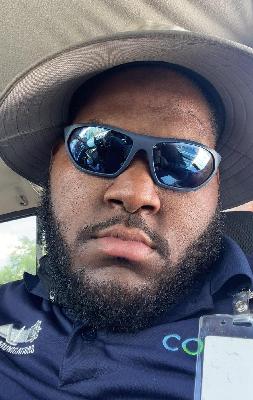
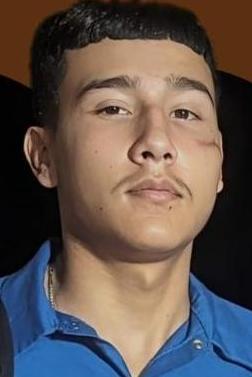
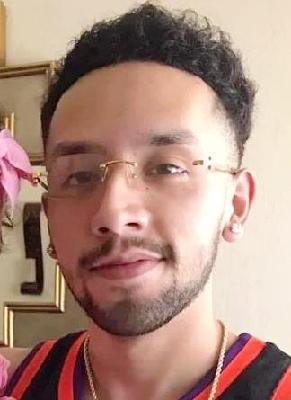
The break in the case came in late summer. On August 31, 1992, two separate anonymous calls reached Tucson police, pointing toward a young man named Martin Soto and a companion, and toward a “Chachi” said to be involved with a Black man named McCrimmon. Around the same time, a gang-unit informant mentioned a Hispanic male nicknamed Chachi and a Black man, Christopher McCrimmon, in connection with the triple homicide. Detectives soon learned that Martin Fong, also known as Martin Soto-Fong or Martin Soto, had once worked at El Grande Market, and that he was close friends with McCrimmon. Days later, Keith Woods, a recently released, three-time felon facing a long sentence on new drug charges, agreed to cooperate with police in exchange for leniency. Wearing a hidden microphone, Woods told detectives that McCrimmon and another man, Andre Minnitt, had confessed to him that they robbed the market with a third person called “Cha-Chi,” described as someone who had worked at the store and set up the job.
Physical evidence then pointed investigators more firmly toward a former employee. Forensic technicians concluded that fingerprints on the produce bags containing the cucumber and lemons, and on one of the food stamps dropped by Fred Gee’s body, belonged to Martin Soto-Fong. Police also found an abandoned car a few blocks from the market, left mid-turn with the engine still warm; a fingerprint on the driver’s window matched McCrimmon. The car’s owner told officers he had lent it to his girlfriend, Queen E. Ray, who eventually testified that on the night of the murders she lent the vehicle to McCrimmon in exchange for money and that he left with Minnitt and a third man she knew as “Martinez,” later identifying that man in court as Soto-Fong. By early September, McCrimmon and Minnitt were under arrest for an unrelated pizza-parlor robbery, and within days Fong was also arrested after his fingerprints were matched to the El Grande crime scene.
The state’s theory of what happened to Huang and the others took shape at Fong’s trial, which went first. Prosecutors argued that as a former employee, he knew how to get inside the market after closing time and used his familiarity with Gee and Huang to gain entry through the security gate. Once inside, they contended, he filled the produce bags, brought them to the liquor counter, and handed over the food stamps to Gee, drawing the manager into position at the register. According to the state, a. 25-caliber handgun was then used to shoot Gee and the others, while an accomplice armed with a. 38 joined in, leaving three men dead and cash missing from the store. Fong’s defense did not deny he had once worked at El Grande but insisted he was the victim of mistaken identity, arguing that another man named Martin Garza was actually the “Chachi” that Woods heard about, and further suggesting that investigators had mishandled or even fabricated the fingerprint evidence that tied Fong to the crime-scene items.
Despite those challenges, a jury convicted Fong of three counts of first-degree murder along with robbery and attempted-robbery charges, and he was sentenced to death on each of the murder counts. In a separate joint trial, McCrimmon and Minnitt were also convicted and sent to death row, largely on the strength of Woods’s testimony and the circumstantial web of tips and associations that linked them to the robbery. Years later, however, it emerged that lead prosecutor Kenneth Peasley and Detective Joseph Godoy had misrepresented when and how the suspects were first identified, minimizing the role of anonymous calls and casting Woods as the key source of their names. The Arizona Supreme Court found that Godoy had given false testimony in the co-defendants’ trials, and Peasley was eventually disbarred for intentionally eliciting perjured testimony to secure capital convictions. The tainted testimony led to the overturning of McCrimmon’s and Minnitt’s convictions; McCrimmon was acquitted at retrial, and Minnitt was ultimately released when the state’s highest court vacated his conviction, leaving both men free.
Fong’s case followed a different path. Although the same detective and prosecutor had been involved, appellate courts concluded that the specific misconduct proven in the co-defendants’ cases did not rise to the level of overturning his conviction. His death sentences were later set aside after the U.S. Supreme Court barred the execution of people who were juveniles at the time of their crimes, and he was re-sentenced to life terms requiring him to serve many decades before being considered for parole. In 2014, a divided panel of the Ninth U.S. Circuit Court of Appeals upheld his murder and robbery convictions, even as one judge dissented and critics argued that a case so steeped in perjury and mishandled testimony could never truly be trusted. Questions lingered over whether the fingerprints and informant testimony told the whole story or only a version shaped by flawed investigative practices.
For ZeWan Huang, the legal debates played out long after he was gone. Born in January 1915, he had crossed most of a century by the time he found himself working in that modest market in South Tucson, supporting his extended family and living a quiet life that left only a few official traces: a gravestone at Evergreen Memorial Park in Tucson, a brief entry in homicide databases, and scattered mentions in court opinions under variant spellings of his name. His killing, alongside his nephew and their co-worker, closed the doors of a family business and set off a chain of trials, overturned verdicts, and professional disgrace that reshaped Arizona’s conversation about prosecutorial misconduct. Yet at the heart of that convoluted history remains the simple image of an elderly uncle at a neighborhood store, staying late to help with closing, unaware that a small stack of produce bags and a couple of food stamps would be the last things he touched before his life was taken.