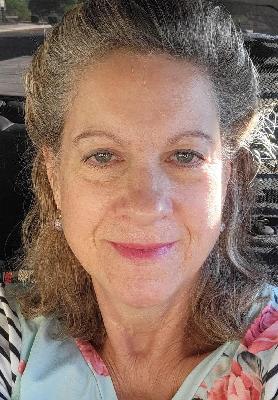
On the morning of October 28, 2002, at the University of Arizona’s College of Nursing in Tucson, assistant professor Robin Elaine Burns Rogers, a 50-year-old white female, was in her second-floor office when third-semester nursing student Robert Stewart Flores Jr. entered and shot her multiple times at close range, killing her almost immediately.
Witnesses reported that the attack occurred around 8:30 a.m., while many students elsewhere in the building were taking midterm exams, and police later confirmed that Rogers was Flores’s first victim in a series of shootings inside the nursing college that day.
Flores, 41, was a Gulf War veteran and licensed practical nurse enrolled in the nursing program with the goal of becoming a registered nurse. Accounts from investigators and contemporaneous news coverage describe him as a struggling student who had previously failed a pediatric nursing course and was doing poorly in a critical care class, leading to mounting frustration with the program and its faculty. On the day of the killings he arrived at the College of Nursing armed with several handguns and hundreds of rounds of ammunition, first confronting Rogers in her office before moving to a fourth-floor classroom where a critical care exam was underway. There he shot assistant professor Barbara Monroe and associate professor Cheryl McGaffic in front of students, then fatally shot himself, bringing the total number of deaths to four, including the perpetrator.
Police from both the University of Arizona and the Tucson Police Department flooded the scene within minutes of the first reports, securing the building and evacuating students while SWAT teams checked for additional threats. Officers found Rogers dead in her office and the other two professors and Flores in the fourth-floor classroom, where evidence and witness statements quickly indicated that Flores had acted alone. Investigators publicly identified him as the gunman the same day, and subsequent reporting detailed how he had systematically targeted faculty members connected to his academic problems. Because Flores died from a self-inflicted gunshot wound at the scene, no arrests were made in Rogers’s case; law enforcement treated the incident as a murder–suicide with a single confirmed perpetrator and did not seek additional suspects.
In the days that followed, investigators and journalists obtained a 22-page letter Flores had mailed to the Arizona Daily Star, which was later published and analyzed in local and national media. In it, he cataloged grievances against the College of Nursing, complaining about professors’ treatment of him and criticizing administrators, and characterized the impending violence as a form of “reckoning” or settling of accounts rather than a spontaneous outburst. Police stated that they had no reason to doubt the authenticity of the document, and the letter was widely cited as evidence that the attack was premeditated and specifically directed at the nursing faculty he blamed for his academic failures, including Rogers.
Biographical and memorial records identify Rogers as a clinical assistant professor of nursing and explicitly note that she was killed in the University of Arizona shootings carried out by Flores, describing her as a murder victim in a campus attack that also claimed the lives of Monroe and McGaffic. These records list her birth in Bakersfield, California, in 1952, her death in Tucson on October 28, 2002, and her burial at East Lawn Palms Cemetery in Tucson, reinforcing that her killing was immediately understood as part of a single, contained rampage rather than an unsolved or open homicide. In the years since, the University of Arizona community has honored Rogers and her colleagues through memorial spaces at the College of Nursing and periodic remembrances, and the case is frequently cited in discussions of campus security, active-shooter training, and the lasting impact of the 2002 nursing school murders on Tucson.