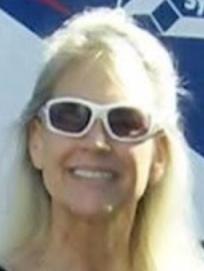
On August 15, 2003, in the Western desert town of Wickenburg, Arizona, a woman named Susan Kolman lost her life to gun violence. She was more than a date and a location in a database; she was a person whose story now survives mostly in a few stark lines on memorial pages and case listings. At the time of her death, publicly available records do not reveal her exact age or ethnicity, but they do identify her as a female victim whose life ended suddenly and violently, leaving behind questions that still have no satisfying answers.
The public record of what happened to Susan is painfully thin. One line simply states that she “tragically lost her life to gun violence” in Wickenburg on that August day, with little else to explain how an ordinary day became the last day of her life. There is no widely available narrative of her final hours, no detailed official report that has been shared with the broader public. Instead, those who come searching for her story find only the barest skeleton of facts: her name, the date, the city, the acknowledgment that a gun ended her life. That starkness can feel almost cruel, as if the complexity of a whole human being has been compressed into a single, tragic sentence.
Online memorials try, in their own quiet way, to push back against that erasure. One site dedicated to honoring gun violence victims lists Susan among those “lost to gun violence,” inviting visitors to light a virtual candle, post a photo, or share a memory. The page is mostly empty—no photographs, no stories yet—but the structure is there, waiting for those who knew her to step in and give color, voice, and history to the name. It is a small digital vigil, a standing invitation to anyone who loved her to say, “She mattered. Here is who she was to us.” The silence on those pages isn’t proof she was unloved; it’s a reminder of how many victims’ stories remain tucked away in private grief rather than written into public record.
A case listing on another site, focused on violent deaths, describes her manner of death as “death by force” and repeats what little else is known: that she was killed in Wickenburg on August 15, 2003, and that public sources offer almost no further detail about the circumstances. The description openly acknowledges the gaps, noting that information about any arrests, suspects, or the subsequent investigation is scarce and that available records do not clarify whether anyone was ever apprehended or held responsible for her killing. It is as if the investigation disappears into the desert air—there may be files and evidence and interviews somewhere in law-enforcement archives, but from the outside, all that’s visible is the void.
In a small online forum, people still ask whether anyone knows more—whether there were witnesses, whether a car seen near where she was last known to be might be connected, whether someone in town remembers something that was never fully pursued. These conversations are tentative, careful not to claim more than they know, but the tone is unmistakable: there is a lingering ache that Susan’s story remains so incompletely told. The speculation reflects a deep human need to make sense of violence, to find patterns, explanations, or at least a path toward justice. Even when there are no clear answers, people reach out to one another, trying to assemble a fuller picture from fragments.
What stands out most, when you step back from the sparse facts, is the emotional weight carried by that single unadorned line: “lost to gun violence on August 15, 2003 in Wickenburg, Arizona.” Behind it is the sudden shattering of a life and the quiet devastation of those who loved her—family, friends, coworkers, neighbors—who had to absorb the news that Susan was gone and that the world would keep spinning as if nothing had happened. For them, August 15 is not just a date on a memorial page; it is an anniversary charged with absence, a day that reopens the old wound every time it comes around.
There is also a broader grief that extends beyond Susan’s circle. She is one among many names on the National Gun Violence Memorial—part of a long list of Americans killed by firearms on that same date in 2003. Each name represents its own universe of relationships and memories, but seeing them together underscores the scale of the loss. Susan’s death, like so many others, exists at the intersection of private sorrow and public crisis: the intimate heartbreak of one family entwined with the larger, ongoing tragedy of gun violence in the United States.
Because there is no clear, publicly documented resolution—no widely reported arrest, no detailed case summary—Susan’s story remains, in many ways, unfinished. The open questions about who was responsible and what exactly happened that day make it difficult for outsiders to trace the contours of her final chapter, but they do not diminish the significance of her life or the wrongness of its ending. All we can say with certainty from the information that is publicly available is that a woman named Susan Kolman was killed by a gun in Wickenburg, Arizona, on August 15, 2003, and that the public record offers no clear account of justice being done in her case.
In the absence of a full narrative, what remains is an obligation: to speak her name with care, to resist letting her be reduced solely to a case file or a statistic, and to hold space for the possibility that someone, somewhere, still carries the fuller story of who she was. Until that story is told, the few facts we have about Susan become a kind of promise—that her life and her death will not be forgotten, and that the emptiness in the record is not the measure of her worth, but a sign of how much more there is still to learn, remember, and honor.