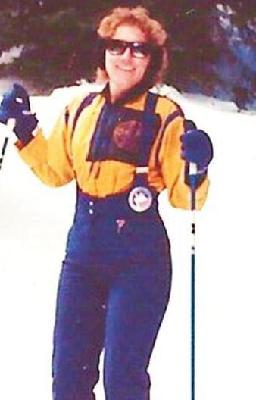
Laurie Ann Baker was a 40-year-old woman from Flagstaff, Arizona, whose life was rooted in family, work, and the routines of a small community just outside the city limits. Born on December 29, 1963, in Spring Valley, New York, she eventually made her home in Kachina Village, a wooded enclave a few miles south of Flagstaff, where she lived with her teenage daughter, Amanda Fiero, and her longtime boyfriend, James M. Longnaker III.
She worked as a cosmetologist, a job that placed her in close contact with neighbors and clients, and her days were divided between raising her daughter and earning a living in northern Arizona.
Behind the appearance of an ordinary blended family, however, was a long and escalating pattern of domestic violence. Court and training materials later used for judges describe Longnaker as a man in his fifties with a serious drinking problem and a documented history of abuse toward Laurie and Amanda. Over several years he was arrested multiple times for domestic-violence offenses involving them, including an arrest in June 2001 after he assaulted Laurie at their shared residence. In that earlier case, he made explicit threats against her life, yet he was eventually released under supervision, with restrictions that were later relaxed after Laurie asked the court to lift a no-contact order.
In the weeks leading up to the killings, the situation became even more volatile. Advocacy accounts based on Arizona domestic-violence fatality reports note that Longnaker was arrested twice in roughly the six weeks before the murders on new domestic-violence allegations. Laurie and Amanda left town for a short time, apparently trying to create distance from him. When they returned to their home in Kachina Village around August 24, 2004, a confrontation broke out inside the house. What began as another argument in a long history of abusive episodes escalated into deadly violence.
On August 24, 2004, Laurie and Amanda were shot and killed in their Flagstaff-area home; later summaries of gun-violence victims and homicide case listings both record that mother and daughter died that day as a result of domestic-violence–related gunfire. Longnaker fled the scene before officers could arrest him. As law enforcement converged on the area, SWAT officers tracked him to a spot northeast of the residence, where he remained armed with a. 30-30 rifle. Negotiators tried to talk him down, but he turned the weapon on himself and died from a self-inflicted gunshot wound at the scene, ending any possibility of a criminal trial or formal conviction.
In the aftermath, records of the case were folded into domestic-violence fatality reviews and training materials as a stark example of how repeated warnings, prior arrests, and explicit threats can still culminate in a familicide when intervention fails to stop the abuser. Laurie’s death, alongside Amanda’s, is now preserved in gun-violence memorials, obituary notices, genealogy pages, and homicide registries that all echo the same basic facts: a mother and daughter in Flagstaff were killed in their own home, the person responsible was the intimate partner whose violence had been documented for years, and the only “resolution” came not through an arrest and prosecution, but through the perpetrator’s suicide after taking their lives.