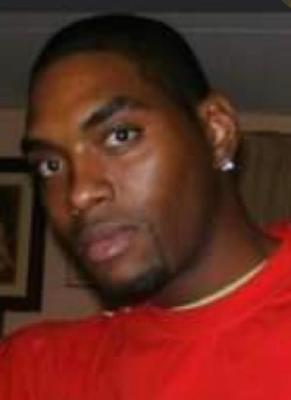
Terrick Strudwick, a 17-year-old African American male from Durham, North Carolina, lost his life on December 17, 2024, when he was fatally shot in a residential neighborhood in the southern part of the city. The shooting occurred shortly after 11:00 p.m. in the 2500 block of South Roxboro Street, near the Cornwallis Road public housing community. What began as an ordinary Tuesday evening ended in tragedy as gunfire erupted near the apartment complex. Durham police officers responded to reports of shots fired and discovered Terrick suffering from gunshot wounds. Despite the emergency response, he was pronounced dead at the scene, leaving his family to confront the devastating reality that his life had been cut short.
The shooting caused alarm throughout the surrounding neighborhood, where residents described hearing an intense burst of gunfire.
One witness compared the sounds to missiles being launched, while another resident spoke about the heartbreak of learning that someone so young had been killed. Bullets struck a vehicle parked nearby, shattering its windows and providing investigators with evidence of the violence that had unfolded. Police secured the area and spent much of the following morning processing the crime scene, examining damaged property, documenting evidence, and attempting to reconstruct the circumstances surrounding the shooting. The investigation quickly became a homicide case, with detectives working to identify those responsible and determine what had led to the deadly confrontation.
In the days after Terrick's death, his family struggled to understand how his future had been taken away so suddenly. His father, Terrick Strudwick Sr., spoke publicly about the overwhelming grief of losing his son and the painful realization that he would never have the opportunity to watch him grow into adulthood. He reflected on the possibilities that had disappeared with his son's death, including the milestones, achievements, and experiences that should have been ahead of him. A fundraising effort was established to support the grieving family, while the tragedy drew renewed attention to the devastating effects of gun violence on young people in Durham. For those who knew Terrick, the loss was far more personal than another statistic in the city's homicide records.
Investigators made their first significant breakthrough on December 18, 2024, when they arrested Corinthian Isaiah Poole, who was 16 at the time. Poole was initially taken into custody for carrying a concealed handgun before authorities developed additional evidence connecting him to the fatal shooting. He was subsequently charged with first-degree murder and conspiracy to commit murder. Detectives continued examining evidence collected from the scene and surrounding properties, seeking to establish the sequence of events and identify everyone allegedly involved. The arrest provided an important development in the investigation, although police had not yet determined the full extent of the involvement of other possible participants.
Additional details emerged in January 2025 when a previously sealed search warrant became public, revealing evidence investigators believed connected Poole to the shooting. According to the warrant, police body-camera footage and patrol vehicle recordings showed Poole leaving a unit within the Cornwallis housing complex after the gunfire. Investigators searched the residence and recovered multiple cellular telephones, ammunition cartridges, spent shell casings, and firearm magazines. The evidence was examined alongside surveillance recordings and information obtained during interviews as detectives attempted to reconstruct the events of that evening.
The warrant also described statements Poole allegedly made during questioning. Investigators reported that he initially provided conflicting accounts of his whereabouts and activities before eventually acknowledging that he had been present at the scene and had fired a Glock handgun. According to the documents, he declined to identify other individuals who may have been involved. Police also discovered a photograph on his telephone showing him alongside three other individuals holding firearms, including an AK-47-style weapon. Surveillance footage from the shooting reportedly showed an individual carrying a similar type of firearm. Detectives examined messages received shortly after the shooting, including one inquiring whether Poole was safe, as well as communications concerning firearm transactions. Investigators further reported that location information from his telephone was unavailable during the approximate time of the shooting but reappeared afterward. They believed this was consistent with the device having been switched off during that period. These findings formed part of the prosecution's developing case, although the allegations and statements contained in the warrant had not yet been established as findings of guilt.
The investigation continued into early 2025, eventually resulting in a second arrest. On February 5, 2025, Durham police arrested Shyheem Bowens, then 18, in connection with Terrick's death. Authorities publicly announced the arrest the following day, confirming that Bowens had been charged with murder and felony conspiracy to commit murder. He was taken to the Durham County Jail following his arrest. Police did not immediately disclose the specific evidence linking Bowens to the shooting or provide a detailed explanation of the suspected motive. The addition of another defendant reinforced investigators' belief that multiple individuals may have participated in the events surrounding Terrick's death.
The criminal proceedings continued well beyond the initial arrests. According to the Durham Police Department's September 2026 Homicide Tracking Report, the charges associated with the December 17, 2024, shooting remained pending as of September 2, 2026. The report identified a juvenile defendant facing first-degree murder and felony conspiracy charges under case number 24CR481999, with a last listed court date of July 16, 2026. It also listed Shyheem Bowens under case number 25CRS220224, facing murder and felony conspiracy charges, with a last listed court date of July 27, 2026. Neither defendant's charges had a conviction or dismissal recorded in that report. No subsequent verified court disposition establishing a guilty verdict, acquittal, plea agreement, or sentence was located. Both individuals must therefore be regarded as defendants accused of criminal offenses rather than convicted perpetrators.
Although the arrests represented substantial progress in the homicide investigation, important questions about the circumstances of the shooting remained unanswered publicly. Authorities had not released a definitive account explaining why Terrick was targeted, what events immediately preceded the gunfire, or the precise role each accused individual allegedly played. Investigators continued seeking information from anyone who might have witnessed the incident or possessed evidence relevant to the case. Members of the public with information were encouraged to contact Durham Police Investigator J. Sokal at 919-560-4440, extension 29238, or Durham CrimeStoppers at 919-683-1200. Information provided through CrimeStoppers could be submitted anonymously.
Terrick Strudwick's death remains a heartbreaking example of the lasting consequences of gun violence within a community. While the criminal investigation resulted in two arrests and serious charges, his family continues to carry the loss of a son whose life ended before he had the opportunity to fulfill his potential. His father's public expressions of grief illustrated the emotional devastation left behind, reminding the community that every homicide represents a person whose absence permanently changes the lives of those who loved them. As the legal proceedings continue toward a final resolution, Terrick's case stands as both an ongoing pursuit of accountability and a lasting reminder of a young life lost to violence on a December night in Durham.