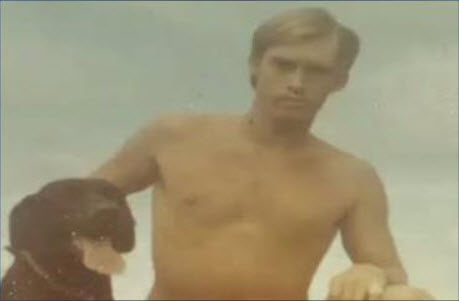
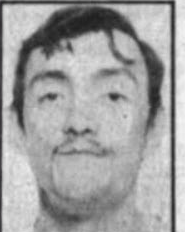
Gabriel William Chaney was a 28-year-old man living without stable housing in Honolulu when his life ended violently in Ala Moana Beach Park in April 2002.  In the months leading up to his death, the park had become a gathering place for people pushed out of other areas, part of a growing encampment on the grassy stretches between the ocean and the city's busy commercial districts.
Ala Moana, lying between downtown Honolulu and the glitter of Waikiki and bordering the large Ala Moana Center shopping mall, was a place where tourists, local families, joggers and homeless residents shared the same pathways and picnic tables, often uneasily. 
In early April 2002, Chaney had only recently begun staying in the park, blending into the loose community of men and women who slept on benches, under trees, or near the shoreline. Witnesses later told police that he was seen the night before his body was found in the company of other park residents, and that he might have been drinking with some of them.  That Monday evening, April 8, he was last reported alive at around 10:30 to 10:40 p.m., moving through Ala Moana Beach Park in the dark hours when the day's crowds had thinned and the shoreline belonged mostly to those with nowhere else to go. 
Before that final night, those who noticed him would have seen a compact figure, about five feet four and 160 pounds with a husky build, known not only as Gabriel or William Chaney but also by nicknames like Billy, Bill, or William Chanel.  On the night he was last seen, he wore a long-sleeved dark blue sweatshirt, black swim trunks and sandals, clothing suited to the damp chill that sometimes creeps across the park after sunset despite the tropical climate.  Those details—his build, his clothing, the aliases he answered to—would later become part of the public appeals as detectives tried to reconstruct his final hours.
At first light on Tuesday, April 9, park workers making their rounds noticed Chaney lying in the grass. Around 6:15 a.m., they saw him and assumed, as many did with people sleeping rough in the park, that he was just another man still asleep after a long night.  Only later, when they tried to wake him, did the horror of the scene become clear. His body had been severely beaten. Maintenance staff called authorities, and the quiet morning at Ala Moana Beach Park was abruptly transformed into a crime scene marked off by police tape and watched by curious onlookers and wary fellow park residents. 
The medical examiner's findings made it clear that Chaney had not simply succumbed to exposure or illness. He had suffered blunt trauma to his head and face consistent with an assault, and his death was attributed to those injuries combined with alcohol intoxication.  Police classified the case as a homicide and opened a full investigation. Detectives turned their attention to the fluid social networks within the park—other homeless men, drinkers, and drifters—trying to determine who had been with Chaney in those last hours and what conflicts or disputes might have led to such a brutal beating. Reports at the time noted that many homeless men in Honolulu believed that recent deaths among their peers, including Chaney's, were tied to heavy drinking and dangerous associations rather than to a single predator, reflecting both the risks of street life and a sense of resignation about violence within their own community. 
Even as investigators interviewed witnesses and appealed to the public, no clear suspect emerged in the killing. The same articles that identified Chaney and described his injuries also carried CrimeStoppers numbers and detectives' contact information, underscoring how dependent the case was on someone coming forward with what they had seen or heard in the park that night.  Over time, with no announced arrests or charges, his file shifted into the realm of long-term investigations. The Honolulu Police Department now lists his death among its unsolved cold cases, and external compilations of Honolulu cold cases likewise describe him simply as a man of 28 who was “severely beaten” and found dead in Ala Moana Park, with the note that he had only recently been staying there and had been seen the night before in the company of other park residents. 
Chaney's killing became one of several deaths of homeless men on Oahu in the spring of 2002 that drew attention to the vulnerability of people living in public spaces and the tensions surrounding encampments in prominent city parks. In stories about those deaths, fellow homeless men talked about how, if you kept to yourself, you might be safe, but if you drank heavily and fell in with the wrong crowd, you were inviting trouble—an unvarnished acknowledgment of the fragile line between survival and tragedy on the streets.  For Gabriel William Chaney, that line was crossed sometime between the late-night conversations of April 8 and the first light of April 9, leaving behind a crime scene in the grass at Ala Moana Beach Park and a homicide that, decades later, remains without a named suspect, arrest, or conviction in the public record.