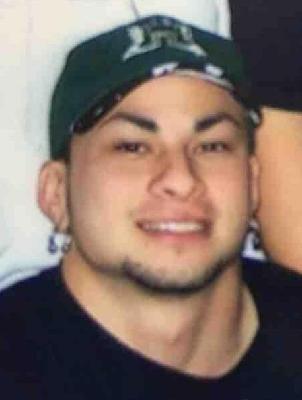
Do you know who murdered Michael Scheidt? On December 20th, 2002, 38-year-old Michael R. Scheidt was spending time with friends in the parking lot at Kahe Point Beach Park on Oahu's leeward coast, in the Waianae area of Honolulu. Without warning, a single shot from what investigators later described as a high-powered rifle tore into Michael's chest. Witnesses at the park scrambled for help, calling an ambulance as his friends tried to understand what had just happened and where the shot had come from.

Paramedics rushed Michael to St. Francis Medical Center West, the closest hospital serving that stretch of the island. Doctors there fought to save him, but the wound was too devastating and he was pronounced dead.  In the days that followed, the medical examiner publicly identified him as Michael Robert Scheidt and noted that he had been shot in the chest at close range with a high-powered rifle, and that he had no permanent local address at the time.  Behind those formal details was a more personal loss: accounts later described him as a married father whose life ended in that sudden burst of gunfire at a beach park where people routinely gathered at night. 
Back at Kahe Point, Michael's father, Terry Scheidt, went to the scene to lay flowers where his son had fallen. There, he was approached by people living at the park who told him what they said had happened and even named the person they believed had pulled the trigger.  At roughly the same time, Honolulu police were trying to piece together the events of that night, working from a chaotic scene in which the fatal shot had been fired from elsewhere in or near the parking lot, not in the middle of a face-to-face confrontation. Investigators initially said the shooting might have been drug-related, hinting at undercurrents in Michael's life or in the lives of those present that night, but they did not publicly spell out a clear motive. 
In the months after the killing, the case developed a shadowy suspect but never the sort of firm evidence that could carry a prosecution. In 2003, the Honolulu city Prosecutor's Office identified Patrick W. Deguair Jr. in state court records as a suspect in Michael's death.  At the time, Deguair was already facing his own serious charges: attempted first-degree murder and two counts of attempted second-degree murder in a separate 2001 incident, where prosecutors alleged he fired several rounds from a 9 mm pistol at people outside a home near Waipio Neighborhood Park after arriving with a group to provoke a fight.  That case ultimately ended in an acquittal when a jury found him not guilty after witnesses, confronted with a dark roadway and multiple vehicles and people, could not say with certainty who had fired the shots. According to court records summarized later in news reports, some witnesses admitted they were afraid to give statements because Deguair was reputed to carry a concealed pistol, and even a man arrested with him in another case told police he feared being “whacked” if he cooperated. 
Despite the rumors that reached Michael's father, the formal identification of a suspect in court documents, and the ongoing work of detectives, no one has ever been arrested or charged with Michael Scheidt's killing.  Years after the shooting, Terry Scheidt wrote to the prosecutor asking what had become of his son's case. The response he received was stark: despite efforts by both the prosecutor's office and the Honolulu Police Department, every lead had gone nowhere, and there was still no credible witness willing to testify about who fired the shot that ended Michael's life.  The father came to believe his son's case would remain unsolved, even as police insist the file is still open, a cold case anchored to a brief, violent moment in a beach parking lot where a single rifle shot turned an ordinary gathering into a lifelong mystery for a grieving family and an unanswered question for investigators in Honolulu.